imecadine.ge

Moving off, manoeuvring, positioning

44 official tickets in this topic, with the correct answer and law explanation.

Changing lanes, turning, reversing and correct positioning.

Ticket #402 — situation image

Is the driver of the passenger car obliged to switch on the right-turn indicator when moving in the direction of the arrow, if no vehicle is moving behind him?

1 is not obliged
2 is obliged
Law explanation
According to Article 32(2) of the Law of Georgia "On Road Traffic", before starting a manoeuvre the driver must switch on the direction indicator for the corresponding direction, and if there is none or it is out of order, signal by hand.

Road sign used in this ticket

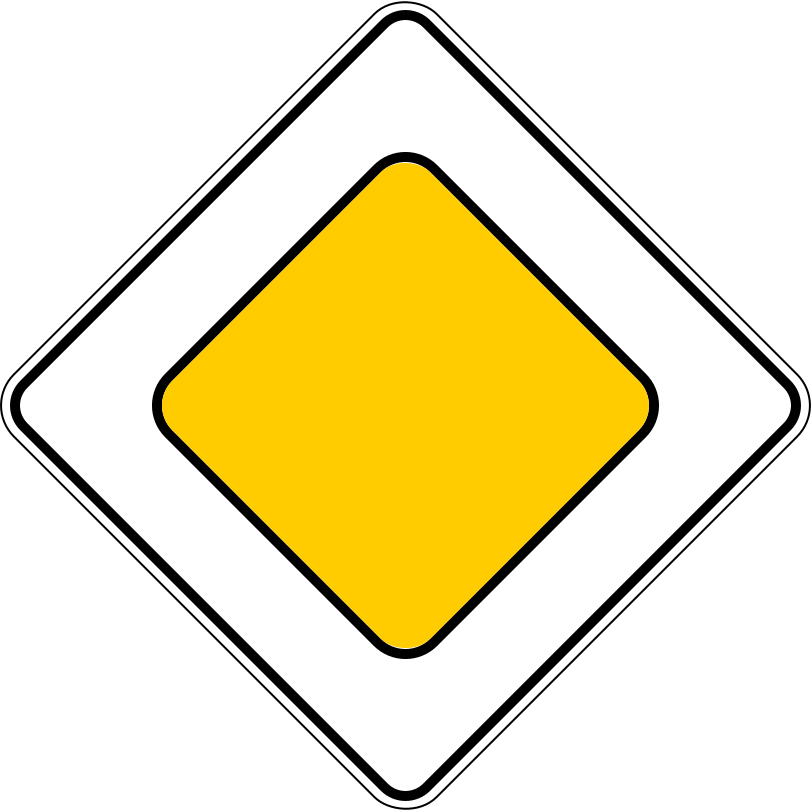
2.1. Priority road

A road on which drivers have priority when passing through unregulated intersections. The sign is installed at the beginning of the road and repeated immediately before every intersection. Sign 2.1 with plate 8.13 is installed in built-up areas before an intersection at which the main road changes direction; outside built-up areas − in advance, 150−300 m before the intersection, and before the intersection.

8.13. Direction of the main road

Indicates the direction of the main road at an intersection. The plate is used with signs 2.1, 2.3 and 2.4 when the main road changes direction at the intersection.

Ticket #404 — situation image

Which picture shows the hand signal for turning left given by the driver of a motorcycle?

1 I
2 III
3 II
Law explanation
According to Article 32(2) of the Law of Georgia "On Road Traffic", before starting a manoeuvre the driver must switch on the direction indicator for the corresponding direction, and if there is none or it is out of order, signal by hand. The signal for turning left or turning around is the left arm extended horizontally to the side, or the right arm extended to the side and bent upward at the elbow at a right angle. The signal for turning right is the right arm extended horizontally to the side, or the left arm extended to the side and bent upward at the elbow at a right angle. The braking signal is the left or right arm raised vertically upward.
Ticket #405 — situation image

Which picture shows the right-turn hand signal given by the driver of a motorcycle?

1 III
2 I
3 II
Law explanation
According to Article 32(2) of the Law of Georgia "On Road Traffic", before starting a manoeuvre the driver must switch on the direction indicator for the corresponding direction, and if there is none or it is out of order, signal by hand. The signal for turning left or turning around is the left arm extended horizontally to the side, or the right arm extended to the side and bent upward at the elbow at a right angle. The signal for turning right is the right arm extended horizontally to the side, or the left arm extended to the side and bent upward at the elbow at a right angle. The braking signal is the left or right arm raised vertically upward.
Ticket #406 — situation image

Which picture shows the braking hand signal given by the driver of a motorcycle?

1 I
2 II
3 III
Law explanation
According to Article 32(2) of the Law of Georgia "On Road Traffic", before starting a manoeuvre the driver must switch on the direction indicator for the corresponding direction, and if there is none or it is out of order, signal by hand. The signal for turning left or turning around is the left arm extended horizontally to the side, or the right arm extended to the side and bent upward at the elbow at a right angle. The signal for turning right is the right arm extended horizontally to the side, or the left arm extended to the side and bent upward at the elbow at a right angle. The braking signal is the left or right arm raised vertically upward.
Ticket #407 — situation image

Which picture shows the braking hand signal given by the driver of a car?

1 I
2 III
3 II
Law explanation
According to Article 32(2) of the Law of Georgia "On Road Traffic", before starting a manoeuvre the driver must switch on the direction indicator for the corresponding direction, and if there is none or it is out of order, signal by hand. The signal for turning left or turning around is the left arm extended horizontally to the side, or the right arm extended to the side and bent upward at the elbow at a right angle. The signal for turning right is the right arm extended horizontally to the side, or the left arm extended to the side and bent upward at the elbow at a right angle. The braking signal is the left or right arm raised vertically upward.
Ticket #408 — situation image

Which picture shows the hand signal given by a car driver for turning right?

1 II
2 I
3 III
Law explanation
According to Article 32(2) of the Law of Georgia "On Road Traffic", before starting a manoeuvre the driver must switch on the direction indicator for the corresponding direction, and if there is none or it is out of order, signal by hand. The signal for turning left or turning around is the left arm extended horizontally to the side, or the right arm extended to the side and bent upward at the elbow at a right angle. The signal for turning right is the right arm extended horizontally to the side, or the left arm extended to the side and bent upward at the elbow at a right angle. The braking signal is the left or right arm raised vertically upward.
Ticket #409 — situation image

Which picture shows the hand signal given by a car driver for turning left or making a U-turn?

1 II
2 III
3 I
Law explanation
According to Article 32(2) of the Law of Georgia "On Road Traffic", before starting a manoeuvre the driver must switch on the direction indicator for the corresponding direction, and if there is none or it is out of order, signal by hand. The signal for turning left or turning around is the left arm extended horizontally to the side, or the right arm extended to the side and bent upward at the elbow at a right angle. The signal for turning right is the right arm extended horizontally to the side, or the left arm extended to the side and bent upward at the elbow at a right angle. The braking signal is the left or right arm raised vertically upward.

If the traffic lane intended for turning right at an intersection is separated from the rest of the carriageway by a raised safety island and there is no traffic light on the right in front of the intersection, the driver may turn right at the following signal of the traffic light at the intersection:

1 by giving way to all vehicles moving from other directions, regardless of the light signals
2 after the light signal permitting movement is switched on
Law explanation
According to subparagraph “g” of paragraph 3 of Article 36 of the Law of Georgia “On Road Traffic”, if at a junction the lane intended for turning right is separated from the rest of the carriageway by a raised traffic island and there is no traffic light on the right before the junction, the right turn is made independently of the signals of the traffic light at the junction, giving way to all vehicles travelling from other directions.

When approaching a level crossing, as well as when passing over it, the driver of a vehicle:

1 must move at a moderate speed, and when crossing railway tracks the driver must use only a level crossing and give way to the train (locomotive, draisine)
2 is obliged to pass the said section of road quickly and, if another vehicle is standing in front of the crossing, to go around it by moving into the oncoming traffic lane
Law explanation
According to Article 39(1)(a) of the Law of Georgia "On Road Traffic", the driver of a vehicle must travel at a moderate speed; in addition, when crossing railway tracks the driver must use only a level crossing and must give way to a train (locomotive, draisine).
Ticket #462 — situation image

In a built-up area, the driver of a route bus is starting to leave a stop; the driver of the passenger car must:

1 as having priority, continue moving without changing speed
2 slow down and, if necessary, stop
Law explanation
According to Article 41(1) of the Law of Georgia "On Road Traffic", subject to the requirements established by Article 33(4) of this Law, in a built-up area, in order to facilitate the movement of a route vehicle, drivers of other vehicles must slow down and, if necessary, stop so that the route vehicle can perform the manoeuvre needed to pull away from the stop. The driver of a route vehicle, after signalling the intention to move off with the direction indicator, must take the precautions necessary to avoid a road traffic accident and start moving only after making sure that other vehicles are giving way.

Road sign used in this ticket

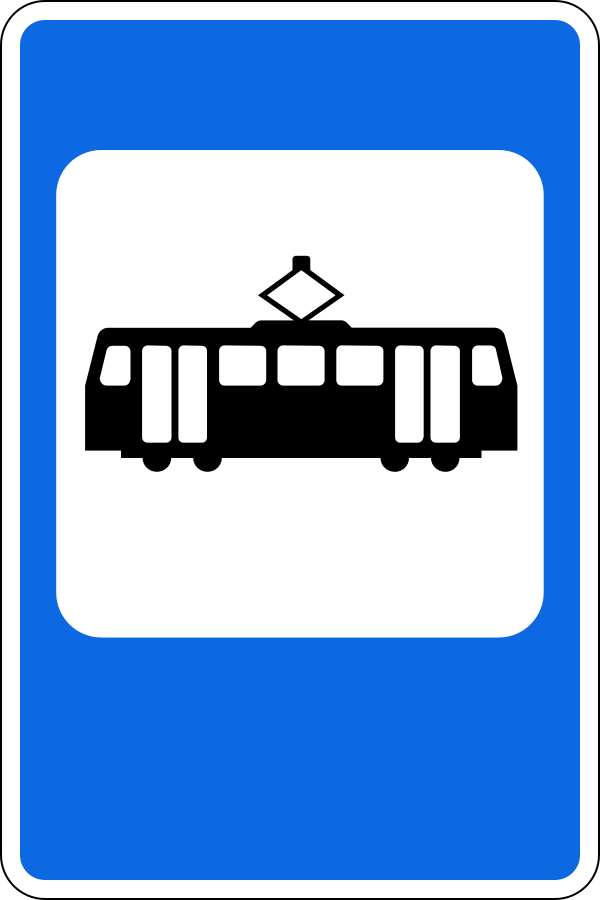
5.17. Tram stop

Indicates a tram stop and a taxi rank.

Ticket #464 — situation image

The driver of which car has the obligation to give way when moving in the direction of the arrow outside a built-up area, if the driver of a route vehicle is starting to pull away from a stop?

1 the passenger car driver
2 the driver of the route vehicle
Law explanation
According to paragraph 1 of Article 41 of the Law of Georgia “On Road Traffic”, taking into account the requirements established by paragraph 4 of Article 33 of this Law, in a built-up area, in order to facilitate the movement of a route vehicle, drivers of other vehicles must slow down and, if necessary, stop so that the route vehicle can perform the manoeuvre required to pull away from the stop. The driver of a route vehicle, after signalling the intention to resume movement with the direction indicator, must take the precautions necessary to avoid a road traffic accident and start moving only after making sure that other vehicles are giving way. According to paragraph 1 of Article 32 of the same Law, a driver who intends to perform any manoeuvre must start it only after making sure that it will not create danger for road users moving behind, in front of and beside him, both in the same and in the opposite direction, taking into account their position, direction of movement and speed.

Road sign used in this ticket

5.17. Tram stop

Indicates a tram stop and a taxi rank.

Ticket #468 — situation image

Is the driver prohibited from making a U-turn with the car in the direction of the arrow?

1 is not prohibited
2 is prohibited
Law explanation
According to Article 42(a) of the Law of Georgia "On Road Traffic", the following rule applies in tunnels marked with a road sign: the driver is prohibited from reversing or turning around.

Road sign used in this ticket

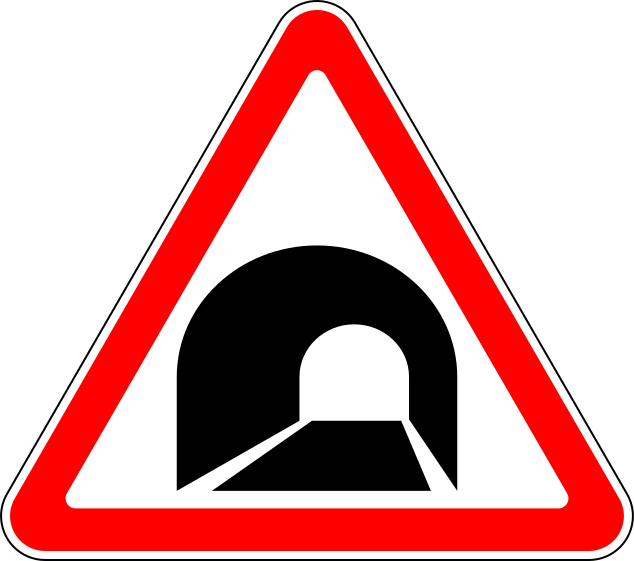
1.32. Tunnel

A tunnel without artificial lighting, or one whose entrance portal visibility is less than 150 m due to the terrain. Outside built-up areas the sign is placed 150−300 m before the start of the hazardous section, in built-up areas – 50–100 m before it.

Ticket #483 — situation image

In the given situation, does the driver of the passenger car have the right to continue moving without stopping?

1 does not have the right
2 Has the right
Law explanation
According to Article 25(4) of the Law of Georgia "On Road Traffic", a driver who intends to pass a route vehicle standing at a properly marked stop on the side corresponding to the direction of travel must reduce speed and, if necessary, stop in order to allow passengers to get on or off public transport safely.

Road sign used in this ticket

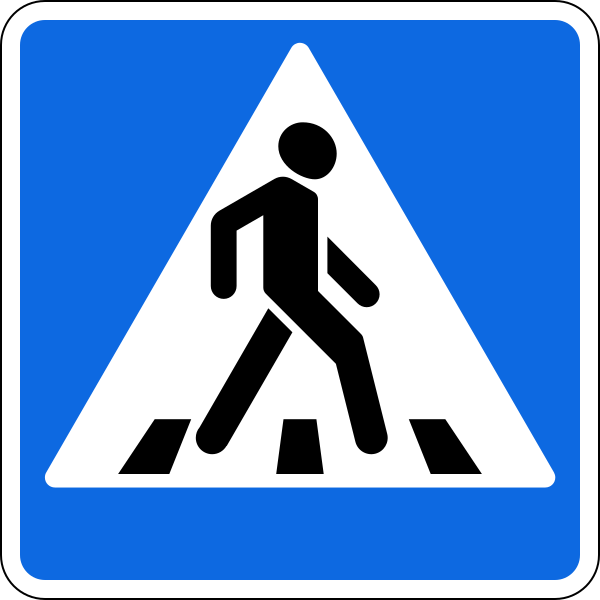
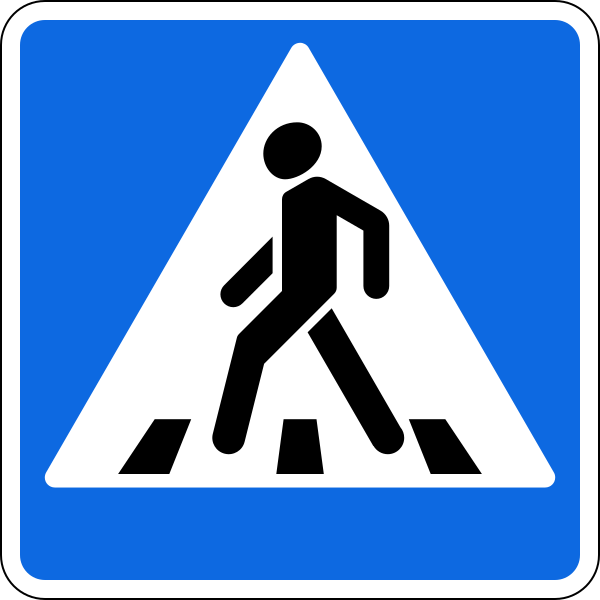
5.19.2. Pedestrian crossing

A place on the road designated as a pedestrian crossing. The sign is installed on the left side of the road. If marking 1.14 is absent at the crossing, the sign is installed at the far boundary of the crossing.

5.19.1. Pedestrian crossing

A place on the road designated as a pedestrian crossing. The sign is installed on the right side of the road. If marking 1.14 is absent at the crossing, the sign is installed at the near boundary of the crossing.

5.17. Tram stop

Indicates a tram stop and a taxi rank.

Ticket #489 — situation image

The driver of which stationary car has priority when starting to move in the direction of the arrow, if the driver of a route bus in a built-up area is starting to move from a marked stop?

1 the passenger car driver
2 the driver of the bus
Law explanation
According to Article 41(1) of the Law of Georgia "On Road Traffic", subject to the requirements established by Article 33(4) of this Law, in a built-up area, in order to facilitate the movement of a route vehicle, drivers of other vehicles must slow down and, if necessary, stop so that the route vehicle can perform the manoeuvre needed to pull away from the stop. The driver of a route vehicle, after signalling the intention to move off with the direction indicator, must take the precautions necessary to avoid a road traffic accident and start moving only after making sure that other vehicles are giving way.

Road sign used in this ticket

5.17. Tram stop

Indicates a tram stop and a taxi rank.

Ticket #502 — situation image

The driver of which vehicle is not prohibited from moving in the direction of the arrow?

1 the drivers of all three vehicles
2 only the truck driver
3 only to motorcycle drivers
Law explanation
According to Article 31(14) of the Law of Georgia "On Road Traffic", mopeds and/or motorcycles without a sidecar may travel in two rows in the same direction in one lane. According to paragraph 15 of the same Article, subject to the requirements established by Article 32(6) of this Law, movement is permitted on tram tracks running in the same direction that are located on the left at the same level as the carriageway, if all lanes intended for traffic in the same direction are occupied, and also when driving around an obstacle or overtaking, or when turning left or making a U-turn. At the same time, the movement of trams must not be obstructed. Driving onto tram tracks running in the opposite direction is prohibited.
Ticket #544 — situation image

The driver of which vehicle is prohibited from moving in the direction of the arrow?

1 only to the driver of the towing vehicle
2 only the truck driver
3 only to the driver of the yellow car
4 the driver of none of the vehicles
Law explanation
According to paragraph 7 of Article 31 of the Law of Georgia “On Road Traffic”, on a two-way road with three lanes (except road marking 1.9), the driver of a vehicle must not move into the outermost lane of the carriageway used by oncoming traffic. If on a three-lane road the middle lane is used for traffic in both directions, entering this lane is permitted only for overtaking, avoiding an obstacle, turning left or making a U-turn. According to paragraph 3.7 of Chapter 3 (Prohibitory signs) of Annex 1 to the same Law, road sign 3.7 “No vehicles with trailers” prohibits the movement of lorries and tractors with trailers of any kind, as well as the towing of power-driven vehicles.

Road sign used in this ticket

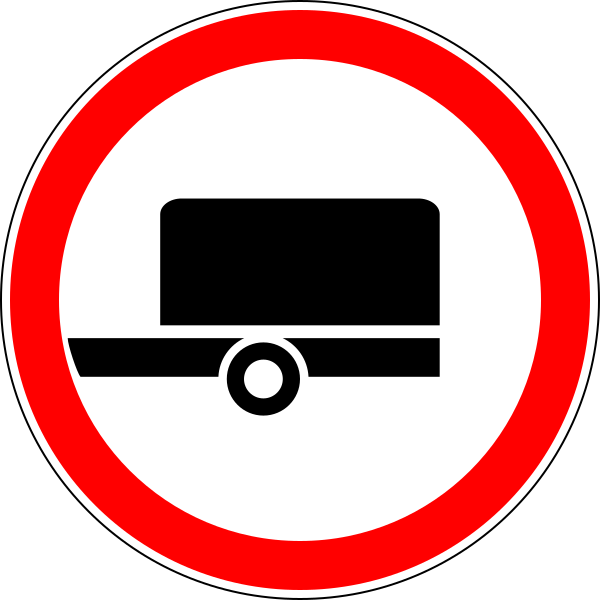
3.7. No vehicles with trailers

Prohibits the movement of all types of trucks and tractors with trailers, as well as the towing of motor vehicles. The sign indicates that traffic is prohibited in both directions. The sign does not apply to vehicles serving an enterprise located in the designated zone, or serving or belonging to persons who live or work in that zone. In such cases the vehicle must enter and leave the zone at the intersection nearest to its destination.

If the actual mass of a power-driven vehicle with an inoperative braking system exceeds half of the actual mass of the towing vehicle, its towing:

1 Is prohibited
2 Is permitted
Law explanation
According to Article 45(6)(c) of the Law of Georgia "On Road Traffic", it is prohibited to tow a power-driven vehicle with an inoperative braking system if its actual mass exceeds half of the actual mass of the towing vehicle; if the mass is smaller, towing is permitted only by a rigid coupling or by partial loading.

At any time of day, a towed power-driven vehicle must have switched on:

1 side (position) lights
2 hazard warning lights
3 Low-beam headlights
Law explanation
According to Article 45(7) of the Law of Georgia "On Road Traffic", at any time of day or night the towing motor vehicle must have its dipped headlights switched on, and the towed motor vehicle must have its hazard warning lights switched on, and if these are absent or faulty, a warning triangle must be attached to the rear of that vehicle.

Outside built-up areas, on a two-way road on which there is no dividing strip or pavement, a person pushing a bicycle or moped by hand must, in order to move, occupy:

1 the left side of the carriageway
2 any traffic lane
3 the right side of the carriageway
Law explanation
According to paragraph 5 of Article 24 of the Law of Georgia “On Road Traffic”, outside built-up areas, on a two-way road that has no dividing strip and no pavement, a pedestrian must use the shoulder located on the side facing oncoming traffic, and if there is none or it cannot be used − the left side of the carriageway, and move against the direction of traffic (except when, in the given situation, it is safer to move on the right side of the carriageway in the direction of traffic), but a person pushing a bicycle, moped or motorcycle, as well as a person with disabilities moving in a wheelchair, must use the right side of the carriageway to move.

The direction of traffic on all roads of Georgia is established:

1 On both the left and the right side
2 on the right-hand side
3 on the left side
Law explanation
According to paragraph 1 of Article 31 of the Law of Georgia “On Road Traffic”, right-hand traffic is established as the direction of traffic on all roads of Georgia.
Practical part

Exam routes — exactly the way the examiner drives them

60 real exam routes across 10 cities, 793 km in total. Every turn and stop on the map, with voice guidance.

  • All routes on the map
  • GPS mode on the real road
  • Practice mode with adjustable speed
  • On the web and in the app

One-off payment, no auto-renewal — by card on the Bank of Georgia secure page.

Chat with us