imecadine.ge

Full ticket list

915 official tickets — category C1, with the correct answer and law explanation.

Ticket #1260 — situation image

An arrow-shaped marking applied in the middle of a traffic lane on the carriageway warns:

1 about approaching a narrowing of the carriageway, a section where the number of traffic lanes in the given direction decreases
2 about approaching a dangerous section of road with bends
Law explanation
According to paragraph 1.19 of Chapter 1 (Horizontal markings) of Annex 2 to the Law of Georgia “On Road Traffic”, road marking 1.19 warns of approaching a narrowing of the carriageway, a section where the number of lanes in a given direction decreases, or a marking 1.1 or 1.11 dividing traffic flows moving in opposite directions. In the first case, marking 1.19 may be used together with signs 1.21.1–1.21.3.
Road sign used in this ticket

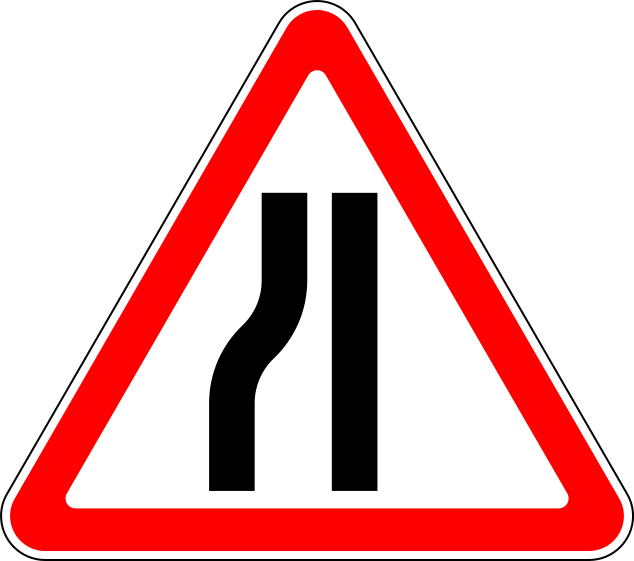
1.21.3. Road narrows

A section of road where the width of the carriageway narrows 1.21.3 − on the left. Outside built-up areas the sign is placed 150−300 m before the start of the hazardous section, in built-up areas – 50–100 m before it.

Ticket #1261 — situation image

The vertical marking drawn on a bridge indicates:

1 the lower edge of tunnels, bridges, overpasses and elements of other structures located at a height of less than 5 m above the carriageway, under which the carriageway passes wholly or partially
2 the number of traffic lanes on the carriageway
Law explanation
According to paragraph 2.2 of Chapter 2 (Vertical markings) of Annex 2 to the Law of Georgia “On Road Traffic”, road marking 2.2 marks the lower edge of an element of a tunnel, bridge, overpass or other structure located at a height of less than 5 metres above the carriageway, under which the carriageway passes wholly or partly.
Ticket #1262 — situation image

In the given situation, is the driver prohibited from stopping the car at the place indicated by the arrow?

1 is not prohibited
2 is prohibited
Law explanation
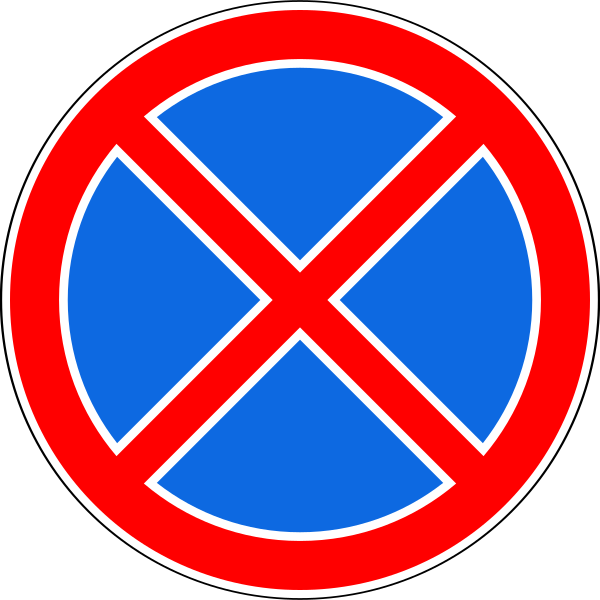
According to paragraph 3.27 of Chapter 3 (Prohibitory signs) of Annex 1 to the Law of Georgia "On Road Traffic", road sign 3.27 "No stopping" prohibits both stopping and parking of vehicles. According to subparagraph (e) of the note to the same Chapter, the effect of signs 3.26–3.30 extends after the relevant sign, from the place where the sign is installed to the nearest intersection, and in a built-up area where there is no intersection, to the end of the built-up area. The effect of the signs also extends past exits from adjacent areas and intersections (junctions) with field, forest and other minor roads before which the relevant sign is not installed. According to Article 5(13) of the same Law, an intersection is a crossing, junction or fork of roads at the same level, including the areas formed by such crossing, junction or fork. The crossing of roads with exits from adjacent areas is not considered an intersection.

Road sign used in this ticket

3.27. No stopping

Prohibits both stopping and parking of vehicles. The sign does not apply to route (public transport) vehicles. The sign applies from the place where it is installed to the nearest intersection behind it, and in a built-up area with no intersection – to the end of the built-up area. The sign's effect is also not interrupted at exits from adjacent areas or at intersections (junctions) with field, forest and other minor roads before which no corresponding sign is installed. The sign applies only to the side of the road on which it is installed.

Ticket #1263 — situation image

The driver of the passenger car has the right to stop:

1 only at place A
2 Only at place B
3 At neither place A nor place B
Law explanation
According to paragraph 1.4 of Chapter 1 (Horizontal markings) of Annex 2 of the Law of Georgia “On Road Traffic”, road marking 1.4, a solid yellow line, marks a place where stopping is prohibited; it is used on its own or together with sign 3.27; it is drawn along the edge of the carriageway or on top of the kerb. According to paragraph 3.27 of Chapter 3 (Prohibitory signs) of Annex 1 of the same Law and subparagraph “i” of the note to the same Chapter, road sign 3.27 “No stopping” - prohibits both stopping and parking of vehicles. Sign 3.27 may be used together with marking 1.4, and sign 3.28 – together with marking 1.10. In that case the zone of effect of the signs is determined by the length of the marking line.

Road sign used in this ticket

3.27. No stopping

Prohibits both stopping and parking of vehicles. The sign does not apply to route (public transport) vehicles. The sign applies from the place where it is installed to the nearest intersection behind it, and in a built-up area with no intersection – to the end of the built-up area. The sign's effect is also not interrupted at exits from adjacent areas or at intersections (junctions) with field, forest and other minor roads before which no corresponding sign is installed. The sign applies only to the side of the road on which it is installed.

If a person injured in a road traffic accident has a wound to the eye, they must:

1 lay them on the side of the healthy eye and place a clean dressing on the injured eye
2 lay them on their back and raise the head forward. Apply a clean dressing to the injured eye
3 seat them in a semi-sitting position, tilt the head back and place a clean dressing on the injured eye
Law explanation
In the case of an eye wound sustained by a person injured in a road traffic accident, the injured person must be laid on his/her back with the head raised forward. A clean dressing must be placed over the injured eye.

In case of an injury to an arm bone below the elbow of a person injured in a road traffic accident, the tourniquet to stop arterial bleeding should be applied:

1 above the wound, up to the elbow
2 above the elbow, near the shoulder
Law explanation
In the case of an injury to the arm bone below the elbow of a person injured in a road traffic accident, a tourniquet to stop arterial bleeding must be applied above the elbow, near the shoulder.

When calling an ambulance for persons injured in a road traffic accident, we must inform the dispatcher of:

1 only the nearest landmark to the scene of the road traffic accident, the number of injured persons, their sex and age
2 the exact location of the road traffic accident (street, house number and nearest landmark), the number of injured persons, their sex, approximate age, the presence of vital signs, and also about severe bleeding
Law explanation
When calling an ambulance for persons injured in a road traffic accident, we must tell the dispatcher the exact location of the road traffic accident (street, house number and nearest landmark), the number of injured persons, their sex, approximate age, the presence of vital signs, and also any severe bleeding.
Ticket #1267 — situation image

Will the truck driver violate the traffic rules when moving in the direction of the arrow?

1 will violate
2 will not violate
Law explanation
According to paragraph 3.22 of Chapter 3 (Prohibitory signs) of Annex 1 of the Law of Georgia “On Road Traffic”, road sign 3.22 “No overtaking by lorries” - prohibits lorries with a maximum permissible mass of more than 3.5 tonnes from overtaking other vehicles (except vehicles travelling at less than 30 km/h), and also prohibits tractors from overtaking other vehicles (except animal-drawn vehicles and bicycles).

If a person injured in a road traffic accident has injuries to the hairy part of the head, in order to provide first aid, they must:

1 Apply an improvised bandage to the neck, apply a pressure bandage with a sterile dressing to the wound, lay the injured person on their side with the legs bent at the knees, and place ice or a cold compress on the head
2 an improvised bandage should be applied to the neck, a sterile cotton pad placed on the wound, and the injured person laid on their back
Law explanation
If a person injured in a road traffic accident has injuries to the hairy part of the head, then, in order to provide first aid, an improvised collar should be placed on their neck, a pressure bandage made with a sterile bandage should be applied to the wound, the injured person should be laid on their side with the legs bent at the knees, and ice or a cold compress should be applied to the head.
Ticket #1269 — situation image

The driver of the passenger car has the right to stop:

1 only at place A
2 both at place A and at place B
3 Only at place B
Law explanation
According to Article 37(6)(a.a) and (a.c) of the Law of Georgia "On Road Traffic", stopping a vehicle on the carriageway is prohibited: a.a) on pedestrian and cyclist crossings and closer than 5 metres before them; a.c) at the intersection of carriageways, and also closer than 5 metres from the edges of the intersecting carriageways, except when stopping at three-way intersections (junctions) opposite side exits where there is a solid marking line or a dividing strip.

Road sign used in this ticket

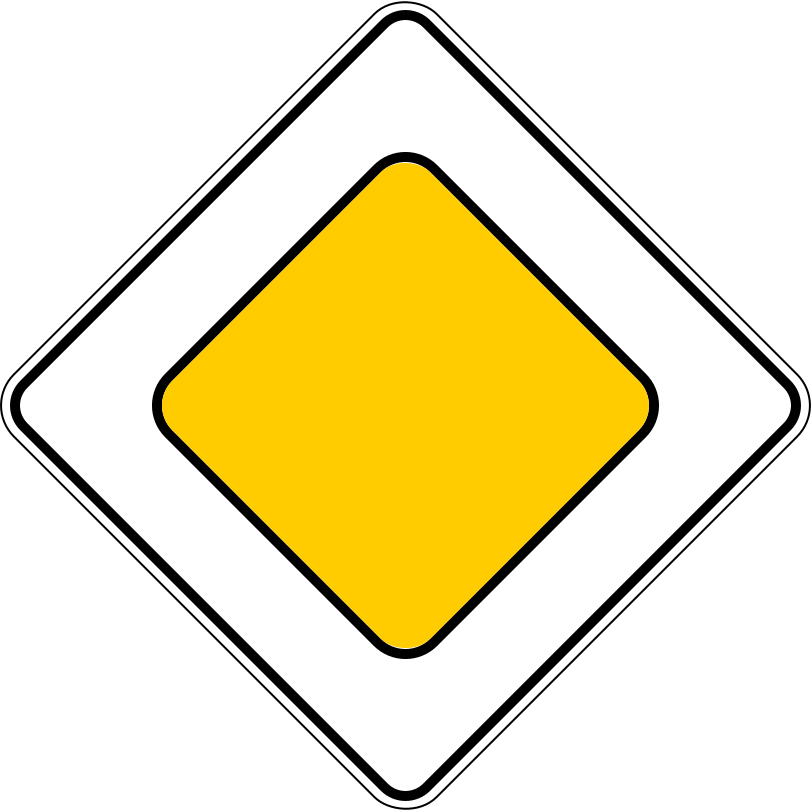
2.1. Priority road

A road on which drivers have priority when passing through unregulated intersections. The sign is installed at the beginning of the road and repeated immediately before every intersection. Sign 2.1 with plate 8.13 is installed in built-up areas before an intersection at which the main road changes direction; outside built-up areas − in advance, 150−300 m before the intersection, and before the intersection.

Ticket #1270 — situation image

The driver of which vehicle has an obligation to give way when moving in the direction of the arrow?

1 the passenger car driver
2 the cyclist
Law explanation
According to paragraph 6 of Article 43 of the Law of Georgia “On Road Traffic”, at an unregulated crossing of a cycle path with a road outside an intersection, riders of bicycles and mopeds must give way to drivers of vehicles travelling on that road.
Ticket #1274 — situation image

In which direction does the driver of a subcategory "C1" vehicle have the right to continue moving on this section of road?

1 only in direction B
2 Only in direction A
3 both in direction A and in direction B
Law explanation
According to paragraph 4.6 of Chapter 4 (Mandatory signs) of Annex 1 to the Law of Georgia “On Road Traffic”, 4.6 “Minimum speed limit” sets the minimum speed limit for traffic on the road. The sign applies after the sign, from the place where it is installed to the nearest intersection, and in a built-up area where there is no intersection, to the end of the built-up area. According to paragraph 8.14 of Chapter 8 (Additional information signs (plates)) of the same Annex, 8.14 “Lane” indicates the lane to which the sign or traffic light applies. The plate is placed above the lane. According to subparagraph “d.a” of paragraph 7 of Article 33 of the same Law, except in the cases established by this Law, in non-built-up areas, and also on a section of road in built-up areas where traffic is permitted by the appropriate sign at a speed of more than 60 km/h, vehicles of categories “C” and “CE”, as well as of subcategories “C1” and “C1E”, are permitted to travel on motorways at a speed not exceeding 80 km/h, and on other roads at a speed not exceeding 70 km/h.
Ticket #1275 — situation image

The driver of which vehicle has the obligation to give way when moving in the direction of the arrow?

1 the driver of the tractor
2 the driver of the passenger car
Law explanation
According to Article 36(4)(c) of the Law of Georgia "On Road Traffic", at an uncontrolled intersection, at the intersection of roads of equal importance, the driver of a trackless vehicle must give way to a vehicle approaching from the right.
Ticket #1277 — situation image

In the given situation, is the driver of the passenger car obliged, when moving in the direction of the arrow, to stop at the light signal prohibiting movement of the traffic light located at the exit from the intersection?

1 is not obliged
2 is obliged
Law explanation
According to Article 36(3)(e) of the Law of Georgia "On Road Traffic", at a controlled intersection, a driver who has entered the intersection on a permissive traffic light signal may move in the intended direction regardless of the prohibitive signals of the traffic light at the exit from the intersection, provided that this does not obstruct the movement of other road users in the direction in which traffic is open. If, while he/she is moving through the intersection, there are "Stop" lines (and/or road signs 7.16) in front of the traffic lights on the road, the driver must follow the signal of each traffic light.
Ticket #1279 — situation image

In the given situation, is the driver of the passenger car obliged, when moving in the direction of the arrow, to stop at the prohibiting light signal of the traffic light?

1 is obliged
2 is not obliged
Law explanation
According to Article 36(3)(e) of the Law of Georgia "On Road Traffic", at a controlled intersection, a driver who has entered the intersection on a permissive traffic light signal may move in the intended direction regardless of the prohibitive signals of the traffic light at the exit from the intersection, provided that this does not obstruct the movement of other road users in the direction in which traffic is open. If, while he/she is moving through the intersection, there are "Stop" lines (and/or road signs 7.16) in front of the traffic lights on the road, the driver must follow the signal of each traffic light.

In order to remove a foreign body from the airways of a person injured in a road traffic accident, it is essential to:

1 slap them several times on the back with the palm; if this is unsuccessful, stand behind the injured person, clasp your hands into a fist against the abdomen at the level of the lower ribs, simultaneously press on the ribs and sharply push with the fists into the abdominal area in an inward and upward direction
2 Put the injured person on their knees face down and strike them on the back with a fist several times
Law explanation
To remove a foreign body from the airways of a person injured in a road traffic accident, we must strike the person several times on the back with the palm of the hand; if this is unsuccessful, we should stand behind the injured person, clasp our hands into a fist at the abdomen at the level of the lower ribs, simultaneously press on the ribs and push the fists sharply into the abdominal area in an inward and upward direction.
Ticket #1281 — situation image

In which direction may the driver of the passenger car continue moving at this signal of the traffic controller?

1 in all directions
2 Only in directions A and D
3 only in directions A, B and D
4 only in directions B and C
Law explanation
According to Article 30(5)(c) of the Law of Georgia "On Road Traffic", the signals of the traffic controller have the following meaning: right arm extended forward − this gesture means the "Stop" signal for all drivers moving from the traffic controller's right side and back; at the same time, from the traffic controller's left side, trams may move to the left, and trackless vehicles may move in all directions. From the traffic controller's chest side, all vehicles may move only to the right. Pedestrians may cross the carriageway behind the traffic controller's back. According to Article 28(2) of the same Law, the signals of the traffic controller take precedence over traffic light signals, the requirements of road signs and road markings, and the requirements of the traffic rules. When the traffic controller is directing traffic at an intersection, prohibitory and mandatory road signs remain in effect, unless the traffic controller specifically indicates that their requirements are to be disregarded.

Road sign used in this ticket

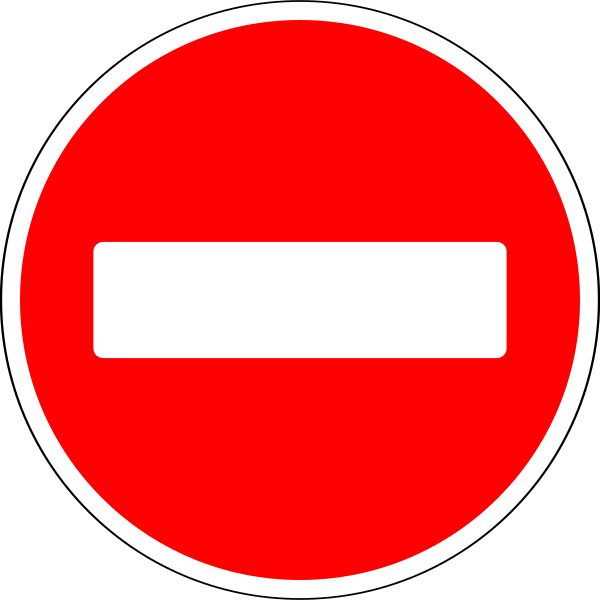
3.1. No entry

Prohibits the entry of all vehicles in the given direction. The sign does not apply to route (public transport) vehicles.

Ticket #1282 — situation image

In which direction can the driver of the passenger car continue moving if the traffic controller specifically indicates movement to the left?

1 Only to the left
2 in all directions
3 only to the left and in the reverse direction (U-turn)
4 only straight ahead
Law explanation
According to paragraph 2 of Article 28 of the Law of Georgia “On Road Traffic”, the signals of a traffic controller take precedence over traffic light signals, the requirements of road signs and road markings, and the requirements of the traffic rules. When traffic at an intersection is being regulated by a traffic controller, prohibitory and mandatory road signs remain in effect, except when the traffic controller specifically indicates that their requirements are to be disregarded.

Road sign used in this ticket

3.1. No entry

Prohibits the entry of all vehicles in the given direction. The sign does not apply to route (public transport) vehicles.

Is it permitted to give medicines to a person injured in a road traffic accident who is unconscious?

1 is not allowed
2 is permitted
Law explanation
It is not permitted to give medicines to an unconscious person injured in a road traffic accident.

In the absence of material for making a splint, in the case of a fracture of an arm bone of a person injured in a road traffic accident, he/she should:

1 Hang the arm, bent at the elbow, from the neck and secure it to the torso with a bandage
2 secure the straightened arm to the torso by wrapping a bandage
Law explanation
If there is no material to make a splint and a person injured in a road traffic accident has a fractured arm bone, the arm, bent at the elbow, must be suspended from the neck and secured to the body with a bandage.
Practical part

Exam routes — exactly the way the examiner drives them

60 real exam routes across 10 cities, 793 km in total. Every turn and stop on the map, with voice guidance.

  • All routes on the map
  • GPS mode on the real road
  • Practice mode with adjustable speed
  • On the web and in the app

One-off payment, no auto-renewal — by card on the Bank of Georgia secure page.

Chat with us