imecadine.ge

Traffic light signals

44 official tickets in this topic, with the correct answer and law explanation.

Meaning of colours and arrows, flashing modes, reversible lanes.

Ticket #165 — situation image

The driver of which car is prohibited from moving in the direction of the arrow?

1 the drivers of both cars
2 only to the driver of the yellow car
3 the driver of neither car
4 only the driver of the blue car
Law explanation
According to paragraph 4.1.1 of Annex 1 of the Law of Georgia “On Road Traffic”, road sign 4.1.1 “Straight ahead only” permits movement only in the direction shown by the arrow. According to subparagraph “b” of the note to the same paragraph, the effect of signs 4.1.1-4.1.6 extends to the intersection of carriageways before which the corresponding sign is placed.

Road sign used in this ticket

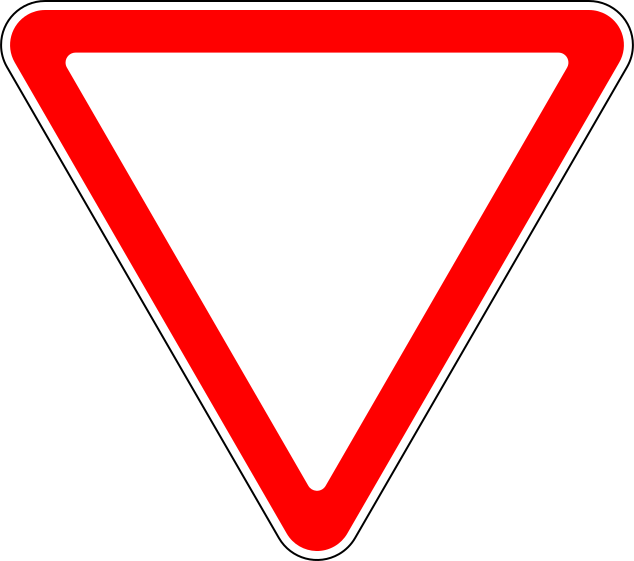
2.3. Give way

The driver on this road must give way to drivers moving on the road being crossed, and where plate 8.13 is present – to drivers on the main road. Outside built-up areas, sign 2.3 is placed in advance, 150−300 m before the intersection, with plate 8.1.1 if sign 2.3 is installed before the intersection, or with plate 8.1.2 if sign 2.4 is installed before the intersection. The sign applies to the intersection of carriageways before which the corresponding sign is installed.
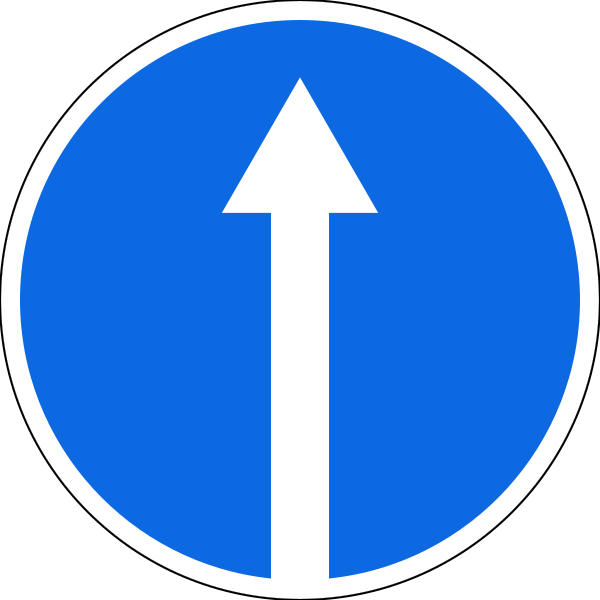
4.1.1. Straight ahead

Requires the driver to proceed only straight ahead. The sign applies to the intersection of carriageways before which it is installed; the sign does not apply to route (public transport) vehicles. A sign installed at the beginning of a section of road applies up to the nearest intersection. The sign does not prohibit turning right into a courtyard or entering other adjacent areas.

Ticket #166 — situation image

In the given situation, the driver of the car has the right to continue moving:

1 in neither direction
2 in direction B
3 In direction C
4 In direction A
Law explanation
According to subparagraph “a” of paragraph 2 of Article 29 of the Law of Georgia “On Road Traffic”, a red signal or a flashing red signal prohibits movement.

Road sign used in this ticket

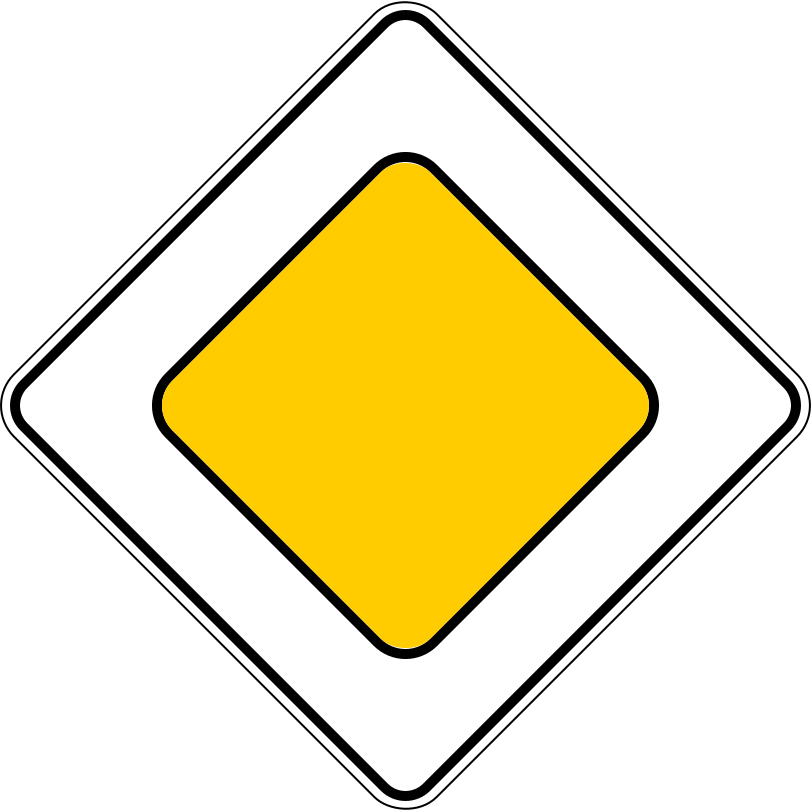
2.1. Priority road

A road on which drivers have priority when passing through unregulated intersections. The sign is installed at the beginning of the road and repeated immediately before every intersection. Sign 2.1 with plate 8.13 is installed in built-up areas before an intersection at which the main road changes direction; outside built-up areas − in advance, 150−300 m before the intersection, and before the intersection.

Ticket #167 — situation image

Does the driver of the passenger car have the right to continue moving in the direction of the arrow at this traffic light signal?

1 does not have the right
2 Has the right
Law explanation
According to paragraph 10 of Article 29 of the Law of Georgia “On Road Traffic”, green, yellow and red light signals showing an arrow/arrows have the same meaning as light signals of the corresponding colour without arrows, but they apply only to the direction(s) indicated by the arrow(s). At the same time, an arrow permitting a left turn also permits a U-turn, unless this is prohibited by the appropriate road sign or road marking. An arrow shown on the green light signal in an additional section of a traffic light has the same meaning. A switched-off light signal of an additional section of a traffic light indicates that movement in the direction regulated by this section is prohibited.

Road sign used in this ticket

2.3. Give way

The driver on this road must give way to drivers moving on the road being crossed, and where plate 8.13 is present – to drivers on the main road. Outside built-up areas, sign 2.3 is placed in advance, 150−300 m before the intersection, with plate 8.1.1 if sign 2.3 is installed before the intersection, or with plate 8.1.2 if sign 2.4 is installed before the intersection. The sign applies to the intersection of carriageways before which the corresponding sign is installed.

Ticket #168 — situation image

In the given situation, is the driver of the blue car obliged, when performing a U-turn manoeuvre in the direction of the arrow, to stop at the traffic light signal prohibiting movement located between the dividing strips?

1 is not obliged if it will not obstruct vehicles moving from the opposite direction
2 is not obliged
3 is obliged
Law explanation
According to subparagraph “e” of paragraph 3 of Article 36 of the Law of Georgia “On Road Traffic”, a driver who has entered an intersection on a permissive traffic light signal may proceed in the intended direction regardless of the prohibitive signals of the traffic lights at the exit from the intersection, provided that this does not obstruct other road users moving in the direction in which traffic is open. If, while the driver is moving through the intersection, there are “stop” lines (and/or road signs 7.16) in front of the traffic lights on the road, the driver must follow the signal of each traffic light.
Ticket #169 — situation image

In the given situation, is the driver of the blue car obliged, when performing a U-turn manoeuvre in the direction of the arrow, to stop at the traffic light signal prohibiting movement located between the dividing strips?

1 is obliged
2 is not obliged
Law explanation
According to subparagraph “e” of paragraph 3 of Article 36 of the Law of Georgia “On Road Traffic”, a driver who has entered an intersection on a permissive traffic light signal may proceed in the intended direction regardless of the prohibitive signals of the traffic lights at the exit from the intersection, provided that this does not obstruct other road users moving in the direction in which traffic is open. If, while the driver is moving through the intersection, there are “stop” lines (and/or road signs 7.16) in front of the traffic lights on the road, the driver must follow the signal of each traffic light.
Ticket #170 — situation image

In which direction can the driver of the passenger car continue moving at this traffic light signal?

1 Only straight ahead and to the left
2 in all directions
3 only straight ahead and to the right
4 Only straight ahead, to the left and in the reverse direction (U-turn)
Law explanation
According to paragraph 3 of Article 29 of the Law of Georgia “On Road Traffic”, if traffic lights are positioned above each lane on the side of the carriageway for traffic in the same direction, the effect of each traffic light extends only to the lane above which it is located. According to paragraph 10 of the same Article, green, amber and red signals on which an arrow/arrows are shown have the same meaning as the arrowless signals of the corresponding colour, but their effect extends only to the direction/directions indicated by the arrow/arrows. In addition, an arrow permitting a left turn also permits a U-turn, unless this is prohibited by the corresponding road sign or road marking. An arrow shown on the green signal in the additional section of a traffic light has the same meaning. A switched-off signal of the additional section of a traffic light indicates that movement in the direction regulated by this section is prohibited.

If the requirements of traffic light signals contradict the requirements of road signs determining priority, road users must be guided by:

1 by the requirements of the road signs that determine priority
2 by the requirements of the traffic light signals
Law explanation
According to paragraph 12 of Article 29 of the Law of Georgia "On Road Traffic", road users are obliged to comply with the requirements of the coloured light signal of a traffic light even if these requirements contradict the requirements of the road signs and markings that determine priority.

If the requirements of the traffic light signals contradict the requirements of road markings determining priority, road users must be guided by:

1 by the requirements of the road markings determining priority of passage
2 by the requirements of the traffic light signals
Law explanation
According to paragraph 12 of Article 29 of the Law of Georgia "On Road Traffic", road users are obliged to comply with the requirements of the coloured light signal of a traffic light even if these requirements contradict the requirements of the road signs and markings that determine priority.

A traffic light with two alternately flashing signals or one flashing red or yellow light signal, located on one post at the same height and directed to one side, is used:

1 in the lanes of the carriageway where the direction of traffic is reversed
2 in lanes specially designated for the movement of route vehicles
3 At level crossings, on approaches to drawbridges, ship or ferry landings, as well as at fire engine exits onto the road and in places where the road is crossed at low altitude by an aircraft flight path
Law explanation
According to Article 29(8) of the Law of Georgia "On Road Traffic", at a level crossing, at the approach to a lift bridge, at a ship or ferry landing, at a fire-engine exit onto the road and at a place where the road is crossed at low altitude by the flight path of aircraft, two alternately flashing or one flashing red or yellow signal are used, located on one post at the same height and facing one direction; of these, the red signal prohibits crossing the "Stop" line, and where there is none, going beyond the traffic light, while the yellow signal means that drivers may continue moving but must at the same time exercise particular caution. If the coloured signals are switched off, movement is permitted only when no train (locomotive, draisine) approaching the crossing is visible within the range of visibility.

Four round yellowish light signals arranged in a "T" shape may be used:

1 For regulating the movement of wheeled tractors
2 for regulating traffic in a lane specially designated for the movement of route vehicles
3 For regulating traffic at a T-junction
Law explanation
According to paragraph 5 of Article 29 of the Law of Georgia "On Road Traffic", four round yellowish light signals arranged in a "T" shape may be used to regulate traffic in a lane specially designated for route vehicles. Movement is permitted only when the lower signal and one or more upper signals are lit simultaneously, of which the left one permits movement to the left, the middle one straight ahead, and the right one to the right. If only the three upper signals are lit, movement is prohibited.

Does the driver have the right to continue moving if, when the yellow light signal comes on, he cannot stop at the "Stop" line without sudden braking?

1 does not have the right
2 Has the right
Law explanation
According to Article 29(14) of the Law of Georgia "On Road Traffic", a driver who, when the yellow light comes on, cannot stop at the places specified in paragraph 13 of this Article without sharp braking is entitled to continue moving. A pedestrian who is on the carriageway when the prohibiting light signal comes on must clear it, and if this is impossible, stop on the line separating traffic flows moving in opposite directions.
Ticket #327 — situation image

Which driver stopped the car at the prohibiting traffic light signal in compliance with the traffic rules?

1 the driver of neither car
2 the driver of the white car
3 the driver of the yellow car
Law explanation
According to Article 29(13) of the Law of Georgia "On Road Traffic", when a traffic light (other than a reversible-lane light) shows a prohibitory signal, the driver must stop at the "Stop" line (or at sign 7.16).

A flashing green traffic light signal:

1 permits movement and gives information about the presence of an unregulated intersection, a pedestrian or cyclist crossing, or an impending danger
2 permits movement and informs road users that its time is running out and the prohibiting signal will soon come on
Law explanation
According to subparagraph “f” of paragraph 2 of Article 29 of the Law of Georgia “On Road Traffic”, a flashing green light signal permits movement and informs road users that its time is running out and a prohibitory signal will soon be switched on.
Ticket #389 — situation image

The driver of the passenger car has the right to move:

1 Only in direction A
2 Only in direction C
3 in neither direction
4 only in direction B
Law explanation
According to Article 31(17) of the Law of Georgia "On Road Traffic", when turning in order to enter a carriageway with reversible traffic, the driver of a vehicle must move so that, on leaving the intersection of carriageways, he/she occupies the extreme right-hand lane. Changing to another lane is permitted only after the driver makes sure that traffic in the same direction is permitted in that lane. According to paragraph 5.10 of Chapter 5 (Special regulation signs) of Annex 1 to the same Law, road sign 5.10 "Exit onto a road with reversible traffic" indicates exit onto a road section marked with sign 5.8 "Reversible traffic". The sign is placed before every side exit. The sign may not be placed at the intersection of an exit from an adjacent area with the road if entry to that area is possible only from the road marked with sign 5.8 "Reversible traffic".

Road sign used in this ticket

2.3. Give way

The driver on this road must give way to drivers moving on the road being crossed, and where plate 8.13 is present – to drivers on the main road. Outside built-up areas, sign 2.3 is placed in advance, 150−300 m before the intersection, with plate 8.1.1 if sign 2.3 is installed before the intersection, or with plate 8.1.2 if sign 2.4 is installed before the intersection. The sign applies to the intersection of carriageways before which the corresponding sign is installed.

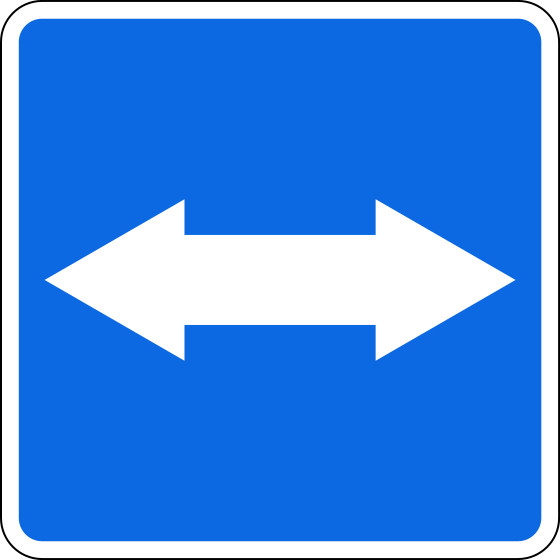
5.10. Entry to a road with reversible traffic

Indicates entry to a section of road marked with sign 5.8. The sign is installed before every side exit. The sign may be omitted at the junction of a road with an exit from an adjacent area if entry into that area is possible only from the road marked with sign 5.8.

Ticket #477 — situation image

Towards the driver of which tram does the driver of the passenger car have an obligation to give way when moving in the direction of the arrow?

1 to the drivers of both trams
2 to none of the tram drivers
3 only to the driver of the first tram
4 only to the driver of the second tram
Law explanation
According to subparagraph “e” of paragraph 3 of Article 36 of the Law of Georgia “On Road Traffic”, at a controlled junction, a driver who has entered the junction on a permissive traffic light signal may proceed in the intended direction regardless of the prohibitive signals of the traffic light at the exit from the junction, provided that this does not obstruct other road users moving in the direction in which traffic has been opened. If, while he is moving through the junction, there are “stop” lines (and/or road signs 7.16) in front of the traffic lights on the road, the driver must follow the signal of each traffic light.
Ticket #1279 — situation image

In the given situation, is the driver of the passenger car obliged, when moving in the direction of the arrow, to stop at the prohibiting light signal of the traffic light?

1 is obliged
2 is not obliged
Law explanation
According to Article 36(3)(e) of the Law of Georgia "On Road Traffic", at a controlled intersection, a driver who has entered the intersection on a permissive traffic light signal may move in the intended direction regardless of the prohibitive signals of the traffic light at the exit from the intersection, provided that this does not obstruct the movement of other road users in the direction in which traffic is open. If, while he/she is moving through the intersection, there are "Stop" lines (and/or road signs 7.16) in front of the traffic lights on the road, the driver must follow the signal of each traffic light.

What is the output of single-bucket excavators?

1 From 10 to 15,000 m³/h
2 From 30 to 2,000 m³/h
3 from 20 to 18000 m³/h
Law explanation
The output of single-bucket excavators ranges from 10 to 15000 m³/h.

What is the mass of multi-bucket excavators?

1 from 600 to 15000 tonnes
2 from 500 to 9000 tonnes
3 From 400 to 8,600 tonnes
Law explanation
The mass of multi-bucket excavators ranges from 600 to 15000 tonnes.

What is the power of single-bucket excavators?

1 Up to 10,000 kW
2 up to 50000 kV
3 up to 9200 kV
Law explanation
The power of single-bucket excavators is up to 9200 kW.

By which index is a bulldozer called special designated?

1 With index B
2 With index C
3 With index A
Law explanation
A bulldozer that is called special is designated by the index B.
Practical part

Exam routes — exactly the way the examiner drives them

60 real exam routes across 10 cities, 793 km in total. Every turn and stop on the map, with voice guidance.

  • All routes on the map
  • GPS mode on the real road
  • Practice mode with adjustable speed
  • On the web and in the app

One-off payment, no auto-renewal — by card on the Bank of Georgia secure page.

Chat with us