imecadine.ge

Warning signs

20 official tickets in this topic, with the correct answer and law explanation.

Triangular signs — advance warning of a dangerous section.

Ticket #256 — situation image

Which of the given combinations of road signs is installed outside a built-up area, 150-300 metres before an unguarded level crossing (without barrier), on the left side of the road?

1 IV
2 III
3 II
4 I
Law explanation
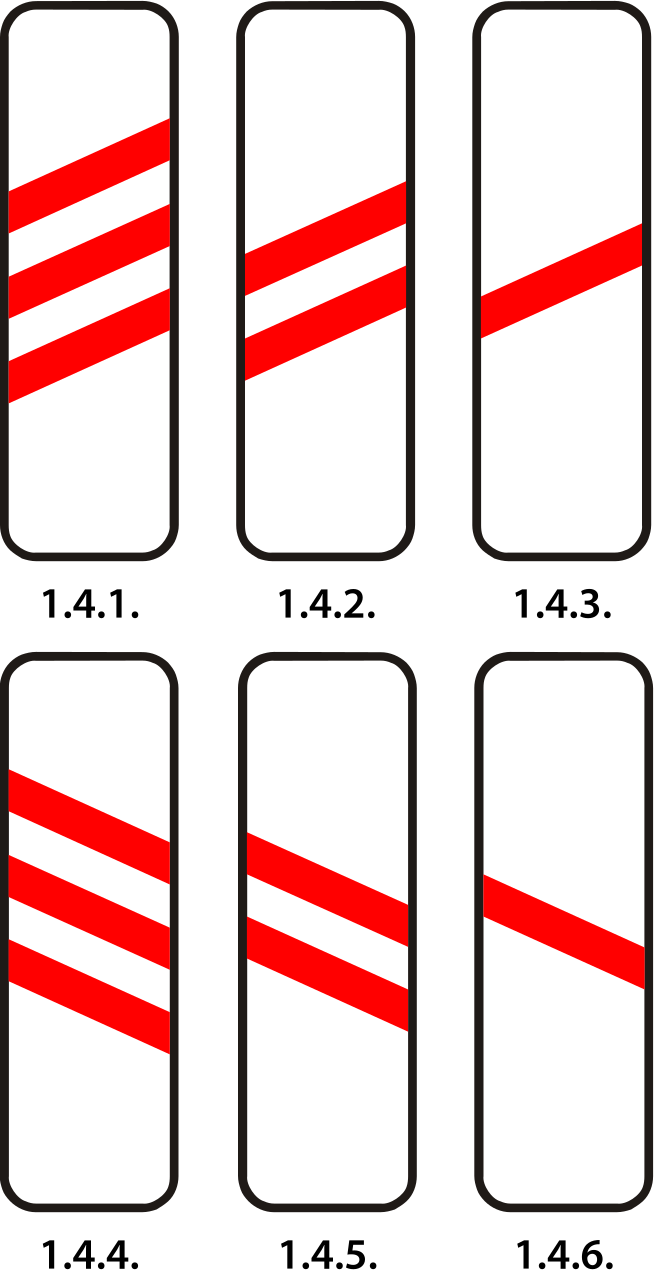
According to paragraphs 1.1, 1.2 and 1.4.1–1.4.6 of Annex 1 to the Law of Georgia "On Road Traffic", road sign: 1.1. "Level crossing with barrier" − warns of the approach to a level crossing with a barrier. 1.2. "Level crossing without barrier" − warns of the approach to a level crossing without a barrier. 1.4.1–1.4.6. "Approach to a level crossing" − gives the driver an additional warning, outside a built-up area, of the approach to a level crossing. According to subparagraphs (a) and (f) of the note to Chapter 1 of the same Annex: a) signs 1.1, 1.2, 1.5–1.34 are placed outside a built-up area at a distance of 150−300 metres before the beginning of the dangerous section, and in a built-up area at a distance of 50–100 metres. Where necessary, the signs are also placed at another distance, which is indicated on plate 8.1.1; f) signs 1.4.1−1.4.3 are placed on the right side of the road, and signs 1.4.4−1.4.6 on the left side of the road. Signs 1.4.1 and 1.4.4 are placed in the direction of travel together with the primary and repeated sign 1.1 or 1.2, signs 1.4.3 and 1.4.6 in the direction of travel together with the repeated sign 1.1 or 1.2, and signs 1.4.2 and 1.4.5 independently, at an equal distance between the primary and repeated sign 1.1 or 1.2.
Road sign used in this ticket

1.4.1.-1.4.6. Approach to a level crossing

Additionally warns the driver outside built-up areas of approaching a railway level crossing. Signs 1.4.1−1.4.3 are installed on the right side of the road, and signs 1.4.4−1.4.6 on the left side. Signs 1.4.1 and 1.4.4 are installed together with the main and repeated sign 1.1 or 1.2 in the direction of travel, signs 1.4.3 and 1.4.6 together with the repeated sign 1.1 or 1.2 in the direction of travel, and signs 1.4.2 and 1.4.5 independently, at an equal distance between the main and the repeated sign 1.1 or 1.2.

Ticket #497 — situation image

Which of the given identification signs is the "warning triangle"?

1 I
2 II
3 III
Law explanation
According to paragraph 5 of Article 52 of the Law of Georgia “On Road Traffic”, the “warning triangle” is an equilateral triangular plate with sides no less than 0.4 metres long and a red border no less than 0.05 metres wide. The central part of this triangle may be hollow or painted in a light colour. The red border must not transmit light or must have a strip with retro-reflective properties. The plate must be constructed so that it can be set up stably in a vertical position.
Ticket #602 — situation image

Which of the given road signs is installed repeatedly outside built-up areas?

1 all
2 Only I and III
3 only II and IV
4 Only I and II
Law explanation
According to subparagraph "b" of the note to Chapter 1 (Warning signs) of Annex 1 to the Law of Georgia "On Road Traffic", signs 1.2 "Level crossing without barrier" and 1.11 "Embankment exit" are repeated outside built-up areas. The second sign is placed at a distance of not less than 50 metres from the beginning of the dangerous section.

Road sign used in this ticket

1.34. Other dangers

A section of road where a danger may arise that is not covered by other warning signs. Outside built-up areas the sign is placed 150−300 m before the start of the hazardous section, in built-up areas – 50–100 m before it.

Ticket #604 — situation image

Which of the given road signs is installed repeatedly outside built-up areas?

1 all
2 none
3 Only I and III
4 only II and IV
Law explanation
According to subparagraph (b) of the note to Chapter 1 (Warning signs) of Annex 1 to the Law of Georgia "On Road Traffic", signs 1.1, 1.2, 1.10, 1.11, 1.23, 1.24 and 1.26 are repeated outside built-up areas, and signs 1.24 and 1.26 also in built-up areas. The second sign is installed at a distance of not less than 50 metres from the beginning of the dangerous section.
Ticket #606 — situation image

Which of the road signs shown is repeated in a built-up area?

1 only II and IV
2 all
3 Only I and II
4 Only II and III
Law explanation
According to subparagraph “b” of the note to Chapter 1 (Warning signs) of Annex 1 of the Law of Georgia “On Road Traffic”, signs 1.23 “Pedestrian crossing”, 1.24 “Children” and 1.26 “Roadworks” are repeated outside built-up areas, and signs 1.24 and 1.26 − in built-up areas as well. The second sign is placed at a distance of no less than 50 metres from the beginning of the hazardous section.
Ticket #607 — situation image

Which road sign warns of approaching an unguarded level crossing (without barrier)?

1 only II
2 only III
3 only I
4 Only III and IV
Law explanation
According to paragraph 1.2 of Chapter 1 (Warning signs) of Annex 1 to the Law of Georgia “On Road Traffic”, road sign 1.2 “Level crossing without barrier” − warns of approaching a level crossing without a barrier.
Ticket #610 — situation image

Which of the road signs shown warns of the approach to a level crossing without a barrier with two or more tracks?

1 only IV
2 Only I and II
3 all
4 Only II and II
Law explanation
According to paragraph 1.3.2 of Chapter 1 (Warning signs) of Annex 1 of the Law of Georgia "On Road Traffic", road sign 1.3.2 "Multi-track railway" warns of approaching an unguarded (barrier-free) level crossing of a railway with two or more tracks.

Road sign used in this ticket

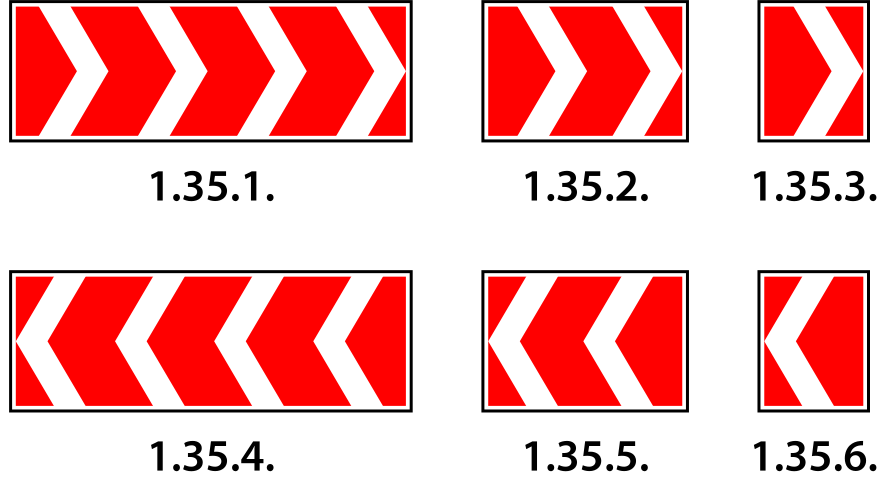
1.35.1.-1.35.6. Direction of the bend

Indicates the direction of travel on a small-radius curve of the road with limited visibility (1.35.1−1.35.3 − to the right, 1.35.4−1.35.6 − to the left), or the direction for bypassing a road works site.

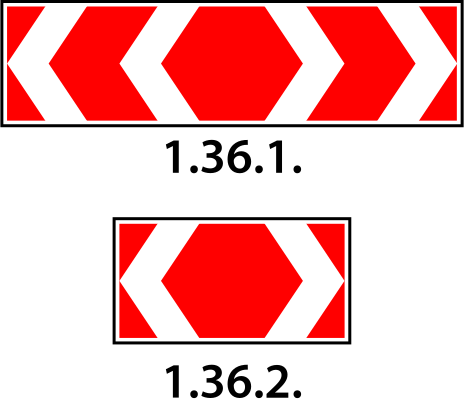
1.36.1.-1.36.2. Direction of the bend

Indicates the direction of travel (right and left) at a T-junction or road fork, or the direction for bypassing a road works site.

1.3.1. Single-track railway

Warns of approaching an unguarded (without barrier) level crossing of a single-track railway. Installed immediately before the level crossing.

1.3.2. Multi-track railway

Warns of approaching an unguarded (without barrier) level crossing of a railway with two or more tracks. Installed immediately before the level crossing.

Ticket #613 — situation image

Outside a built-up area, the given road signs are installed repeatedly (the second sign) at a distance of no less than the following from the beginning of the dangerous section:

1 over a distance of 150 metres
2 over a distance of 50 metres
3 over a distance of 100 metres
Law explanation
According to subparagraph (b) of the note to Chapter 1 (Warning signs) of Annex 1 to the Law of Georgia "On Road Traffic", signs 1.1 "Level crossing with barrier", 1.2 "Level crossing without barrier", 1.10 "Opening bridge", 1.11 "Quayside or river bank", 1.23 "Pedestrian crossing", 1.24 "Children" and 1.26 "Roadworks" are repeated outside built-up areas, and signs 1.24 and 1.26 also in built-up areas. The second sign is installed at a distance of not less than 50 metres from the beginning of the dangerous section.
Ticket #617 — situation image

Which of the given combinations of road signs is installed outside a built-up area, 150-300 metres before an unguarded level crossing (without barrier), on the right side of the road?

1 I
2 IV
3 III
4 II
Law explanation
According to subparagraphs "a", "b" and "f" of the note to Chapter 1 (Warning signs) of Annex 1 to the Law of Georgia "On Road Traffic": a) signs 1.1 "Level crossing with barrier" and 1.2 "Level crossing without barrier" are placed outside built-up areas at a distance of 150−300 metres before the beginning of the dangerous section; b) signs 1.1 "Level crossing with barrier", 1.2 "Level crossing without barrier", 1.10 "Opening bridge", 1.11 "Embankment exit", 1.23 "Pedestrian crossing", 1.24 "Children" and 1.26 "Road works" are repeated outside built-up areas, and signs 1.24 and 1.26 also in built-up areas. The second sign is placed at a distance of not less than 50 metres from the beginning of the dangerous section. f) Signs 1.4.1-1.4.3 "Approaching a level crossing" are placed on the right-hand side of the road, and signs 1.4.4-1.4.6 "Approaching a level crossing" on the left-hand side. Signs 1.4.1 and 1.4.4 are placed in the direction of travel together with the main and duplicate signs 1.1 or 1.2. Signs 1.4.3 and 1.4.6 are placed in the direction of travel with the repeated signs 1.1 or 1.2, and signs 1.4.2 and 1.4.5 independently, at equal distance between the main and repeated signs 1.1 or 1.2.
Ticket #625 — situation image

Which of the given road signs designates a dangerous bend of the road with a small radius or limited visibility?

1 III
2 II
3 I
4 IV
Law explanation
According to paragraphs 1.12.1 and 1.12.2 of Chapter 1 (Warning signs) of Annex 1 of the Law of Georgia "On Road Traffic", road signs 1.12.1, 1.12.2 "Dangerous bend" indicate a dangerous bend of the road with a small radius or limited visibility: 1.12.1 – to the right, 1.12.2 – to the left.

Road sign used in this ticket

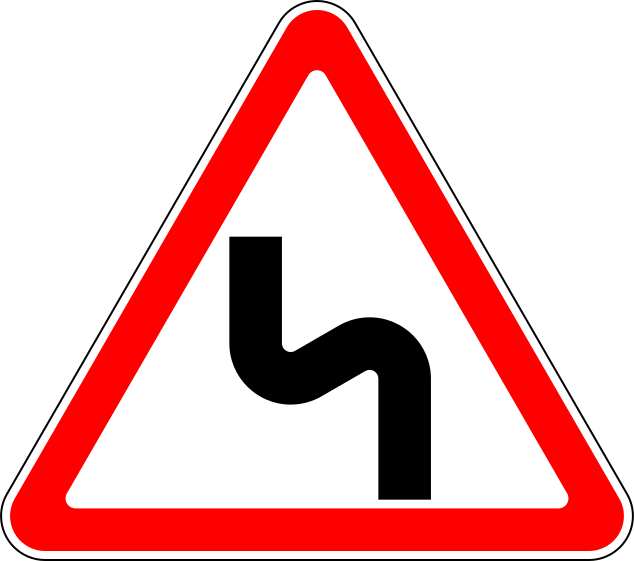
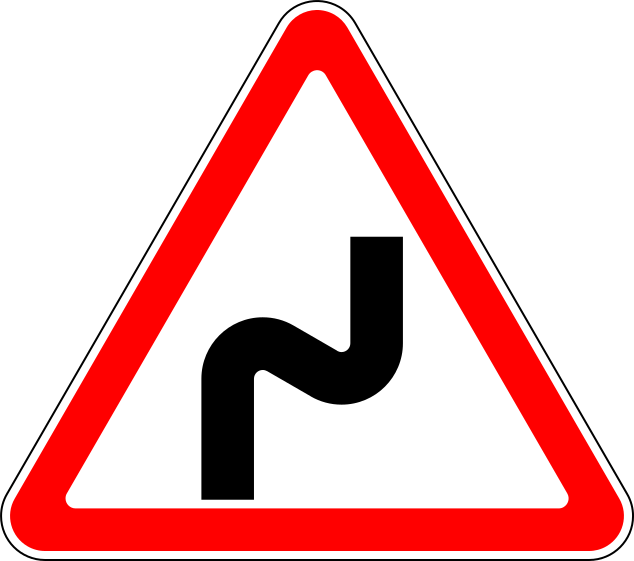
1.13.2. Dangerous bends
A section of road with dangerous bends, the first bend being to the left. Outside built-up areas the sign is placed 150−300 m before the start of the hazardous section, in built-up areas – 50–100 m before it.

3.19. No U-turn

Prohibits U-turns at the nearest intersection of carriageways. The sign does not apply to route (public transport) vehicles.

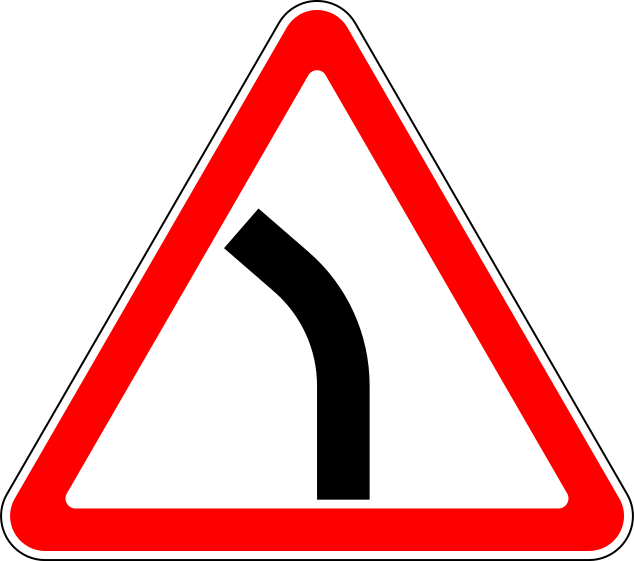
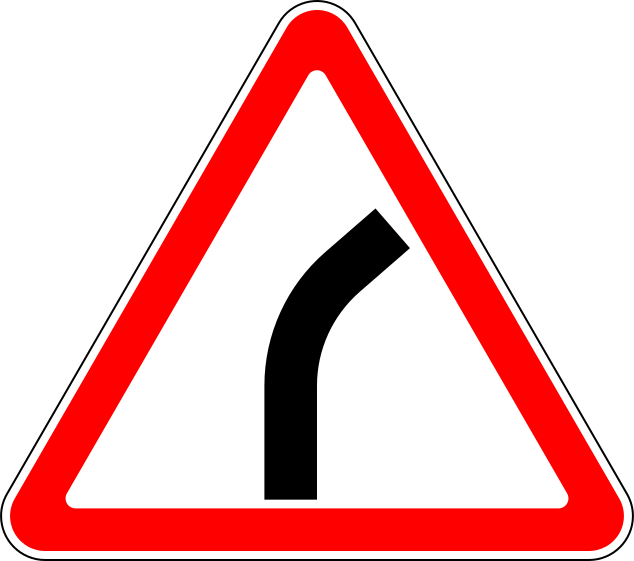
1.12.2. Dangerous bend

A dangerous bend of the road to the left with a small radius or limited visibility. Outside built-up areas the sign is placed 150−300 m before the start of the hazardous section, in built-up areas – 50–100 m before it.
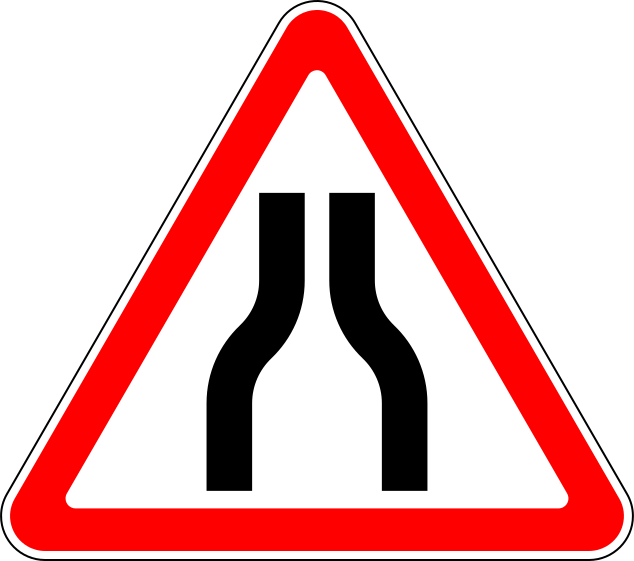
1.21.1. Road narrows

A section of road where the width of the carriageway narrows on both sides. Outside built-up areas the sign is placed 150−300 m before the start of the hazardous section, in built-up areas – 50–100 m before it.

Ticket #631 — situation image

Which of the given road signs designates a section of road whose carriageway is damaged?

1 Only II and III
2 only I and IV
3 only I
4 only III
Law explanation
According to paragraph 1.17 of Chapter 1 (Warning signs) of Annex 1 to the Law of Georgia “On Road Traffic”, road sign 1.17 “Uneven road” designates a section of road whose carriageway is damaged – undulating, with potholes, with uneven joints at bridges, etc.

Road sign used in this ticket

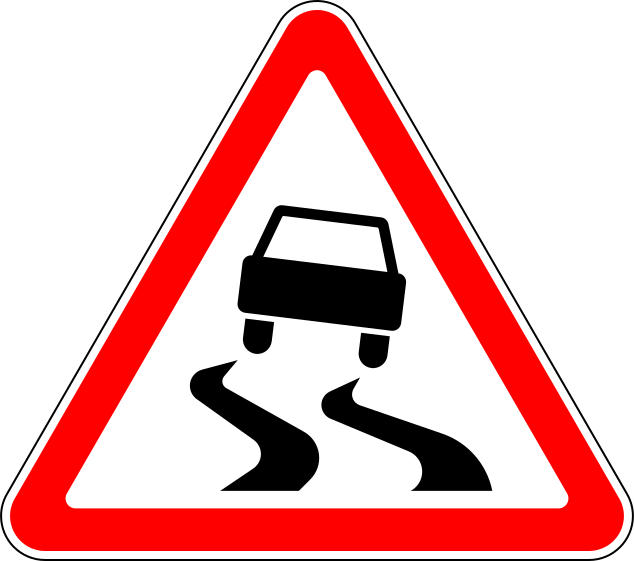
1.16. Slippery road

A slippery section of road on which the coefficient of tyre grip with the road surface is less than 0.4. Outside built-up areas the sign is placed 150−300 m before the start of the hazardous section, in built-up areas – 50–100 m before it.

Ticket #633 — situation image

Which of the road signs shown indicates a section of road where crushed stone, gravel, etc. may be thrown up from the wheels of vehicles?

1 only II
2 only II and IV
3 only IV
4 Only I and III
Law explanation
According to paragraph 1.19 of Chapter 1 (Warning signs) of Annex 1 to the Law of Georgia "On Road Traffic", road sign 1.19 "Loose chippings" indicates a section of road where crushed stone, gravel, etc. may be thrown up from the wheels of vehicles.

Road sign used in this ticket

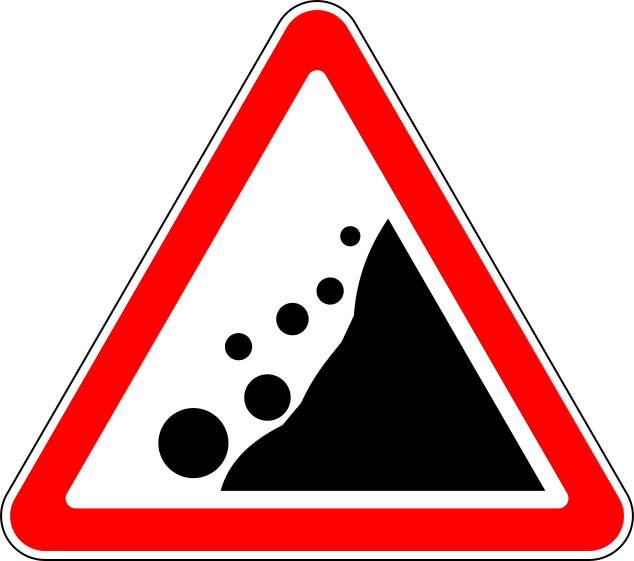
1.29. Falling rocks

A section of road whose carriageway is not protected against avalanches, landslides or falling rocks. Outside built-up areas the sign is placed 150−300 m before the start of the hazardous section, in built-up areas – 50–100 m before it.

1.16. Slippery road

A slippery section of road on which the coefficient of tyre grip with the road surface is less than 0.4. Outside built-up areas the sign is placed 150−300 m before the start of the hazardous section, in built-up areas – 50–100 m before it.

Ticket #635 — situation image

Which of the given road signs indicates a section of road where the width of the carriageway narrows on both sides?

1 I
2 III
3 IV
4 II
Law explanation
According to paragraphs 1.21.1–1.21.3 of Chapter 1 (Warning signs) of Annex 1 to the Law of Georgia "On Road Traffic", road signs 1.21.1–1.21.3 "Road narrows" indicate a section of road where the width of the carriageway narrows: 1.21.1 – on both sides; 1.21.2 – on the right; 1.21.3 – on the left.

Road sign used in this ticket

1.16. Slippery road

A slippery section of road on which the coefficient of tyre grip with the road surface is less than 0.4. Outside built-up areas the sign is placed 150−300 m before the start of the hazardous section, in built-up areas – 50–100 m before it.

1.21.1. Road narrows

A section of road where the width of the carriageway narrows on both sides. Outside built-up areas the sign is placed 150−300 m before the start of the hazardous section, in built-up areas – 50–100 m before it.

1.13.1. Dangerous bends

A section of road with dangerous bends, the first bend being to the right. Outside built-up areas the sign is placed 150−300 m before the start of the hazardous section, in built-up areas – 50–100 m before it.

Ticket #639 — situation image

Which of the given road signs warns of approaching a pedestrian crossing marked by a road sign (5.19.1 or 5.19.2) and/or road marking (1.14.1-1.14.3)?

1 IV
2 III
3 II
4 I
Law explanation
According to paragraph 1.23 of Chapter 1 (Warning signs) of Annex 1 to the Law of Georgia "On Road Traffic", road sign 1.23 "Pedestrian crossing" warns of an approaching pedestrian crossing marked with signs 5.19.1 and 5.19.2 and/or markings 1.14.1–1.14.3.

Road sign used in this ticket

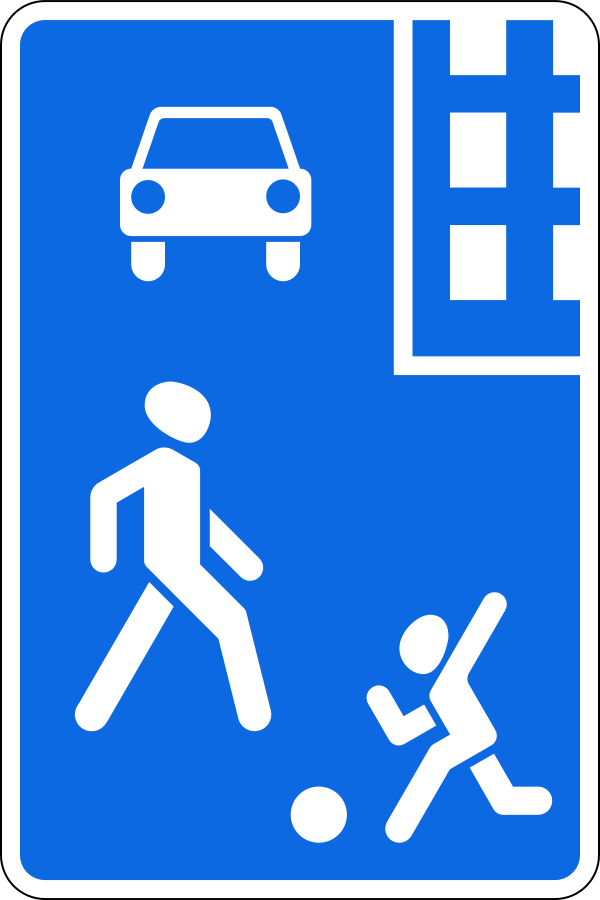
5.21. Residential zone

An area (zone) in which the traffic rules established for residential zones apply. The sign is installed at every entrance to the residential zone.

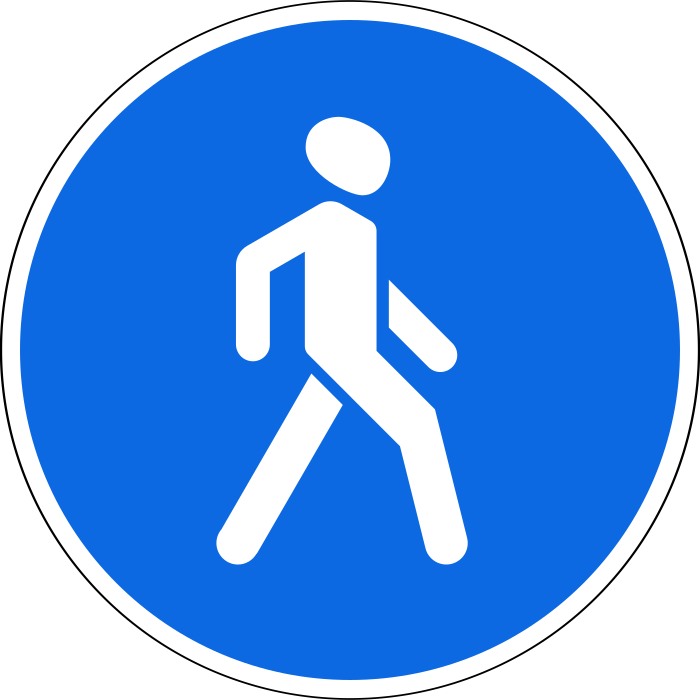
4.5. Footpath

A path separated from the road and intended for pedestrian traffic. Sign 4.5 is installed as the main sign at the beginning of the footpath, and as a repeated sign after every crossing with a road.

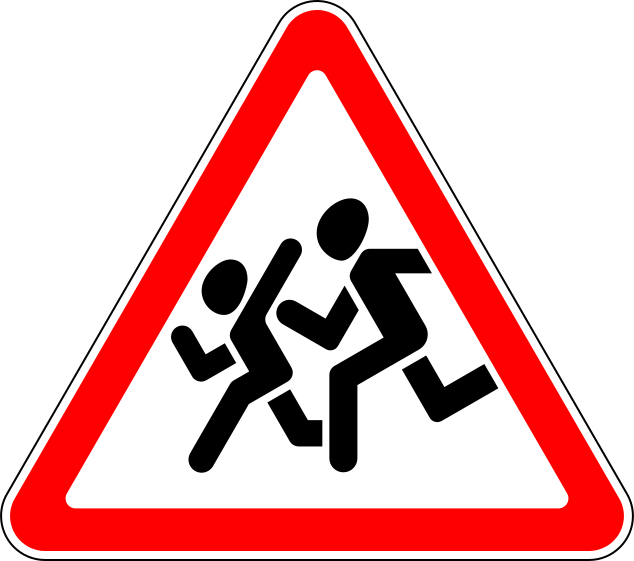
1.24. Children

Warns of a children's facility near the section of road, from which children are likely to appear on the carriageway. Outside built-up areas the sign is placed 150−300 m before the start of the hazardous section, in built-up areas – 50–100 m before it. The sign is repeated in built-up and non-built-up areas at least 50 m before the start of the hazardous section.

Ticket #641 — situation image

Which of the given road signs warns of approaching a place where a cycle path designated by road sign (4.4) crosses the carriageway?

1 II
2 III
3 IV
4 I
Law explanation
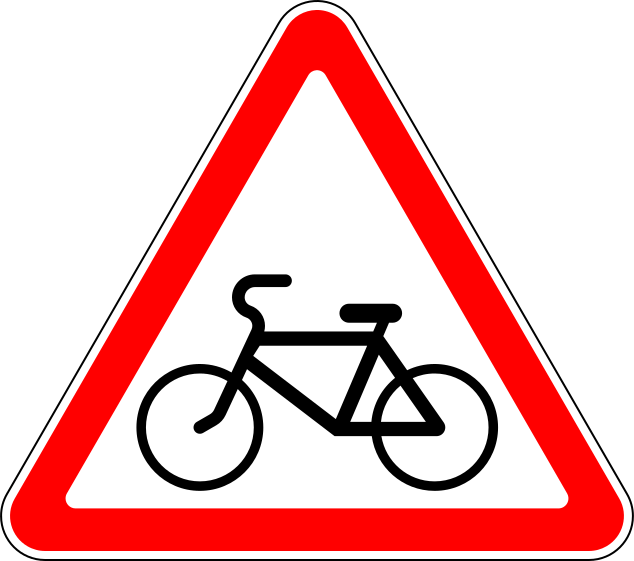
According to paragraph 1.25 of Chapter 1 (Warning signs) of Annex 1 to the Law of Georgia "On Road Traffic", road sign 1.25 "Cycle path crossing" warns of approaching a place where a cycle path marked with sign 4.4 crosses the carriageway.

Road sign used in this ticket

1.25. Cycle path crossing

Warns of approaching a place where a cycle path marked with sign 4.4 crosses the carriageway. Outside built-up areas the sign is placed 150−300 m before the start of the hazardous section, in built-up areas – 50–100 m before it.

4.4. Cycle path

A path intended for cycling that is structurally separated from other roads or other road elements. Sign 4.4 is installed as the main sign at the beginning of the cycle path, and as a repeated sign after every crossing with a road.

5.21. Residential zone

An area (zone) in which the traffic rules established for residential zones apply. The sign is installed at every entrance to the residential zone.

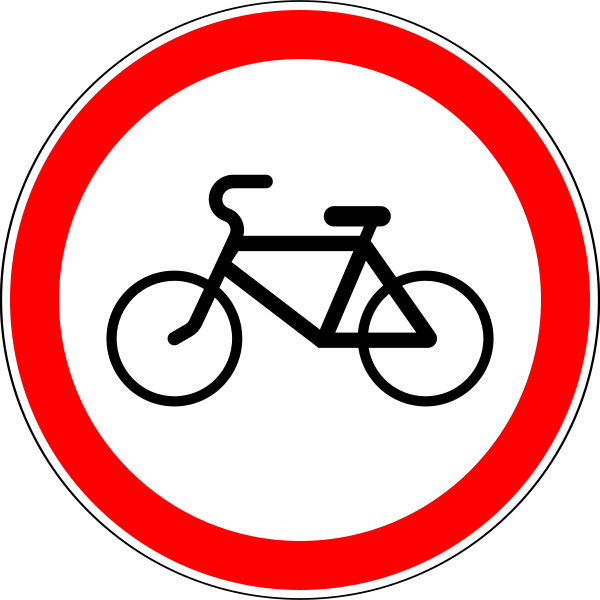
3.9. No cycling

Prohibits the movement of bicycles and mopeds. The sign indicates that traffic is prohibited in both directions.

Ticket #642 — situation image

Which of the given road signs designates a section of road on which works are being carried out?

1 II
2 I
3 III
4 IV
Law explanation
According to paragraph 1.26 of Chapter 1 (Warning signs) of Annex 1 to the Law of Georgia “On Road Traffic”, road sign 1.26 “Road works” designates a section of road within which work is being carried out.
Ticket #646 — situation image

Which of the given road signs designates a section of road on which a strong crosswind may occur?

1 III
2 I
3 II
4 IV
Law explanation
According to paragraph 1.30 of Chapter 1 (Warning signs) of Annex 1 to the Law of Georgia “On Road Traffic”, road sign 1.30 “Side wind” designates a section of road where a strong side wind may arise.

Road sign used in this ticket

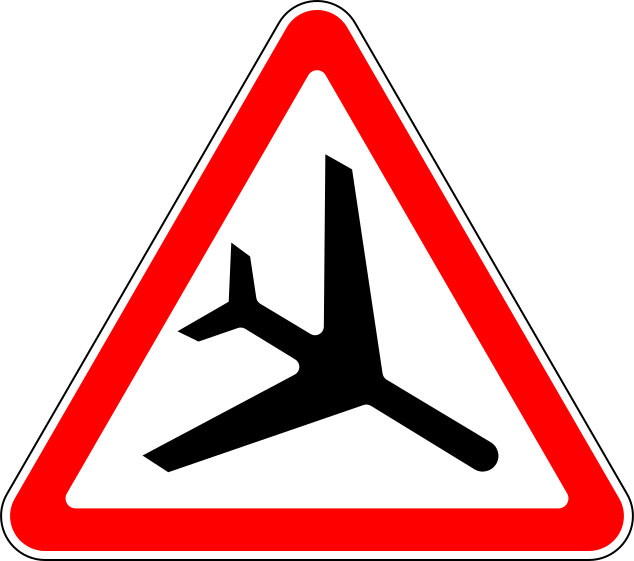
1.31. Low-flying aircraft

A section of road passing near an airfield, over which aeroplanes or helicopters fly at low altitude. Outside built-up areas the sign is placed 150−300 m before the start of the hazardous section, in built-up areas – 50–100 m before it.

1.34. Other dangers

A section of road where a danger may arise that is not covered by other warning signs. Outside built-up areas the sign is placed 150−300 m before the start of the hazardous section, in built-up areas – 50–100 m before it.

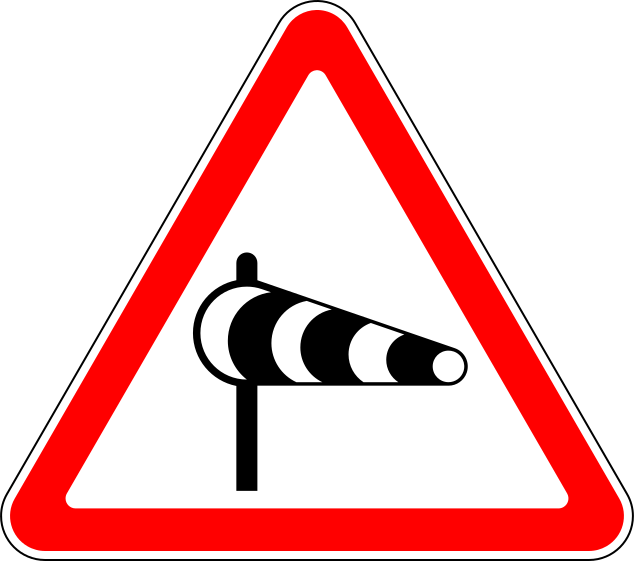
1.30. Crosswind

A section of road where strong crosswinds may occur. Outside built-up areas the sign is placed 150−300 m before the start of the hazardous section, in built-up areas – 50–100 m before it.

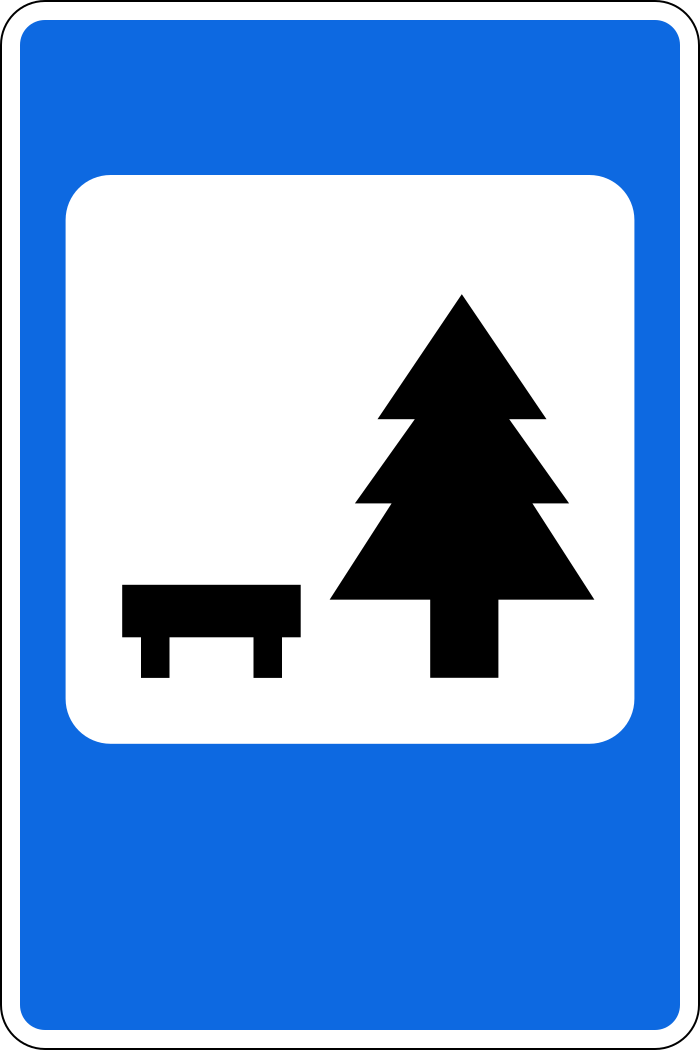
6.10. Rest area

Sign indicating a rest area.

Ticket #650 — situation image

Which of the given road signs indicates a section of road where a kind of danger may arise that is not specified by other warning signs?

1 IV
2 III
3 II
4 I
Law explanation
According to paragraph 1.34 of Chapter 1 (Warning signs) of Annex 1 to the Law of Georgia "On Road Traffic", road sign 1.34 "Other dangers" indicates a section of road where a danger may arise that is not covered by other warning signs.

Road sign used in this ticket

1.12.1. Dangerous bend

A dangerous bend of the road to the right with a small radius or limited visibility. Outside built-up areas the sign is placed 150−300 m before the start of the hazardous section, in built-up areas – 50–100 m before it.

1.34. Other dangers

A section of road where a danger may arise that is not covered by other warning signs. Outside built-up areas the sign is placed 150−300 m before the start of the hazardous section, in built-up areas – 50–100 m before it.

3.1. No entry

Prohibits the entry of all vehicles in the given direction. The sign does not apply to route (public transport) vehicles.

Ticket #653 — situation image

Which of the given road signs designates a road on which the driver is granted priority when passing through an uncontrolled intersection?

1 II
2 III
3 IV
4 I
Law explanation
According to paragraph 2.1 of Chapter 2 (Priority signs) of Annex 1 to the Law of Georgia "On Road Traffic", road sign 2.1 "Priority road" indicates a road on which the driver is given priority when passing through uncontrolled intersections. The sign is installed at the beginning of the road and is repeated immediately before each intersection. Sign 2.1 with plate 8.13 is installed in a built-up area before an intersection at which the priority road changes direction, and outside a built-up area – in advance, at a distance of 150–300 metres before the intersection, and before the intersection.

Road sign used in this ticket

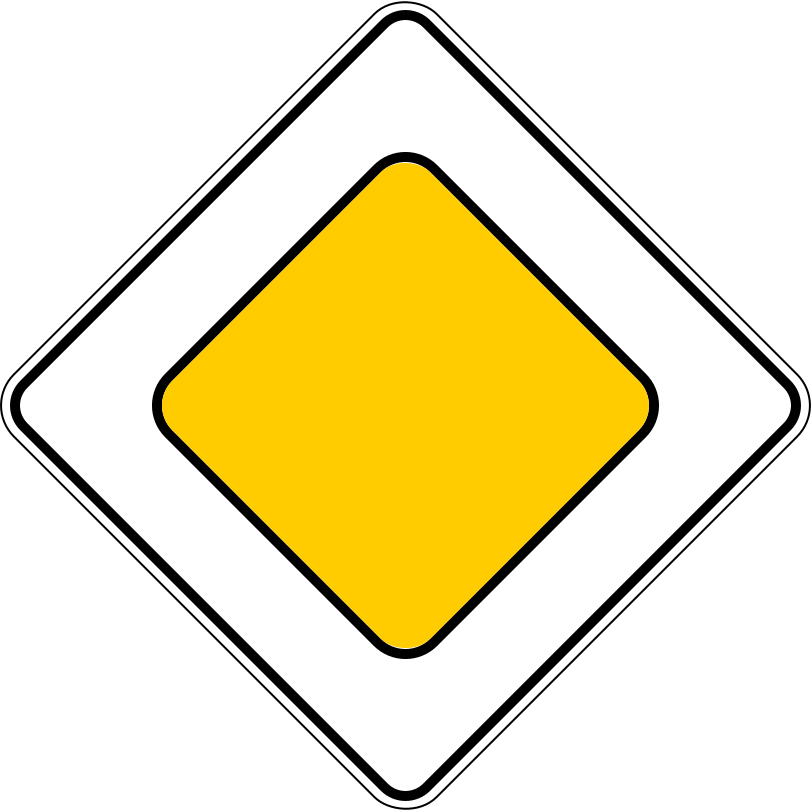
2.1. Priority road

A road on which drivers have priority when passing through unregulated intersections. The sign is installed at the beginning of the road and repeated immediately before every intersection. Sign 2.1 with plate 8.13 is installed in built-up areas before an intersection at which the main road changes direction; outside built-up areas − in advance, 150−300 m before the intersection, and before the intersection.

2.5. Priority to oncoming traffic

Prohibits the driver from entering a narrow section of road if this would hinder oncoming traffic. The driver must give way to oncoming vehicles that are at the opposite approach or on the narrow section of road. The sign is installed immediately before the narrow section of road, or in advance with plate 8.1.1.

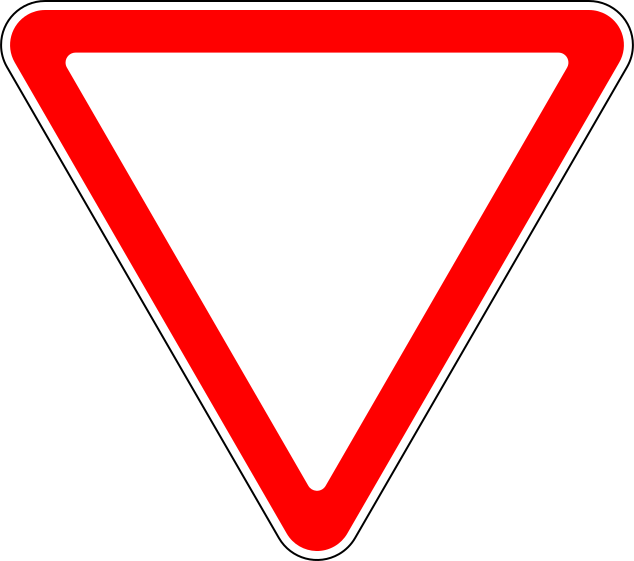
2.3. Give way

The driver on this road must give way to drivers moving on the road being crossed, and where plate 8.13 is present – to drivers on the main road. Outside built-up areas, sign 2.3 is placed in advance, 150−300 m before the intersection, with plate 8.1.1 if sign 2.3 is installed before the intersection, or with plate 8.1.2 if sign 2.4 is installed before the intersection. The sign applies to the intersection of carriageways before which the corresponding sign is installed.

A horse-drawn vehicle on the road must be driven:

1 on the carriageway against the direction of traffic
2 to the cart driver, at their discretion, on any section of the road
3 at the edge of the carriageway, at the closest distance, or on the shoulder (if this does not obstruct pedestrians), in single file, in accordance with the direction of traffic
Law explanation
According to Article 22(2) of the Law of Georgia "On Road Traffic", animals being driven on the road, as well as horse-drawn vehicles, must be driven as close as possible to the edge of the carriageway or on the verge (if this does not obstruct pedestrians), in single file, in the direction of traffic.
Practical part

Exam routes — exactly the way the examiner drives them

60 real exam routes across 10 cities, 793 km in total. Every turn and stop on the map, with voice guidance.

  • All routes on the map
  • GPS mode on the real road
  • Practice mode with adjustable speed
  • On the web and in the app

One-off payment, no auto-renewal — by card on the Bank of Georgia secure page.

Chat with us