Law explanation
Road sign used in this ticket
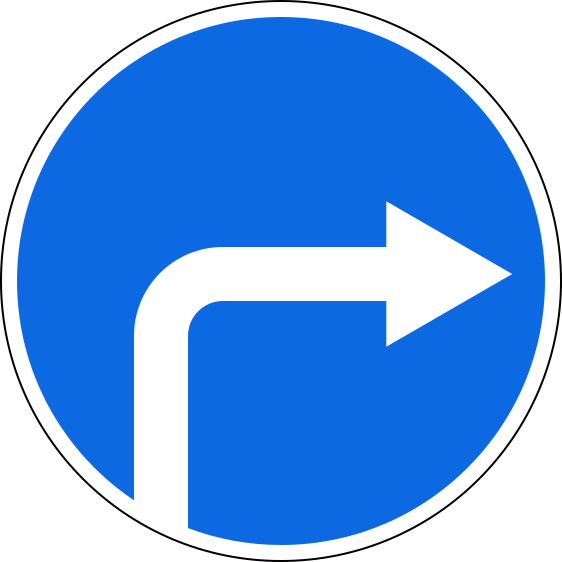
Requires the driver to proceed only to the right. The sign applies to the intersection of carriageways before which it is installed; the sign does not apply to route (public transport) vehicles.
24 official tickets in this topic, with the correct answer and law explanation.
Blue round signs — required direction and mode.
Road sign used in this ticket
Requires the driver to proceed only to the right. The sign applies to the intersection of carriageways before which it is installed; the sign does not apply to route (public transport) vehicles.
In the given situation, the driver of the car that has passed the turn, in order to enter the right turn:
Road sign used in this ticket
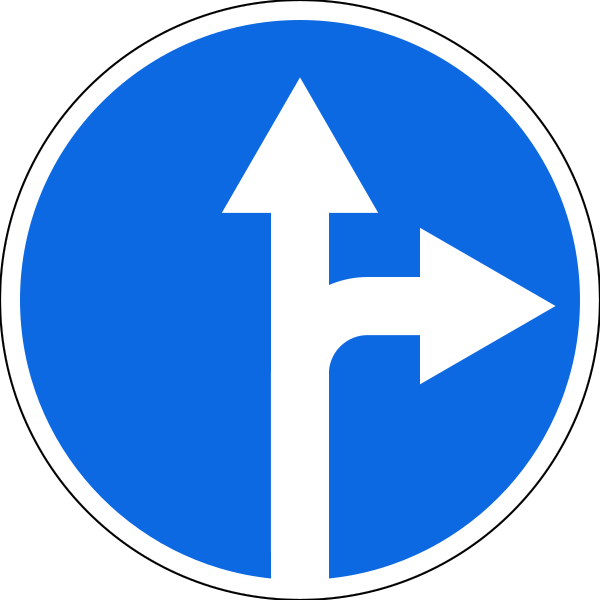
Requires the driver to proceed only straight ahead or to the right. The sign applies to the intersection of carriageways before which it is installed; the sign does not apply to route (public transport) vehicles.
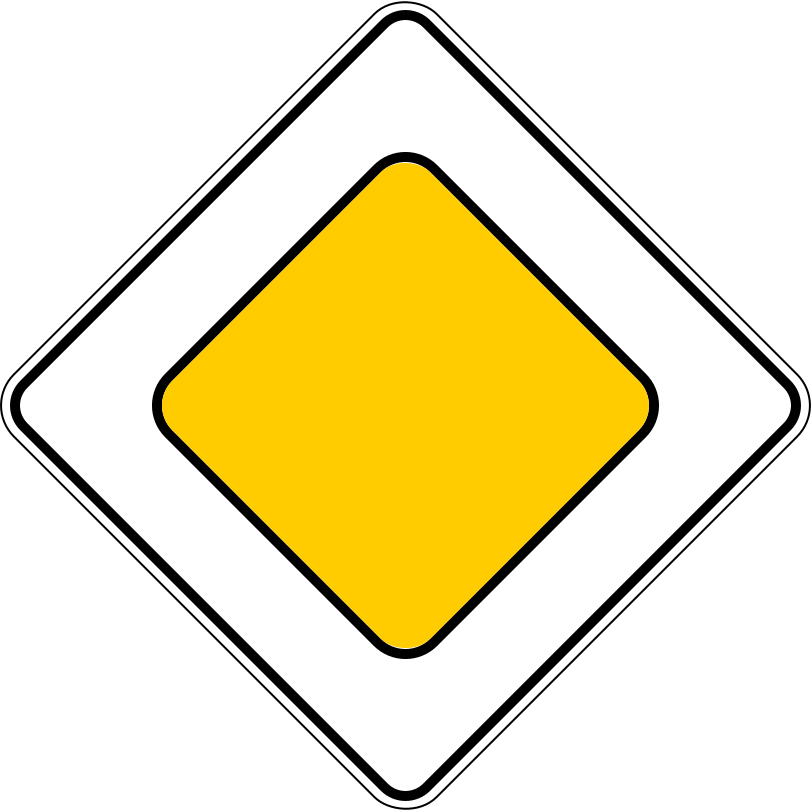
A road on which drivers have priority when passing through unregulated intersections. The sign is installed at the beginning of the road and repeated immediately before every intersection. Sign 2.1 with plate 8.13 is installed in built-up areas before an intersection at which the main road changes direction; outside built-up areas − in advance, 150−300 m before the intersection, and before the intersection.
Road sign used in this ticket
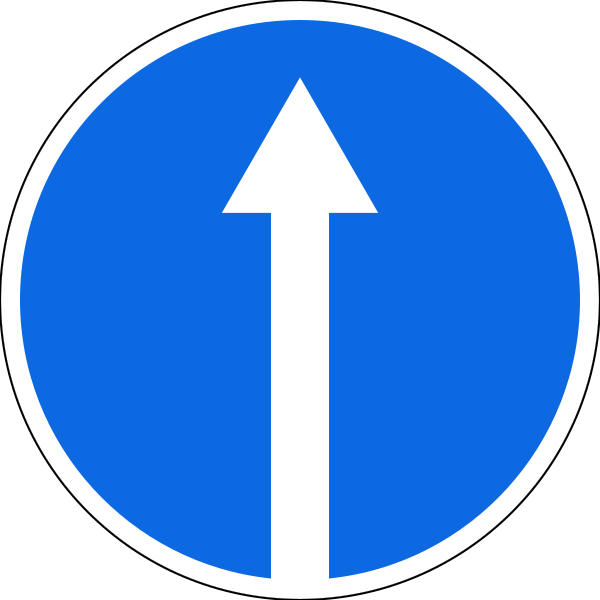
Requires the driver to proceed only straight ahead. The sign applies to the intersection of carriageways before which it is installed; the sign does not apply to route (public transport) vehicles. A sign installed at the beginning of a section of road applies up to the nearest intersection. The sign does not prohibit turning right into a courtyard or entering other adjacent areas.
Road sign used in this ticket
Requires the driver to proceed only to the right. The sign applies to the intersection of carriageways before which it is installed; the sign does not apply to route (public transport) vehicles.
Which of the given road signs indicates that a dividing strip, safety island or any obstacle may be passed only on the right?
Road sign used in this ticket
Requires the driver to proceed only to the right. The sign applies to the intersection of carriageways before which it is installed; the sign does not apply to route (public transport) vehicles.
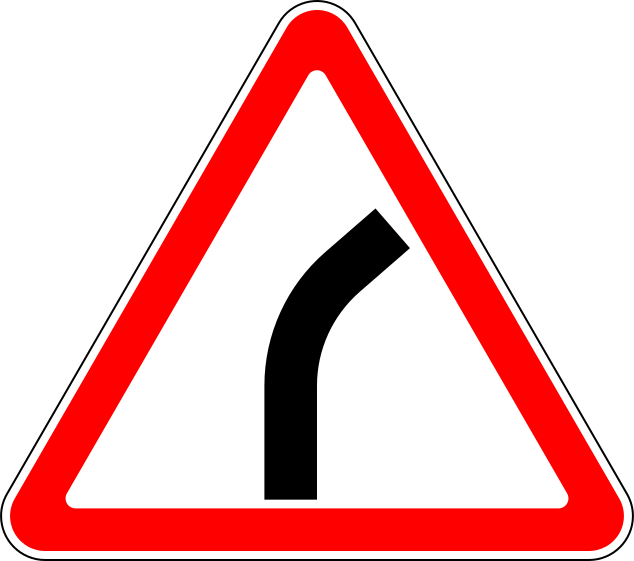
A dangerous bend of the road to the right with a small radius or limited visibility. Outside built-up areas the sign is placed 150−300 m before the start of the hazardous section, in built-up areas – 50–100 m before it.
Indicates that a dividing strip, traffic island or other obstacle may be passed only on the right.
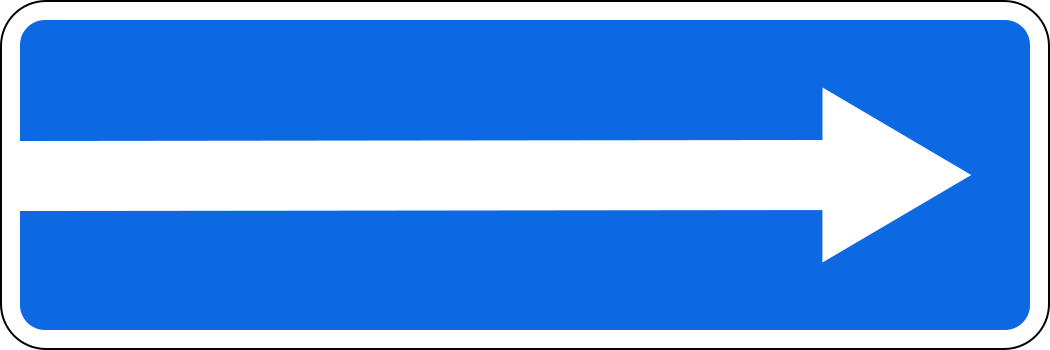
Indicates entry to a one-way road or carriageway. The signs are installed before every side entrance. The signs may be omitted at the junction of a road with an exit from an adjacent area if entry into that area is possible only from the road marked with sign 5.5.
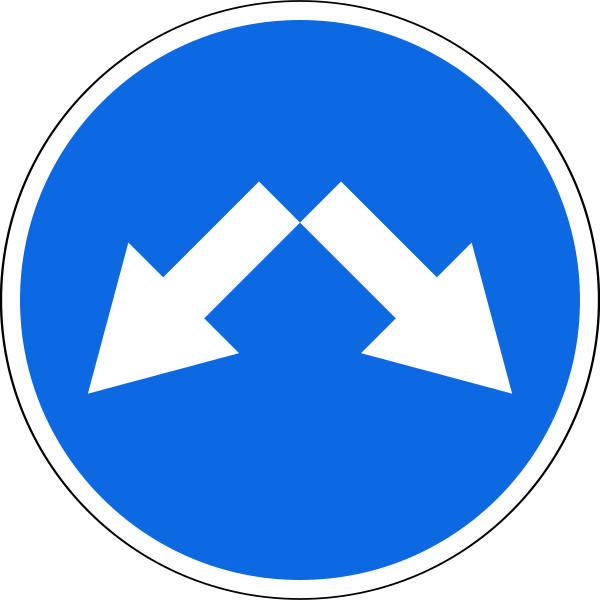
Which of the given road signs indicates the direction for passing around a dividing strip, a safety island or any obstacle on the right or on the left?
Road sign used in this ticket
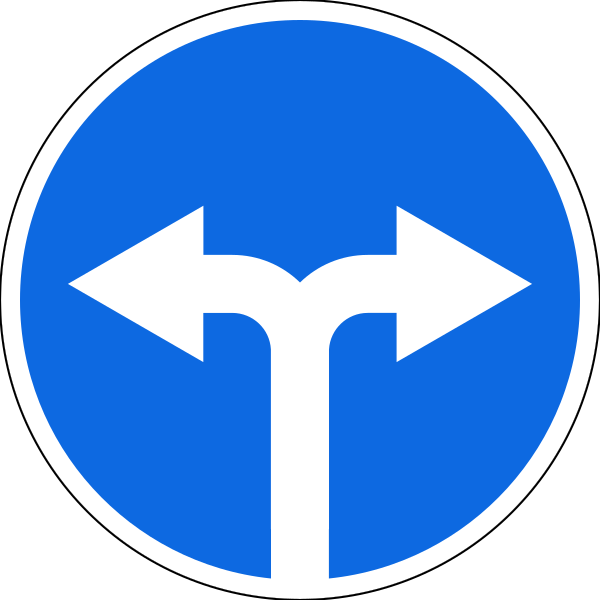
Requires the driver to proceed only to the right or to the left. The sign also permits U-turns. The sign applies to the intersection of carriageways before which it is installed; the sign does not apply to route (public transport) vehicles.
Indicates entry to a section of road marked with sign 5.8. The sign is installed before every side exit. The sign may be omitted at the junction of a road with an exit from an adjacent area if entry into that area is possible only from the road marked with sign 5.8.
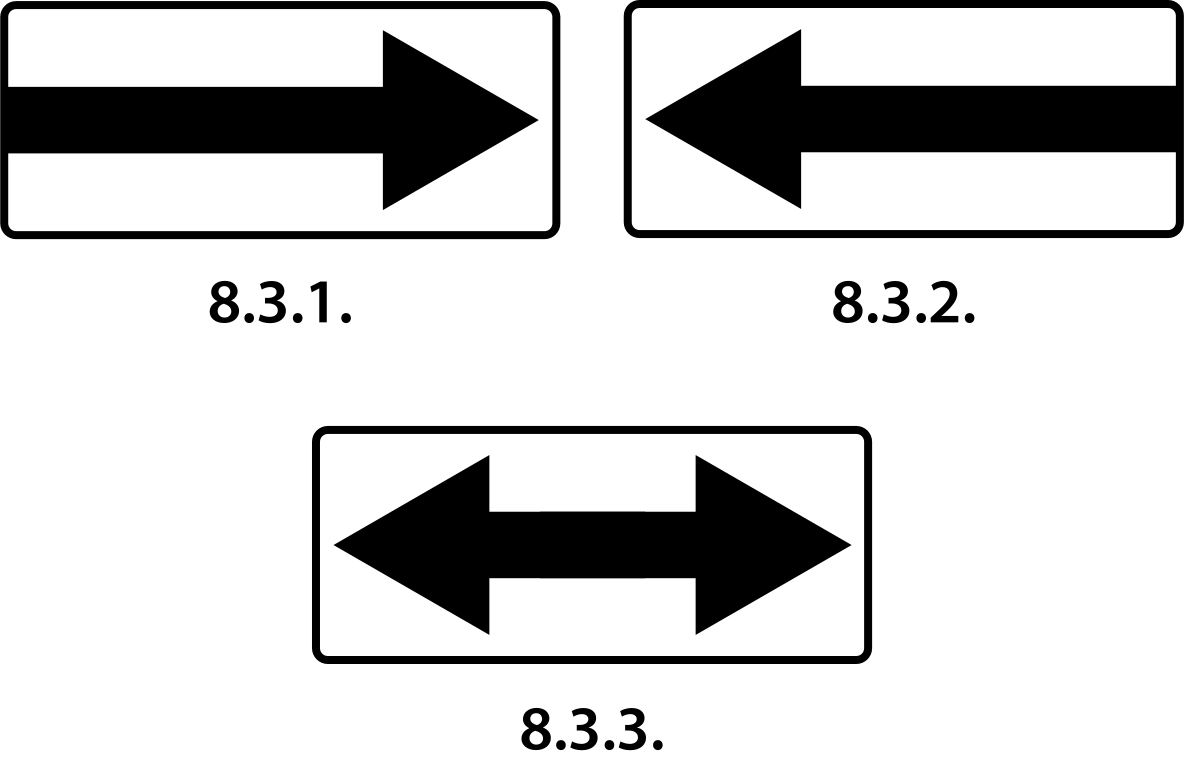
Indicates the direction of operation of a sign installed before an intersection, or the direction of travel towards a designated object located directly by the road.
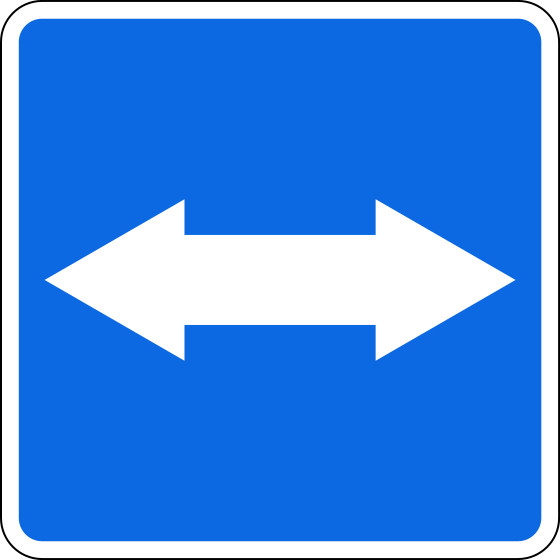
Indicates that a dividing strip, traffic island or other obstacle may be passed on the right or on the left.
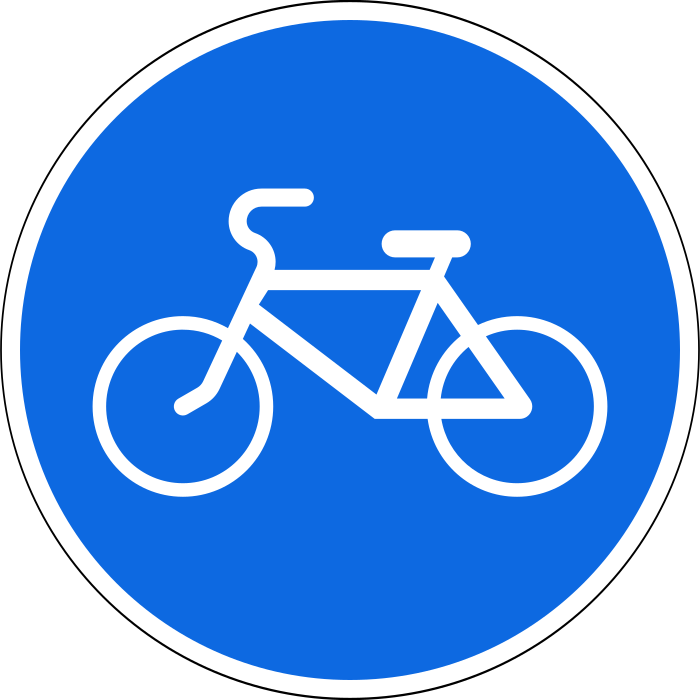
Which of the given road signs designates a path intended for cycling that is structurally separated from another road or from other elements of the road?
Road sign used in this ticket
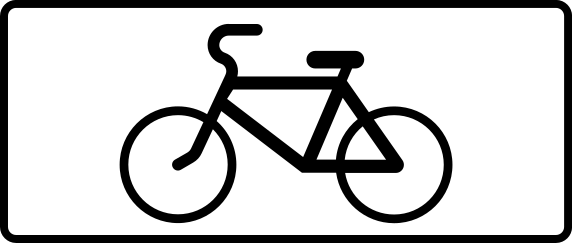
Indicates the type of vehicle to which the sign applies.
A path intended for cycling that is structurally separated from other roads or other road elements. Sign 4.4 is installed as the main sign at the beginning of the cycle path, and as a repeated sign after every crossing with a road.
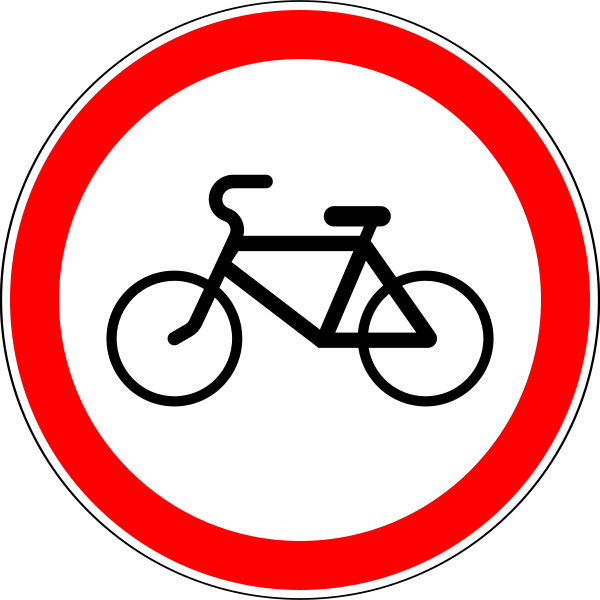
Prohibits the movement of bicycles and mopeds. The sign indicates that traffic is prohibited in both directions.
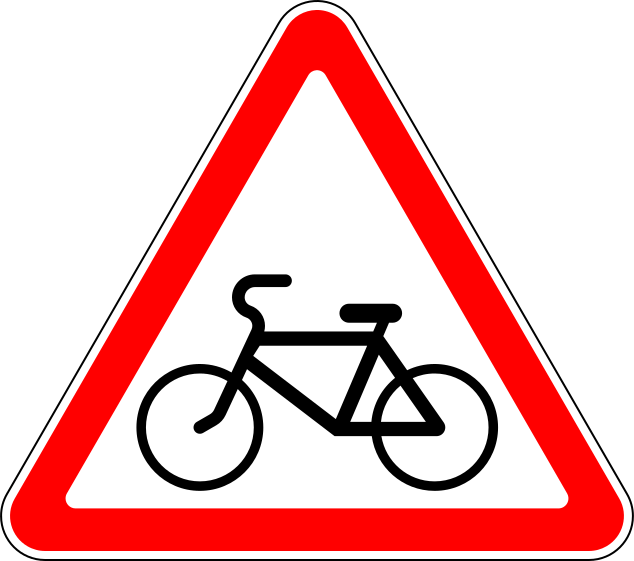
Warns of approaching a place where a cycle path marked with sign 4.4 crosses the carriageway. Outside built-up areas the sign is placed 150−300 m before the start of the hazardous section, in built-up areas – 50–100 m before it.
Road sign used in this ticket
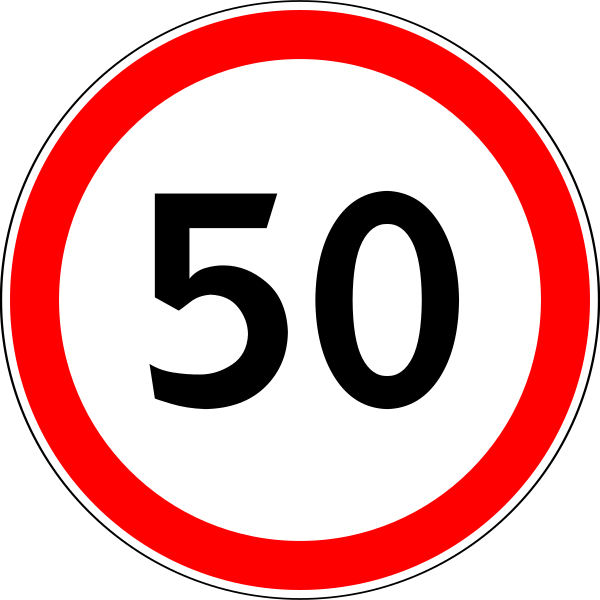
Prohibits driving at a speed (km/h) exceeding that shown on the sign. The sign applies from the place where it is installed to the nearest intersection behind it, and in a built-up area with no intersection – to the end of the built-up area. The sign's effect is also not interrupted at exits from adjacent areas or at intersections (junctions) with field, forest and other minor roads before which no corresponding sign is installed. Sign 3.24 installed before a built-up area marked with signs 5.23.1 and 5.23.2 applies up to signs 5.23.1 and 5.23.2, respectively, that mark the built-up area.
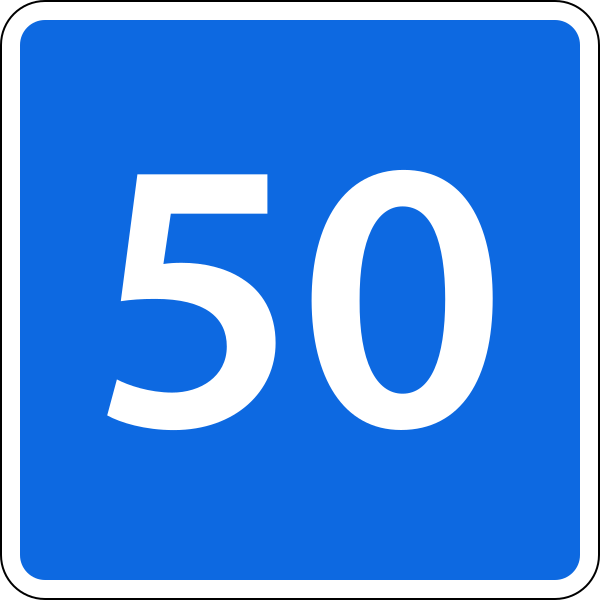
Indicates the speed at which it is recommended to travel on the given section of road. The sign is installed at the beginning of the road. The sign applies up to the nearest intersection, and when used with a warning sign − over the entire length of the hazardous section.
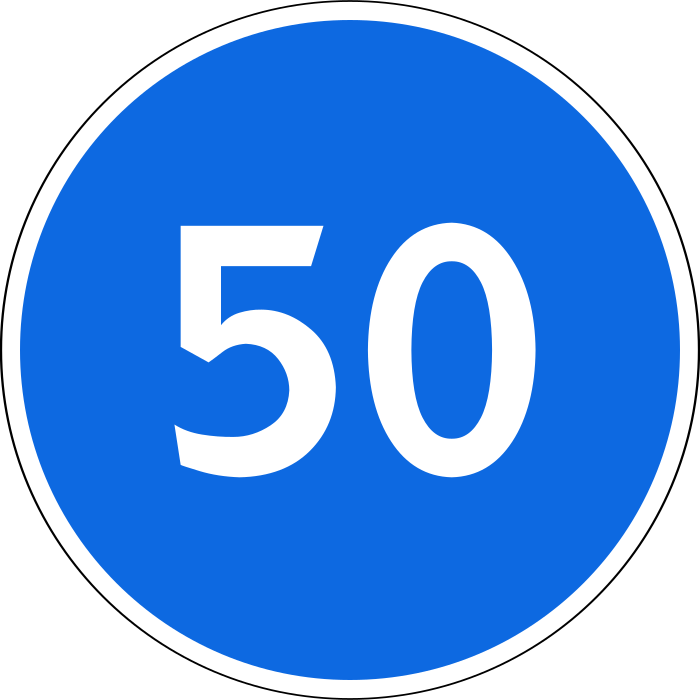
Sets the minimum speed of travel on the road. The sign applies from the place where it is installed to the nearest intersection behind it, and in a built-up area with no intersection − to the end of the built-up area.
The driver of which car will violate the traffic rules when moving in the direction of the arrow, if they are entering a courtyard area?
Road sign used in this ticket
Requires the driver to proceed only straight ahead. The sign applies to the intersection of carriageways before which it is installed; the sign does not apply to route (public transport) vehicles. A sign installed at the beginning of a section of road applies up to the nearest intersection. The sign does not prohibit turning right into a courtyard or entering other adjacent areas.
Requires the driver to proceed only straight ahead or to the right. The sign applies to the intersection of carriageways before which it is installed; the sign does not apply to route (public transport) vehicles.
A road on which drivers have priority when passing through unregulated intersections. The sign is installed at the beginning of the road and repeated immediately before every intersection. Sign 2.1 with plate 8.13 is installed in built-up areas before an intersection at which the main road changes direction; outside built-up areas − in advance, 150−300 m before the intersection, and before the intersection.
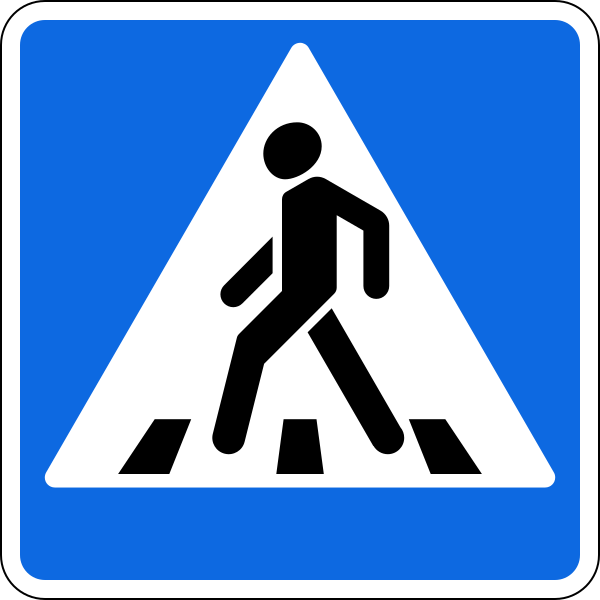
A place on the road designated as a pedestrian crossing. The sign is installed on the right side of the road. If marking 1.14 is absent at the crossing, the sign is installed at the near boundary of the crossing.
Road sign used in this ticket
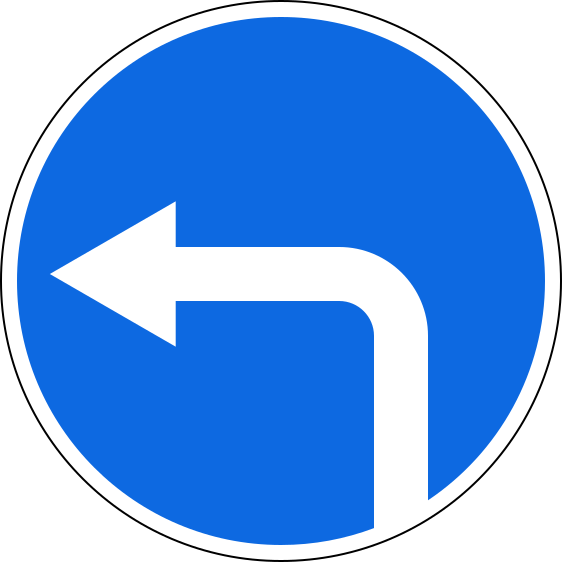
Requires the driver to proceed only to the left. The sign also permits U-turns. The sign applies to the intersection of carriageways before which it is installed; the sign does not apply to route (public transport) vehicles.
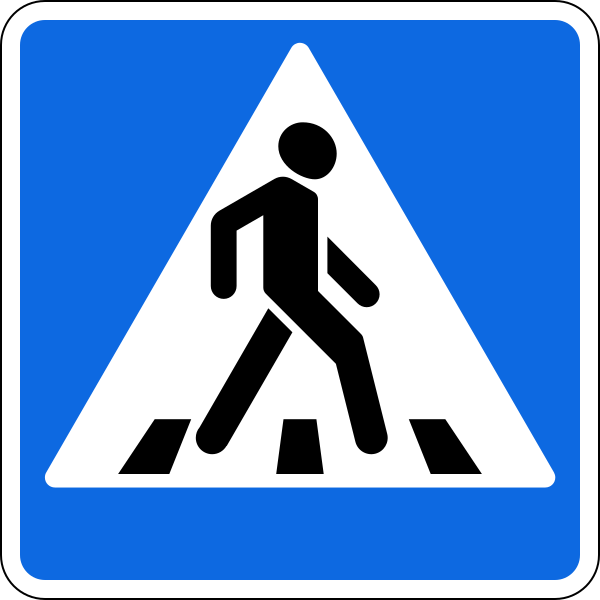
A place on the road designated as a pedestrian crossing. The sign is installed on the left side of the road. If marking 1.14 is absent at the crossing, the sign is installed at the far boundary of the crossing.
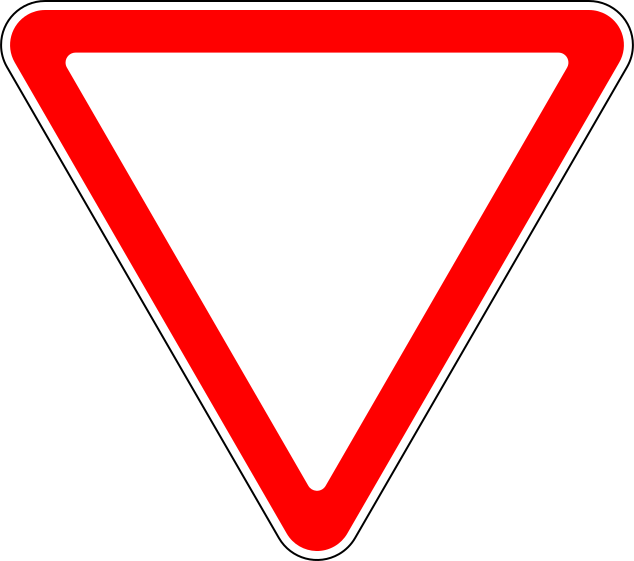
The driver on this road must give way to drivers moving on the road being crossed, and where plate 8.13 is present – to drivers on the main road. Outside built-up areas, sign 2.3 is placed in advance, 150−300 m before the intersection, with plate 8.1.1 if sign 2.3 is installed before the intersection, or with plate 8.1.2 if sign 2.4 is installed before the intersection. The sign applies to the intersection of carriageways before which the corresponding sign is installed.
In the given situation, is the driver of the passenger car prohibited from making a U-turn in the direction of the arrow?
Road sign used in this ticket
The driver on this road must give way to drivers moving on the road being crossed, and where plate 8.13 is present – to drivers on the main road. Outside built-up areas, sign 2.3 is placed in advance, 150−300 m before the intersection, with plate 8.1.1 if sign 2.3 is installed before the intersection, or with plate 8.1.2 if sign 2.4 is installed before the intersection. The sign applies to the intersection of carriageways before which the corresponding sign is installed.
Requires the driver to proceed only straight ahead or to the right. The sign applies to the intersection of carriageways before which it is installed; the sign does not apply to route (public transport) vehicles.
Road sign used in this ticket
The driver on this road must give way to drivers moving on the road being crossed, and where plate 8.13 is present – to drivers on the main road. Outside built-up areas, sign 2.3 is placed in advance, 150−300 m before the intersection, with plate 8.1.1 if sign 2.3 is installed before the intersection, or with plate 8.1.2 if sign 2.4 is installed before the intersection. The sign applies to the intersection of carriageways before which the corresponding sign is installed.
Requires the driver to proceed only to the right or to the left. The sign also permits U-turns. The sign applies to the intersection of carriageways before which it is installed; the sign does not apply to route (public transport) vehicles.
Road sign used in this ticket
Permits movement in the directions shown by the arrows at an intersection where roundabout (circular) traffic is organised.
Prohibits the movement of all types of vehicles. The sign indicates that traffic is prohibited in both directions. The sign does not apply to route (public transport) vehicles. The sign does not apply to vehicles serving an enterprise located in the designated zone, or serving or belonging to persons who live or work in that zone. In such cases the vehicle must enter and leave the zone at the intersection nearest to its destination. The sign does not apply to vehicles driven by a person with a significant or severe disability status, or to vehicles carrying such persons.
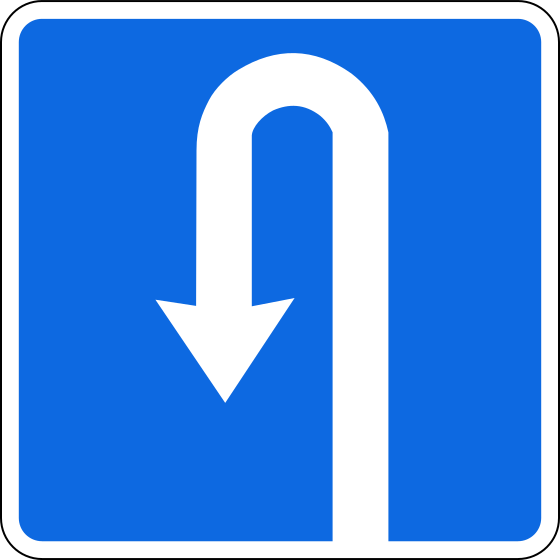
Indicates a place for making a U-turn. The sign is installed before or above the U-turn place, or in advance with plate 8.1.1. The sign does not permit turning left.
Which of the given road signs does not apply from the place where the sign is installed to the nearest intersection after it?
Road sign used in this ticket
Requires the driver to proceed only straight ahead. The sign applies to the intersection of carriageways before which it is installed; the sign does not apply to route (public transport) vehicles. A sign installed at the beginning of a section of road applies up to the nearest intersection. The sign does not prohibit turning right into a courtyard or entering other adjacent areas.
Indicates the speed at which it is recommended to travel on the given section of road. The sign is installed at the beginning of the road. The sign applies up to the nearest intersection, and when used with a warning sign − over the entire length of the hazardous section.
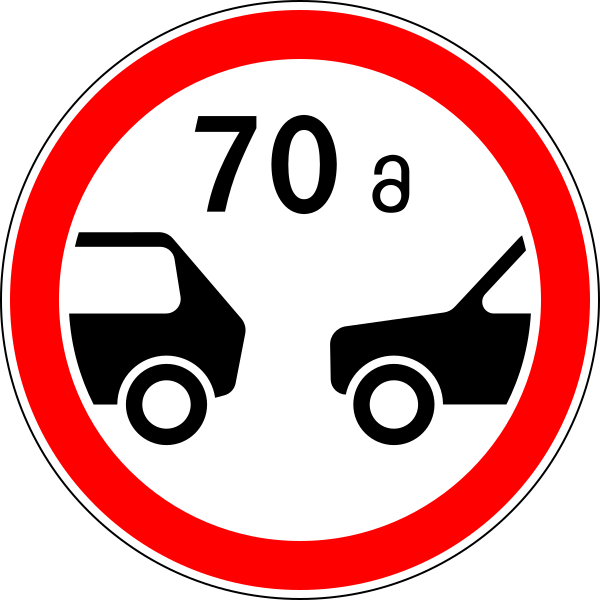
Prohibits vehicles from travelling at a distance between them shorter than that shown on the sign. The sign applies from the place where it is installed to the nearest intersection behind it, and in a built-up area with no intersection – to the end of the built-up area. The sign's effect is also not interrupted at exits from adjacent areas or at intersections (junctions) with field, forest and other minor roads before which no corresponding sign is installed.
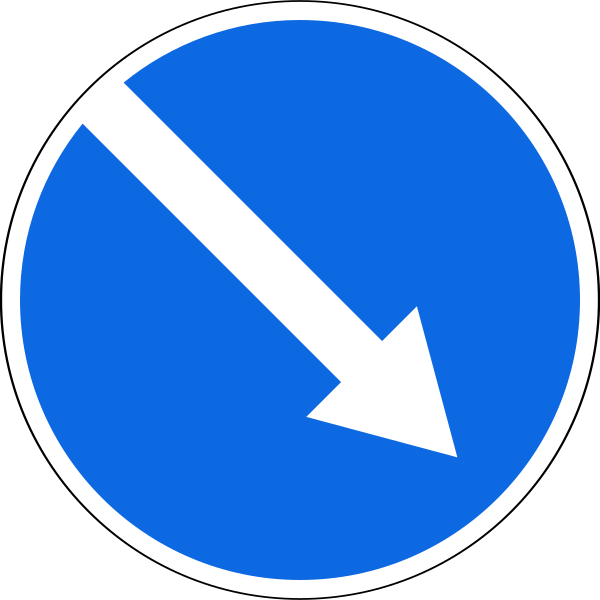
Indicates that a dividing strip, traffic island or other obstacle may be passed only on the right.
If the designation of a pneumatic tyre model is 21.0 – 25.0, what does the first number indicate?
To which group do scrapers belong?
The type of soil cutting is:
60 real exam routes across 10 cities, 793 km in total. Every turn and stop on the map, with voice guidance.
One-off payment, no auto-renewal — by card on the Bank of Georgia secure page.