imecadine.ge

Speed

17 official tickets in this topic, with the correct answer and law explanation.

Permitted speed in and outside built-up areas and on motorways.

Ticket #248 — situation image

At what maximum speed is the driver of a category "B" towing car entitled to continue moving in a built-up area on this section of the road?

1 At a speed of 70 km/h
2 at a speed of 50 km/h
3 At a speed of 60 km/h
4 At a speed of 90 km/h
Law explanation
According to Article 33(8)(d) of the Law of Georgia "On Road Traffic", unless otherwise established by this Law, in built-up or non-built-up areas a power-driven vehicle that is towing another power-driven vehicle is permitted to travel at a speed not exceeding 50 km/h.
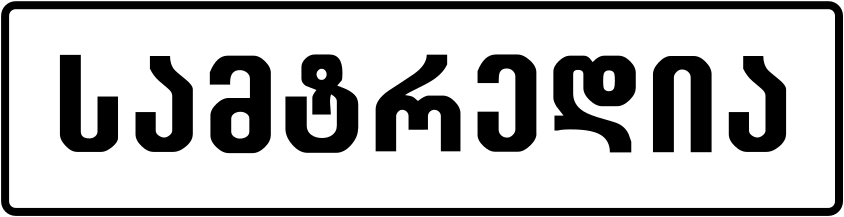
Road sign used in this ticket

5.23.1. Beginning of built-up area

Indicates the beginning of a built-up area in which the traffic rules established for built-up areas apply. The sign is installed at every entrance to the built-up area.

Which of the road conditions listed below must the driver take into account when changing the speed of the vehicle?

1 All the road conditions listed in this ticket
2 Only the terrain and the traffic intensity
3 only weather conditions, as well as insufficient or limited visibility
4 Only the condition of the road and the vehicle
Law explanation
According to paragraph 2 of Article 33 of the Law of Georgia “On Road Traffic”, when changing the speed of the vehicle the driver must take into account the road conditions (the terrain, the condition of the road and of the vehicle, its load, weather conditions, traffic density, insufficient or restricted visibility), so that, when necessary, as well as before any obstacle he can foresee, he can reduce speed and, if necessary, stop.

What is the maximum speed at which the driver of an oversized or overweight (heavy) vehicle has the right to move in a built-up area or outside a built-up area?

1 at a speed not exceeding that indicated in the permit issued by the body (agency) authorised in accordance with the procedure established by the legislation of Georgia
2 at a speed of 40 km/h
3 At a speed of 60 km/h
Law explanation
According to Article 33(8)(e) of the Law of Georgia "On Road Traffic", unless otherwise established by this Law, in built-up areas or outside built-up areas an oversized (large-dimension) or overweight (heavy) vehicle is permitted to travel at a speed not exceeding that indicated in the approval issued by the body (agency) authorised in accordance with the procedure established by the legislation of Georgia.

On motorways, as well as at motorway entrances and exits, without the consent of the authorised body (agency), the movement of cars (with or without trailers) whose design speed does not exceed the following is prohibited:

1 40 km/h
2 90 km/h
3 110 km/h
4 60 km/h
Law explanation
According to Article 38(1)(a) of the Law of Georgia "On Road Traffic", on a motorway, at the entrance to and exit from a motorway, the movement of pedestrians, animals, bicycles, mopeds, two-wheeled electric scooters and all vehicles other than motor vehicles and their trailers is prohibited, as is the movement of a motor vehicle (with or without a trailer) whose design speed does not exceed 40 km/h (this restriction does not apply to a power-driven vehicle travelling on a motorway in accordance with an agreement with the authorised body (agency) concluded in the manner established by the legislation of Georgia and with the terms of that agreement).
Ticket #540 — situation image

What is the maximum speed at which the truck driver may continue moving if towing is carried out with a rigid coupling?

1 at a speed of 50 km/h
2 at a speed of 80 km/h
3 At a speed of 60 km/h
Law explanation
According to Article 33(8)(d) of the Law of Georgia "On Road Traffic", unless otherwise established by this Law, in built-up or non-built-up areas a power-driven vehicle that is towing another power-driven vehicle is permitted to travel at a speed not exceeding 50 km/h.

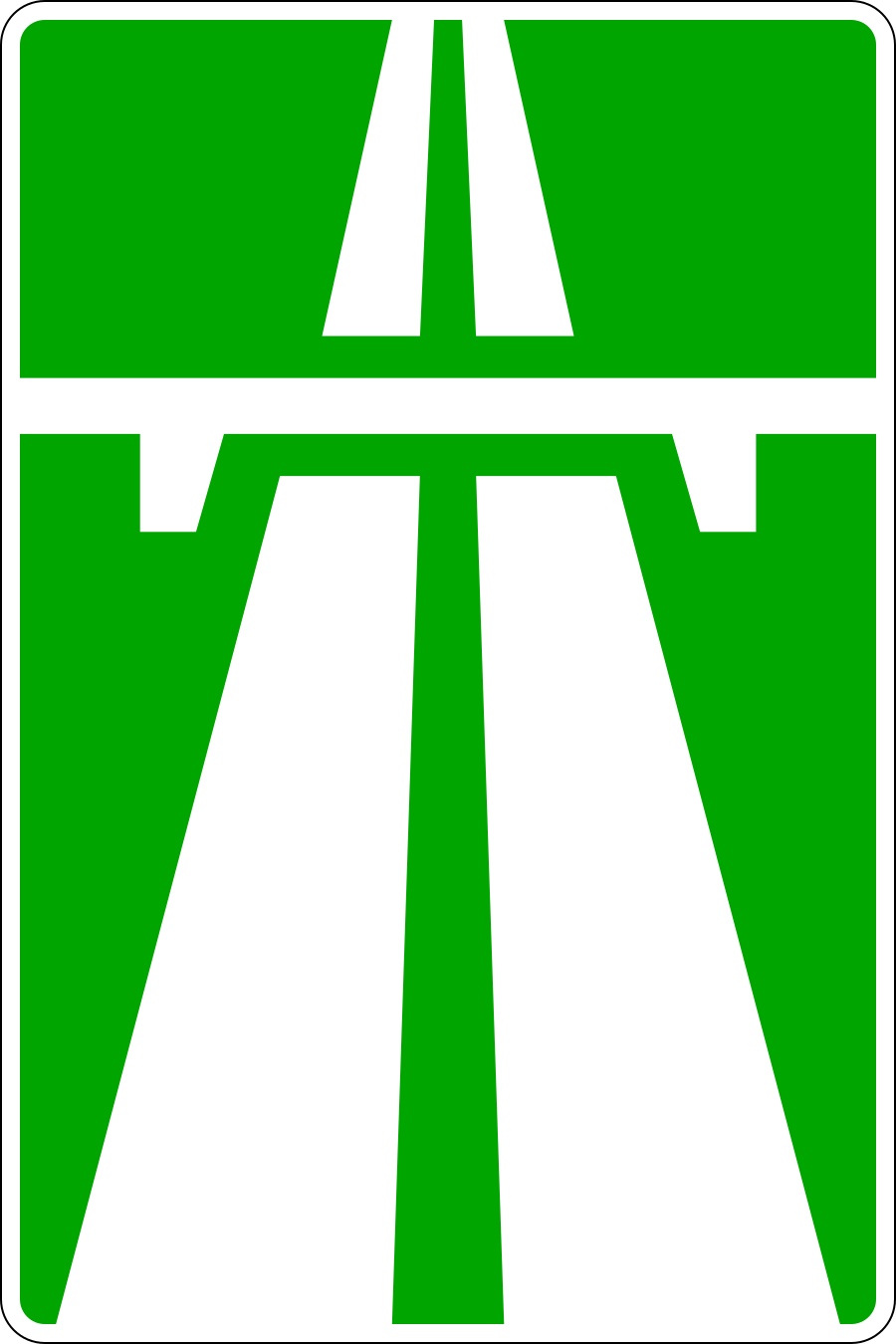
Road sign used in this ticket

5.1. Motorway

A motorway on which the requirements of the rules governing traffic on motorways apply. The sign is installed at the beginning of the motorway or near it with plate 8.1.1.

The identification sign "Road train" must be switched on:

1 while the road train is moving, and during the dark time of day and in conditions of insufficient visibility, also while it is stopped or parked
2 only when the road train is moving in a period of insufficient visibility
3 Only when a road train is moving during the hours of darkness
Law explanation
According to Article 49(16) of the Law of Georgia "On Road Traffic", the identification sign "Road train" must be switched on while the road train is moving, and during the hours of darkness and in conditions of insufficient visibility, also while it is stopped or parked.

In daylight hours, to mark an oversized (large-dimension) or overweight (heavy) power-driven vehicle moving on the road, it is mandatory to switch on:

1 Low-beam headlights and rear side lights
2 Fog lights
3 High-beam headlights
Law explanation
According to Article 49(8)(c) of the Law of Georgia "On Road Traffic", in daylight, in order to make a vehicle moving on the road visible, it is mandatory to switch on dipped headlights and rear position lights: c) when moving an oversized (large-dimension) or overweight (heavy) vehicle, as well as a vehicle carrying dangerous goods.

Is it permissible, in thick fog, heavy snowfall, heavy rain or similar conditions, when stopped or parked on the road, to switch on, in addition to the front and rear position lights, the dipped-beam headlights and the front and rear fog lamps on power-driven vehicles and their trailers?

1 Is permitted
2 is not permitted
Law explanation
According to Article 49(9) of the Law of Georgia "On Road Traffic", from dusk to dawn, as well as in any other conditions of insufficient visibility, when stopping or parking on the road, a motor vehicle and its trailer must be marked with front and rear position lights. In thick fog, heavy snowfall, heavy rain or similar conditions, dipped headlights or front fog lights may be switched on. In such conditions, rear fog lights may additionally be switched on together with the rear position lights.

On a horse-drawn vehicle whose width does not exceed 1 m, it is mandatory to fit:

1 At the front – one white light and at the rear – one red light
2 At least one white or yellow selective light at the front
3 at the rear, on the left side or in the centre, one retro-reflective device
Law explanation
According to paragraph 3 of Article 50 of the Law of Georgia “On Road Traffic”, a lamp is not mandatory for animal-drawn vehicles whose width does not exceed 1 metre, but in this case one retro-reflective device must be fitted at the rear, on the left side or in the centre.

When moving on the carriageway at night, groups of pedestrians led by leaders or walking in a column must have on the left side:

1 at least one red selective light at the front and one yellow light at the rear
2 at least one white selective light at the front and one white selective light at the rear
3 At least one white or yellow selective light at the front and one red light at the rear, or a yellow light at the front and rear
Law explanation
According to Article 50(4)(a) of the Law of Georgia "On Road Traffic", when moving on the carriageway at night: a) a group of pedestrians led by a leader or walking in procession must carry, on the left side, at least one white or selective yellow light at the front and at least one red light at the rear, or a yellow light at the front and rear.

What type are the cutting units of a mower?

1 finger-segment, fingerless and rotary
2 toothed, fingerless and rotary
3 fingerless and rotary
4 Toothed and finger-segment
Law explanation
The cutting units of mowers are finger-bar (segment) type, fingerless and rotary.

What is the purpose of a ripper?

1 Gathering the mown mass from the swath and stacking haycocks in the field
2 picking up hay or straw from windrows
3 gathering dried and freshly mown grass into swaths and windrows
Law explanation
The purpose of rakes is to gather dried and freshly mown grass into strips and windrows.

What are pick-up balers used for?

1 for picking up the mown mass from the swath and stacking it in the field
2 for picking up hay or straw from swaths, baling it and tying the baled mass
3 for raking dried and freshly mown grass into strips and swaths
4 for stacking hay or straw ricks
Law explanation
Pick-up balers are used to pick up hay or straw from windrows, press it, and tie the pressed mass.

What operations does the technology of harvesting cereal crops include?

1 cutting stalks, threshing, separating grain from the chaff, and removing impurities from the grain
2 Cutting the stalks, threshing, separating the grain from the chaff and weighing
3 cutting the stalks, threshing, separating the grain from the chaff
4 cutting stalks, threshing, weighing grain, stacking hay
Law explanation
The technology of harvesting cereal crops includes the following operations: cutting the stalks, threshing, separating the grain from the chaff and removing impurities from the grain.

What types of threshing apparatus are used in a grain harvesting combine?

1 slatted, toothed and rotary
2 with chains and with spurs
3 chain, toothed and rotary
4 slatted and chain
Law explanation
Grain harvesting combines use chain, tooth (spike) and rotor type threshing units.

What is the task of grain cleaning?

1 removing damaged grain and obtaining grain of uniform size
2 Obtaining grain of uniform size and shape
3 Removing all foreign impurities and obtaining the grain of the main crops in clean form
4 Removing damaged grain and obtaining the grain of the main crops in clean form
Law explanation
The task of grain cleaning is to remove all foreign impurities and to obtain the grain of the main crops in a clean form.

Which machines are included in a grain cleaning station?

1 threshers
2 Reapers
3 Cleaner-graders
4 Combine harvesters
Law explanation
A grain-cleaning station includes cleaning and grading machines.
Practical part

Exam routes — exactly the way the examiner drives them

60 real exam routes across 10 cities, 793 km in total. Every turn and stop on the map, with voice guidance.

  • All routes on the map
  • GPS mode on the real road
  • Practice mode with adjustable speed
  • On the web and in the app

One-off payment, no auto-renewal — by card on the Bank of Georgia secure page.

Chat with us