The load must be marked with the identification sign "Oversized (large-dimension) load" if it protrudes beyond the dimensions of the vehicle at the front and/or rear:
Full ticket list
738 official tickets — category A, A1, with the correct answer and law explanation.
The load must be marked with the identification sign "Oversized (large-dimension) load" if it protrudes at the side beyond the outer edge of the side light:
Law explanation
At night or in conditions of insufficient visibility, a load protruding beyond the dimensions of the vehicle by more than one metre at the front and/or rear, or by more than 0.4 metres at the side from the outer edge of the position light, must additionally be marked:
Law explanation
If there is suspicion of a neck or spinal injury of a person injured in a road traffic accident and their life is in danger, how should the injured person be moved by dragging without a helper (by one person)?
Law explanation
If a person injured in a road traffic accident has a wound in the abdominal area, they must be transported:
Law explanation
If a person injured in a road traffic accident has fainted, in order to provide first aid, they must:
Law explanation
In case of a concussion of a person injured in a road traffic accident, they must be transported:
Law explanation
If a person injured in a road traffic accident has a penetrating chest wound, they must be transported:
Law explanation
In case of an injury to one arm of a person injured in a road traffic accident, the jacket or shirt should be removed:
Law explanation
In case of traumatic shock, in order to provide first aid, a person injured in a road traffic accident must:
Law explanation
The characteristic signs of bleeding from a large artery of a person injured in a road traffic accident are:
Law explanation
Law explanation
Road sign used in this ticket
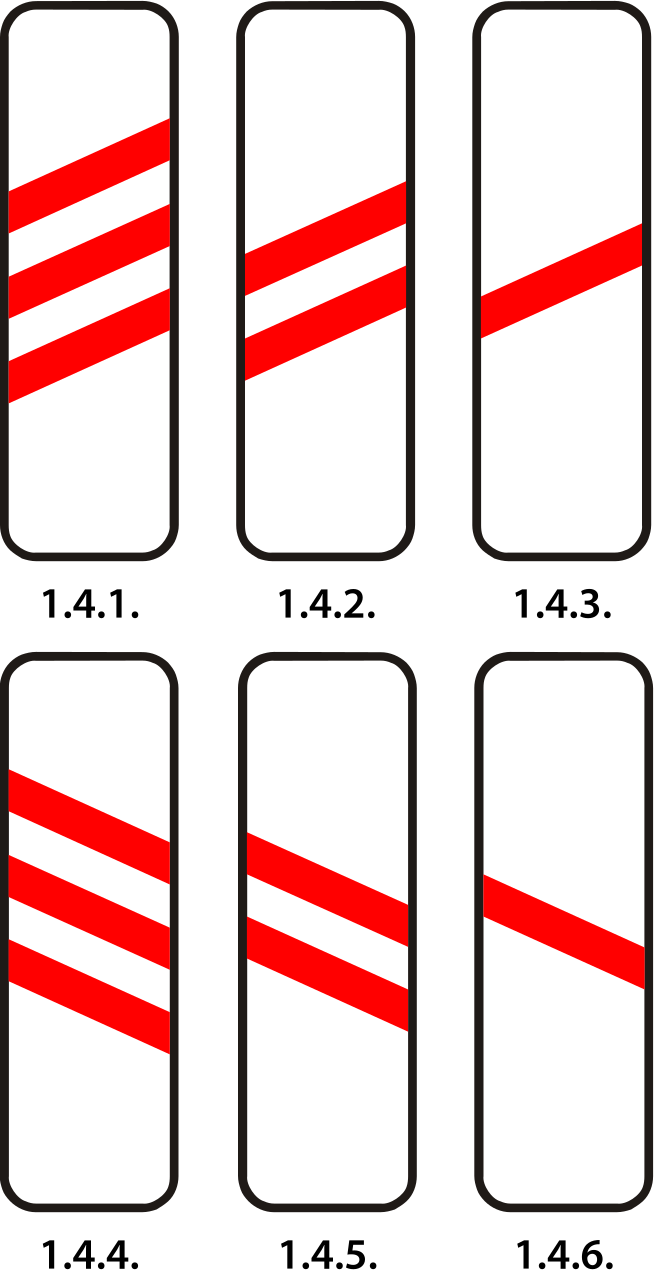
Additionally warns the driver outside built-up areas of approaching a railway level crossing. Signs 1.4.1−1.4.3 are installed on the right side of the road, and signs 1.4.4−1.4.6 on the left side. Signs 1.4.1 and 1.4.4 are installed together with the main and repeated sign 1.1 or 1.2 in the direction of travel, signs 1.4.3 and 1.4.6 together with the repeated sign 1.1 or 1.2 in the direction of travel, and signs 1.4.2 and 1.4.5 independently, at an equal distance between the main and the repeated sign 1.1 or 1.2.
Law explanation
Law explanation
Law explanation
Which of the road signs shown warns of the approach to a level crossing without a barrier with two or more tracks?
Law explanation
Road sign used in this ticket
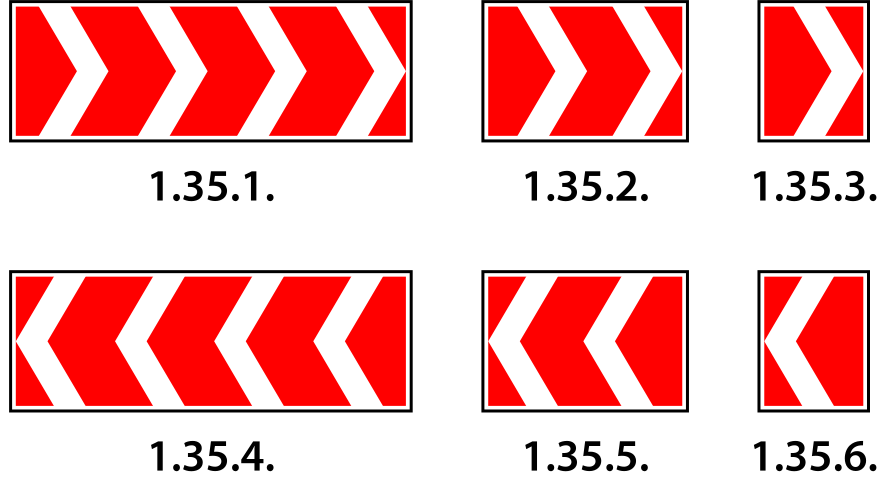
Indicates the direction of travel on a small-radius curve of the road with limited visibility (1.35.1−1.35.3 − to the right, 1.35.4−1.35.6 − to the left), or the direction for bypassing a road works site.
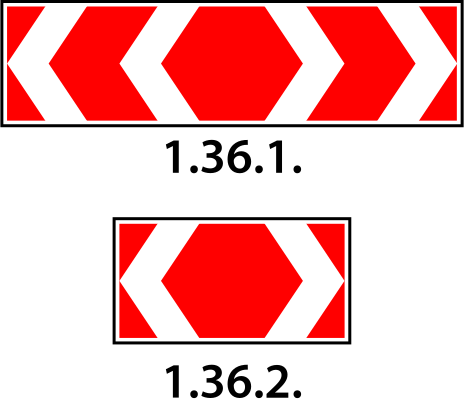
Indicates the direction of travel (right and left) at a T-junction or road fork, or the direction for bypassing a road works site.
Warns of approaching an unguarded (without barrier) level crossing of a single-track railway. Installed immediately before the level crossing.
Warns of approaching an unguarded (without barrier) level crossing of a railway with two or more tracks. Installed immediately before the level crossing.
At what distance are the given road signs installed in a built-up area before the beginning of the dangerous section?
Law explanation
Outside built-up areas, the given road signs are placed a second time before the start of the dangerous section, at not less than:
Law explanation
Road sign used in this ticket
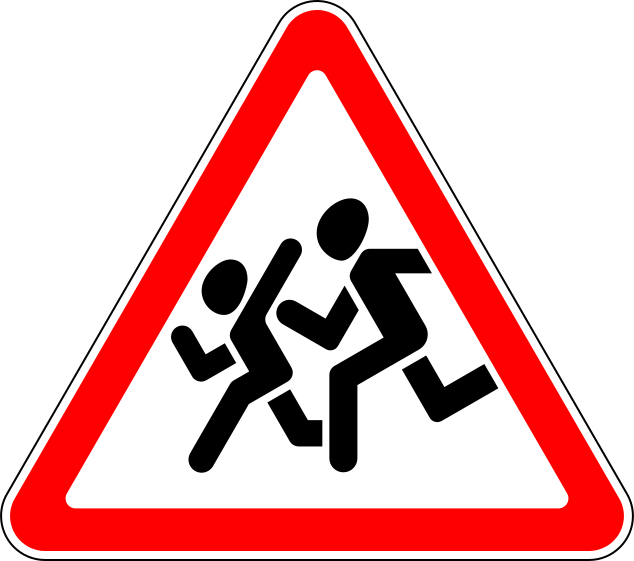
Warns of a children's facility near the section of road, from which children are likely to appear on the carriageway. Outside built-up areas the sign is placed 150−300 m before the start of the hazardous section, in built-up areas – 50–100 m before it. The sign is repeated in built-up and non-built-up areas at least 50 m before the start of the hazardous section.
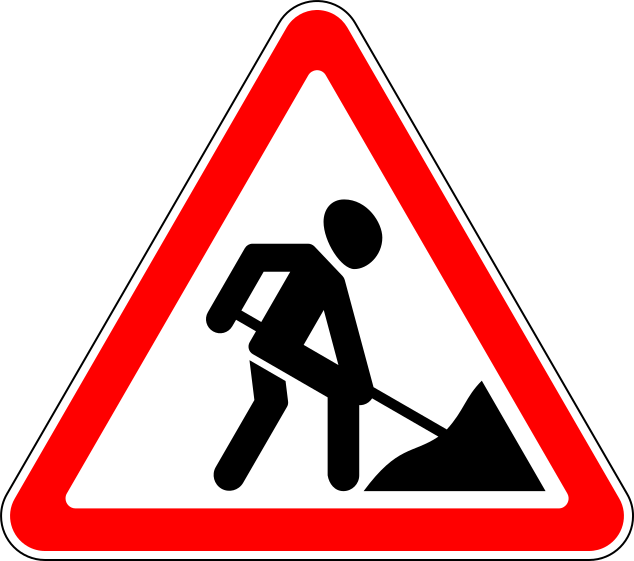
A section of road on which works are being carried out. Outside built-up areas the sign is placed 150−300 m before the start of the hazardous section, in built-up areas – 50–100 m before it. The sign is repeated in built-up and non-built-up areas at least 50 m before the start of the hazardous section. When short-term work is carried out on the carriageway, the sign is installed 10−15 m from the work site, without plate 8.1.1.
The given road sign, without the 8.1.1 (Distance to object) plate, when short-term work is carried out on the carriageway, is placed from the work site at:
Law explanation
Which of the given combinations of road signs is installed outside a built-up area, 150-300 metres before an unguarded level crossing (without barrier), on the right side of the road?
Law explanation
Exam routes — exactly the way the examiner drives them
60 real exam routes across 10 cities, 793 km in total. Every turn and stop on the map, with voice guidance.
- All routes on the map
- GPS mode on the real road
- Practice mode with adjustable speed
- On the web and in the app
One-off payment, no auto-renewal — by card on the Bank of Georgia secure page.