imecadine.ge

Full ticket list

898 official tickets — category B, B1, with the correct answer and law explanation.

Ticket #552 — situation image

In the given situation, the driver of the towing car has the right to continue moving:

1 both in direction A and in direction B
2 only in direction B
3 Only in direction A
Law explanation
According to paragraph 7.2 of Chapter 7 (Information and direction signs) of Annex 1 to the Law of Georgia "On Road Traffic", road sign 7.2 "Recommended speed" indicates the speed at which it is recommended to travel on the given section of road. The sign is placed at the beginning of the road. The sign's zone of application extends to the nearest intersection, and when used together with a warning sign, over the entire length of the dangerous section.
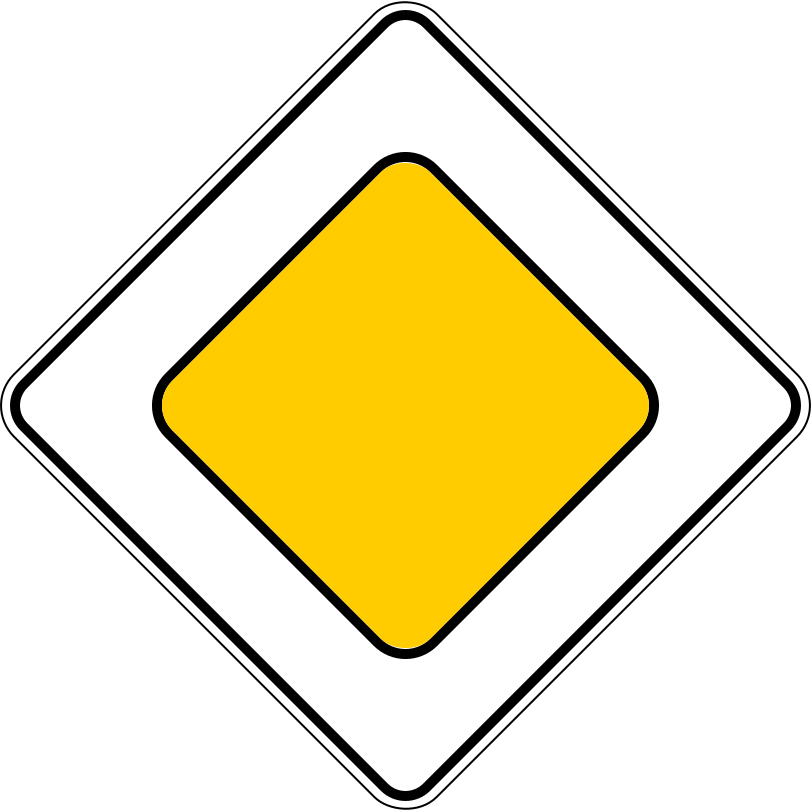
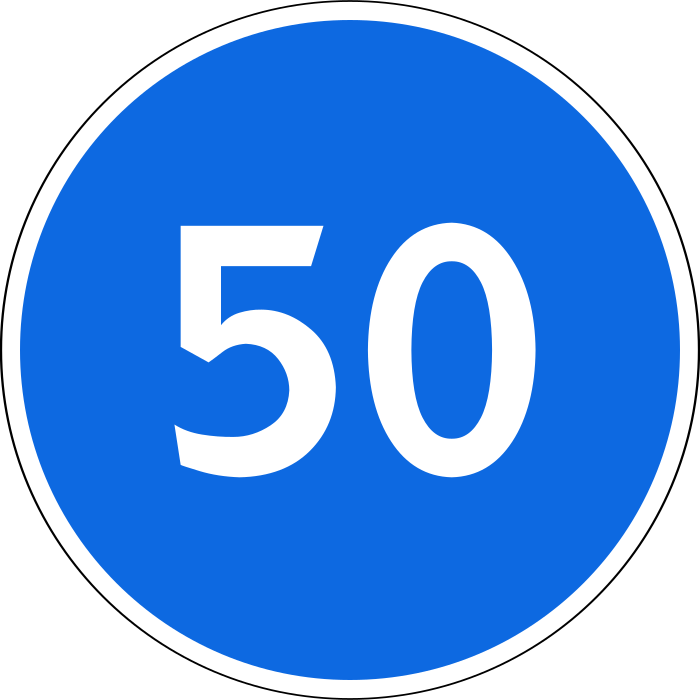
Road sign used in this ticket

2.1. Priority road

A road on which drivers have priority when passing through unregulated intersections. The sign is installed at the beginning of the road and repeated immediately before every intersection. Sign 2.1 with plate 8.13 is installed in built-up areas before an intersection at which the main road changes direction; outside built-up areas − in advance, 150−300 m before the intersection, and before the intersection.

4.6. Minimum speed limit

Sets the minimum speed of travel on the road. The sign applies from the place where it is installed to the nearest intersection behind it, and in a built-up area with no intersection − to the end of the built-up area.

Ticket #553 — situation image

In the given situation, is the driver of the towing car prohibited from moving in the direction of the arrow, if the road is icy?

1 is not prohibited
2 is prohibited
Law explanation
According to subparagraph “e” of paragraph 6 of Article 45 of the Law of Georgia “On Road Traffic”, towing with a flexible coupling is prohibited when the road is icy.

Road sign used in this ticket

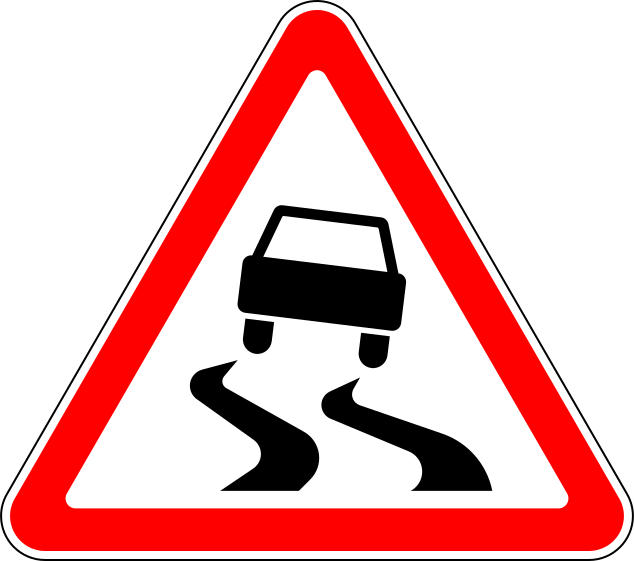
1.16. Slippery road

A slippery section of road on which the coefficient of tyre grip with the road surface is less than 0.4. Outside built-up areas the sign is placed 150−300 m before the start of the hazardous section, in built-up areas – 50–100 m before it.

Is it permitted to tow another power-driven vehicle with a power-driven vehicle that has a trailer?

1 is not permitted
2 Is permitted
3 is permitted only if the maximum permissible mass of the towing power-driven vehicle's trailer is less than 750 kg
Law explanation
According to Article 45(1) of the Law of Georgia "On Road Traffic", towing another motor vehicle with a motor vehicle (without a trailer) is permitted in accordance with the procedure established by this Law.

When towing with a rigid coupling, is it mandatory for the towed vehicle to be driven by a driver when the design of the coupling ensures that the towed vehicle follows the trajectory of the towing vehicle?

1 Is mandatory
2 is not mandatory
Law explanation
According to Article 45(3) of the Law of Georgia "On Road Traffic", when a power-driven vehicle is towed by a rigid or flexible coupling, the towed vehicle must be driven by a driver, except where, during movement, the design of the rigid coupling ensures that the towed vehicle follows the path of the towing vehicle.

When towing with a flexible coupling, is it mandatory for the towed vehicle to be driven by a driver?

1 is not mandatory
2 Is mandatory
Law explanation
According to Article 45(3) of the Law of Georgia "On Road Traffic", when a power-driven vehicle is towed by a rigid or flexible coupling, the towed vehicle must be driven by a driver, except where, during movement, the design of the rigid coupling ensures that the towed vehicle follows the path of the towing vehicle.

When towing with partial loading (partially lifted), the presence of people is prohibited:

1 both in the towed motor vehicle and on the body of the towing motor vehicle
2 Only in the towing power-driven vehicle
3 only on the body of the towing power-driven vehicle
Law explanation
According to Article 45(4) of the Law of Georgia "On Road Traffic", when towing by a rigid or flexible coupling, it is prohibited to carry passengers in a towed bus, trolleybus or in the body of a goods vehicle, and when towing by partial loading, it is prohibited for people to be in the towed power-driven vehicle or in the body of the towing vehicle.

When towing with a flexible coupling, the distance between the towing and the towed vehicles must be:

1 4-6 metres
2 6-8 metres
3 2-4 metres
Law explanation
According to paragraph 5 of Article 45 of the Law of Georgia “On Road Traffic”, the distance between the towing and towed vehicles when towing with a flexible coupling must be 4−6 metres, and when towing with a rigid coupling – not more than 4 metres.

Is it prohibited to tow a power-driven vehicle that has two trailers?

1 Is not prohibited
2 Is prohibited
Law explanation
According to Article 45(6)(b) of the Law of Georgia "On Road Traffic", of two or more motor vehicles, as well as of a motor vehicle that has two or more trailers.

Towing is permitted:

1 None of the answers listed in this ticket is correct
2 with a flexible coupling, when roads are icy
3 a motorcycle without a sidecar, as well as towing such a motorcycle
Law explanation
According to Article 45(6)(d) and (e) of the Law of Georgia "On Road Traffic", towing is prohibited: d) by a motorcycle without a sidecar, as well as towing such a motorcycle; e) with a flexible coupling when the road is icy.

At any time of day or night, a towing power-driven vehicle must have switched on:

1 Fog lights
2 Low-beam headlights
3 side (position) lights
Law explanation
According to Article 45(7) of the Law of Georgia "On Road Traffic", at any time of day or night the towing motor vehicle must have its dipped headlights switched on, and the towed motor vehicle must have its hazard warning lights switched on, and if these are absent or faulty, a warning triangle must be attached to the rear of that vehicle.

In the absence or malfunction of hazard warning lights, the following must be attached to the rear of the towed power-driven vehicle:

1 Maximum speed limit sign
2 the emergency stop sign
3 Sign indicating other dangers
Law explanation
According to Article 45(7) of the Law of Georgia "On Road Traffic", at any time of day or night the towing motor vehicle must have its dipped headlights switched on, and the towed motor vehicle must have its hazard warning lights switched on, and if these are absent or faulty, a warning triangle must be attached to the rear of that vehicle.

At least how many warning devices (flags) must be attached to the flexible coupling link when towing a power-driven vehicle with a flexible coupling?

1 three
2 four
3 two
Law explanation
According to Article 45(9) of the Law of Georgia "On Road Traffic", when towing a power-driven vehicle, flags, a warning device or a 200X200 mm board on which alternating red and white stripes 50 mm wide with a retroreflective surface are drawn diagonally are used to mark flexible connecting links. At least two warning devices (flags) are fixed to the flexible connecting link.

Is it permitted to carry passengers in such a number or in such a way that this interferes with driving or restricts the driver's field of view?

1 is not allowed
2 is permitted only outside built-up areas, on a secondary road, on condition that the speed of the vehicle does not exceed 40 km/h
3 is permitted only with the driver's consent
Law explanation
According to Article 46(1) of the Law of Georgia "On Road Traffic", it is prohibited to carry passengers in such numbers or in such a way that this would hinder driving the vehicle or restrict the driver's field of vision.

It is not prohibited to carry passengers:

1 with a truck trailer, as well as a caravan
2 by a towing bus
3 outside the passenger compartment or cab of the tractor and other self-propelled machines
4 with the body of a cargo motorcycle
Law explanation
According to subparagraph “a” of paragraph 10 of Article 46 of the Law of Georgia “On Road Traffic”, it is prohibited to carry passengers outside the passenger compartment or cab of a motor vehicle (except for carrying passengers in the body of a lorry with a van body or a flatbed platform), a tractor or other self-propelled machine, in a lorry trailer, in a caravan trailer, in the body of a cargo motorcycle, and outside the seats provided by the design of a motorcycle.

Is the carriage of passengers prohibited in a vehicle whose actual mass exceeds its maximum permissible mass?

1 Is prohibited
2 Is not prohibited
Law explanation
According to subparagraph “c” of paragraph 10 of Article 46 of the Law of Georgia “On Road Traffic”, carrying passengers is prohibited if the actual mass of the vehicle exceeds its maximum permissible mass.

Any load on a vehicle must be placed and, if necessary, secured in such a way that during its carriage:

1 only so that visibility and the field of vision are not restricted, the stability of the vehicle is not compromised and its control is not made difficult
2 all the conditions listed in this ticket must be observed
3 only must not obscure the lights, stop signal, direction indicators, reflective devices, registration number and the distinguishing sign of the state of registration, as well as the hand signals defined by this law
4 only so that it does not endanger other road users, does not damage state, public or private property, and the cargo does not drag or fall onto the road
Law explanation
According to subparagraphs “a”, “b” and “c” of paragraph 11 of Article 47 of the Law of Georgia “On Road Traffic”, any load on a vehicle must be placed and, if necessary, secured in such a way that during its carriage: a) it does not endanger other road users, does not damage state, public or private property, and the load does not drag or fall onto the road; b) it does not restrict visibility and the field of view, does not impair the stability of the vehicle and does not make it difficult to drive; c) it does not cover the vehicle's lights, “stop” signal, direction indicators, retroreflective devices, registration number and the distinguishing sign of the state of registration, nor the hand signals provided for by this Law.

The load must be marked with the identification sign "Oversized (large-dimension) load" if it protrudes beyond the dimensions of the vehicle at the front and/or rear:

1 by not less than 2.0 metres
2 By more than 1.0 metre
3 By at least 1.5 metres
Law explanation
According to Article 47(13) of the Law of Georgia "On Road Traffic", a load projecting more than 1 metre beyond the vehicle's overall dimensions at the front and/or rear, or more than 0.4 metres at the side beyond the outer edge of the position light, must be marked with the identification sign "Oversized (large-dimension) load", and at night or in conditions of insufficient visibility, with a white lamp or reflector at the front and a red lamp or reflector at the rear.

The load must be marked with the identification sign "Oversized (large-dimension) load" if it protrudes at the side beyond the outer edge of the side light:

1 By at least 2 metres
2 by more than 0.4 metres
3 By at least 1.5 metres
Law explanation
According to Article 47(13) of the Law of Georgia "On Road Traffic", a load projecting more than 1 metre beyond the vehicle's overall dimensions at the front and/or rear, or more than 0.4 metres at the side beyond the outer edge of the position light, must be marked with the identification sign "Oversized (large-dimension) load", and at night or in conditions of insufficient visibility, with a white lamp or reflector at the front and a red lamp or reflector at the rear.

At night or in conditions of insufficient visibility, a load protruding beyond the dimensions of the vehicle by more than one metre at the front and/or rear, or by more than 0.4 metres at the side from the outer edge of the position light, must additionally be marked:

1 only at the front, with a white lamp or reflector
2 Both at the front – with a white lamp or reflector, and at the rear – with a red lamp or reflector
3 Only at the rear – with a red lamp or reflector
Law explanation
According to Article 47(13) of the Law of Georgia "On Road Traffic", a load projecting more than 1 metre beyond the vehicle's overall dimensions at the front and/or rear, or more than 0.4 metres at the side beyond the outer edge of the position light, must be marked with the identification sign "Oversized (large-dimension) load", and at night or in conditions of insufficient visibility, with a white lamp or reflector at the front and a red lamp or reflector at the rear.

If there is suspicion of a neck or spinal injury of a person injured in a road traffic accident and their life is in danger, how should the injured person be moved by dragging without a helper (by one person)?

1 with the injured person in a sitting position, stand between their legs, slide the arms under their shoulders and clasp them together behind their back. Lift using the legs and move the injured person backwards by dragging
2 with the injured person in a sitting position, slide the arms under their shoulders from behind, fix the lower jaw and neck, and move them backwards by dragging
Law explanation
Moving an injured person by dragging without an assistant, when a neck or spinal injury is suspected and their life is in danger, should be done as follows: place the injured person in a sitting position. Stand behind the injured person, slide your arms under their armpits, fix the lower jaw and neck, and drag them backwards in this way.
Practical part

Exam routes — exactly the way the examiner drives them

60 real exam routes across 10 cities, 793 km in total. Every turn and stop on the map, with voice guidance.

  • All routes on the map
  • GPS mode on the real road
  • Practice mode with adjustable speed
  • On the web and in the app

One-off payment, no auto-renewal — by card on the Bank of Georgia secure page.

Chat with us