imecadine.ge

Moving off, manoeuvring, positioning

61 official tickets in this topic, with the correct answer and law explanation.

Changing lanes, turning, reversing and correct positioning.

# 2
Ticket #2 — situation image

Is the driver of the red car obliged to give way to pedestrians when exiting onto the road from an adjacent area?

1 is not obliged
2 is obliged
Law explanation
According to Article 25(7) of the Law of Georgia "On Road Traffic", when exiting onto a road from an adjacent area or entering such an area from a road, the driver must give way to pedestrians.
Ticket #10 — situation image

The driver of the passenger car has the right to perform a U-turn manoeuvre:

1 both in direction A and in direction B
2 only in direction B
3 Only in direction A
Law explanation
According to paragraph 4.3 of Annex 1 of the Law of Georgia “On Road Traffic”, road sign 4.3 “Roundabout” - permits movement in the directions shown by the arrows at a junction where roundabout traffic is organised.

Road sign used in this ticket

4.3. Roundabout

Permits movement in the directions shown by the arrows at an intersection where roundabout (circular) traffic is organised.

Ticket #52 — situation image

The driver of which car will violate the traffic rules when moving in the direction of the arrow?

1 the driver of the green car
2 the driver of the white car
3 the driver of the red car
4 The driver of the yellow car
Law explanation
According to paragraph 12 of Article 31 of the Law of Georgia “On Road Traffic”, unless otherwise provided by this Law, on any carriageway with three or more lanes for traffic in the same direction, occupying the far left lane is permitted only in heavy traffic when the other lanes are occupied, as well as for overtaking, turning left or making a U-turn, and for trucks – only when turning left or making a U-turn.
Ticket #91 — situation image

The driver of which car has the obligation to give way when moving in the direction of the arrow?

1 the driver of the yellow car
2 the driver of the white car
Law explanation
According to Article 32(4) of the Law of Georgia "On Road Traffic", when changing from one lane to another without changing the direction of travel, the driver must give way to a vehicle travelling in the same direction in the lane being moved into. When vehicles travelling in the same direction change lanes simultaneously and their paths cross, priority is given to the driver of the vehicle on the right.
Ticket #98 — situation image

Near the intersection, the width of the road does not allow the truck to make a U-turn. Does the truck driver have the right to make a U-turn?

1 has the right only if the gross mass of the car does not exceed 11 tonnes
2 has the right if traffic safety is ensured and no obstruction is created for other road users
3 does not have the right, since U-turns at the intersection are prohibited
4 does not have the right, since a U-turn may be performed only from the extreme left lane
Law explanation
According to Article 32(7)(b) of the Law of Georgia "On Road Traffic", before turning right or left to exit onto another road or to enter an adjacent area, without violating the requirements established by Article 20(2) of this Law and by paragraphs 1 and 2 of this Article, if the driver of a vehicle intends to leave the road on the left-hand side, the vehicle must, as far as possible, approach the centre line of the carriageway (on two-way roads) or the left-hand edge of the carriageway (on one-way roads), and if he/she intends to exit onto another two-way road, the turn must be performed so that, on leaving the intersection of carriageways, the vehicle does not end up on the side for opposing traffic. According to paragraphs 10 and 11 of the same Article: 10. If, when turning around beyond an intersection, the width of the carriageway is insufficient for turning around from the extreme left position, this manoeuvre may be performed from the right-hand edge of the carriageway or from the right-hand shoulder. In doing so, the driver must give way to vehicles travelling in the same and opposite directions. 11. If the width of the carriageway at an intersection is insufficient for turning around from the extreme left position, the driver must perform this manoeuvre beyond the intersection, except where the width of the road near the intersection does not allow it. In all cases, traffic safety must be ensured and no obstruction must be created for other road users. The rule defined by this paragraph does not apply to intersections where turning around is prohibited by the corresponding road sign or road marking.

Road sign used in this ticket
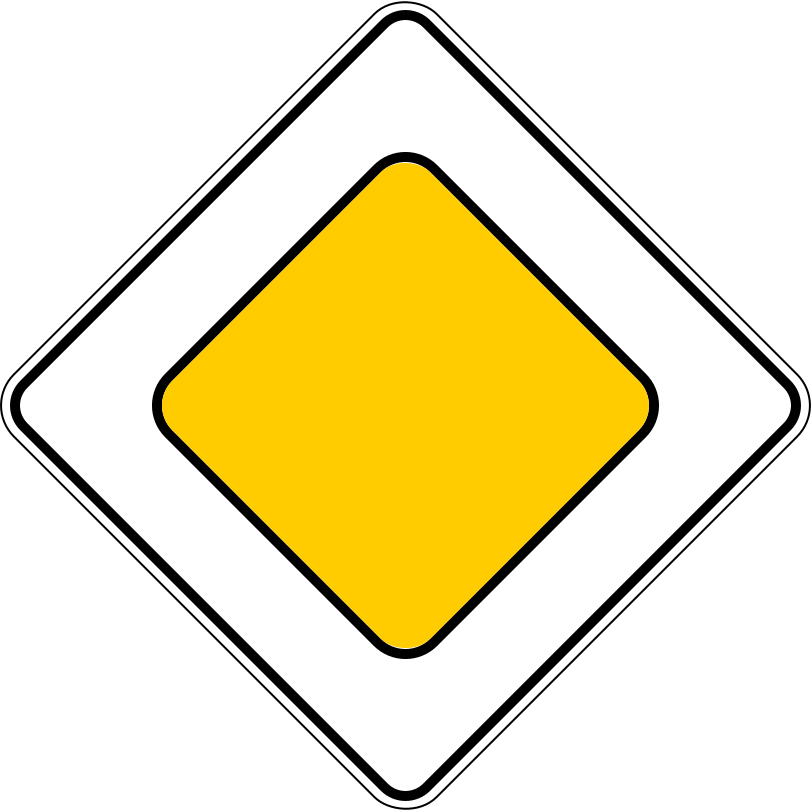
2.1. Priority road

A road on which drivers have priority when passing through unregulated intersections. The sign is installed at the beginning of the road and repeated immediately before every intersection. Sign 2.1 with plate 8.13 is installed in built-up areas before an intersection at which the main road changes direction; outside built-up areas − in advance, 150−300 m before the intersection, and before the intersection.
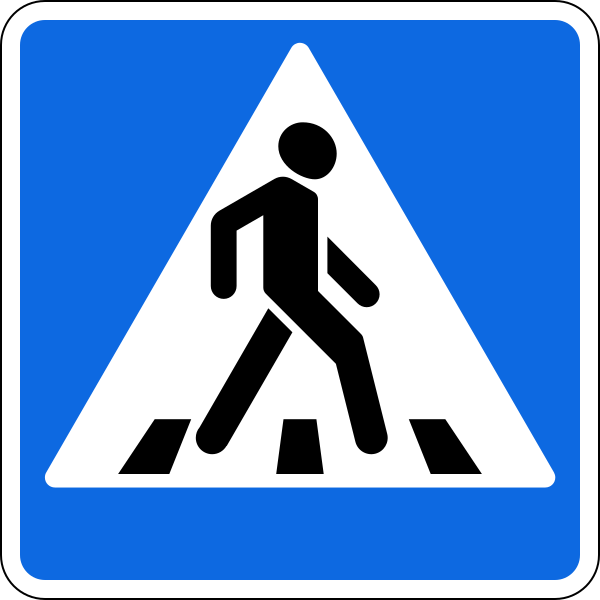
5.19.2. Pedestrian crossing

A place on the road designated as a pedestrian crossing. The sign is installed on the left side of the road. If marking 1.14 is absent at the crossing, the sign is installed at the far boundary of the crossing.

Ticket #117 — situation image

The driver of which car has the obligation to give way when moving in the direction of the arrow?

1 the truck driver
2 the passenger car driver
Law explanation
According to Article 36(4)(c) of the Law of Georgia "On Road Traffic", at an uncontrolled intersection, at the intersection of roads of equal importance, the driver of a trackless vehicle must give way to a vehicle approaching from the right.
Ticket #132 — situation image

The driver of which car has the obligation to give way when moving in the direction of the arrow?

1 the truck driver
2 the passenger car driver
Law explanation
According to Article 36(4)(c) of the Law of Georgia "On Road Traffic", at an uncontrolled intersection, at the intersection of roads of equal importance, the driver of a trackless vehicle must give way to a vehicle approaching from the right. Drivers of rail vehicles must follow the same rule among themselves. At such an intersection a rail vehicle has priority over a trackless vehicle, regardless of its direction of travel.
Ticket #137 — situation image

Towards the driver of which vehicle does the driver of the white passenger car have an obligation to give way when moving in the direction of the arrow?

1 to both the driver of the motorcycle and the driver of the tram
2 only to the driver of the tram
3 only to the driver of the motorcycle
Law explanation
According to paragraphs 3 and 9 of Article 32 of the Law of Georgia “On Road Traffic”: 3. When entering a road from an adjacent area, the driver must give way to vehicles and pedestrians moving on the road, and when leaving the road – to pedestrians, cyclists, and riders of mopeds and two-wheeled electric self-propelled vehicles whose path he crosses. 9. When turning left or making a U-turn outside an intersection, the driver of a trackless vehicle must give way to vehicles moving in the opposite direction and to a tram moving in the same direction.
Ticket #230 — situation image

The driver of which vehicle moving in the direction of the arrow is violating the traffic rules?

1 only the drivers of category "CE" and "B" vehicles
2 only the driver of a category "CE" vehicle
3 only the drivers of the tractor and the category "CE" vehicle
4 only the tractor driver
Law explanation
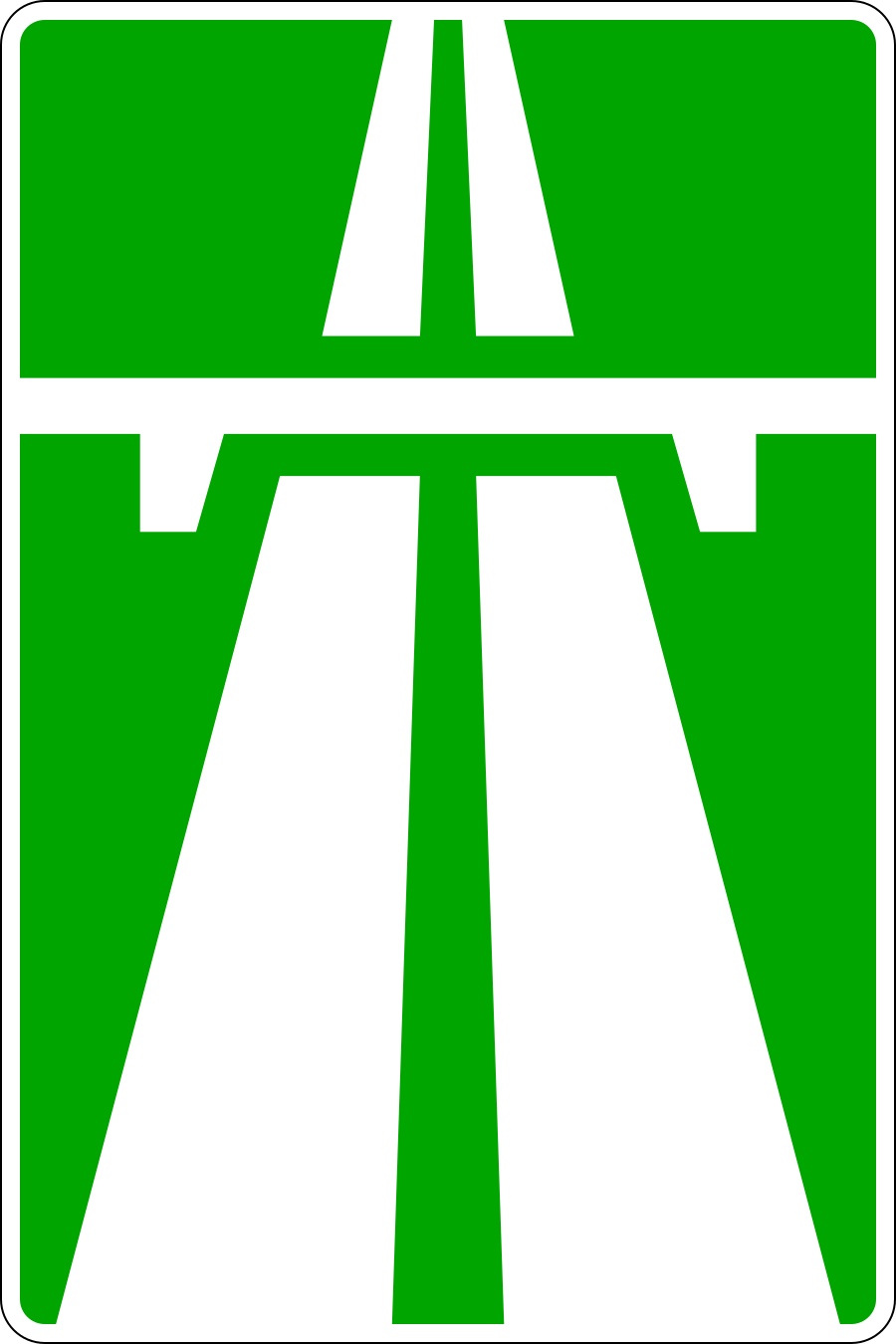
According to subparagraphs "a" and "c.c" of paragraph 1 of Article 38 of the Law of Georgia "On Road Traffic", on a motorway and at motorway entrances and exits: a) the movement of pedestrians, animals, bicycles, mopeds, two-wheeled electric scooters, and all vehicles other than cars and their trailers is prohibited. c.c) the driver is prohibited from driving beyond the second lane in a goods vehicle (with or without trailers) whose permissible maximum mass exceeds 3.5 tonnes, or in cars with trailers whose total length exceeds 7 metres.

Road sign used in this ticket

5.1. Motorway

A motorway on which the requirements of the rules governing traffic on motorways apply. The sign is installed at the beginning of the motorway or near it with plate 8.1.1.

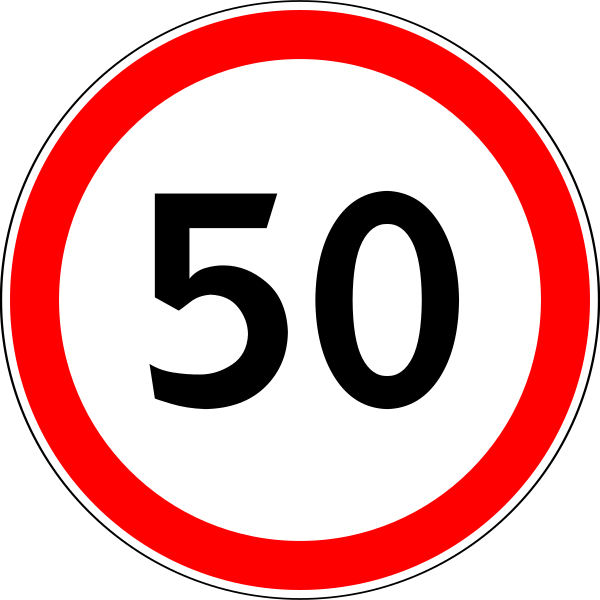
3.24. Maximum speed limit

Prohibits driving at a speed (km/h) exceeding that shown on the sign. The sign applies from the place where it is installed to the nearest intersection behind it, and in a built-up area with no intersection – to the end of the built-up area. The sign's effect is also not interrupted at exits from adjacent areas or at intersections (junctions) with field, forest and other minor roads before which no corresponding sign is installed. Sign 3.24 installed before a built-up area marked with signs 5.23.1 and 5.23.2 applies up to signs 5.23.1 and 5.23.2, respectively, that mark the built-up area.

Ticket #297 — situation image

The driver of which vehicle is not prohibited from moving in the direction of the arrow, if the given road does not serve adjacent areas?

1 the driver of a category "B" vehicle
2 the driver of a category "C" vehicle
3 the driver of the moped
Law explanation
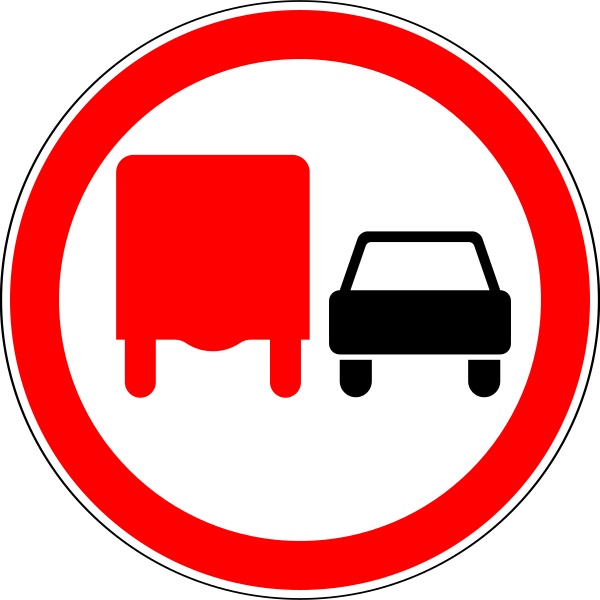
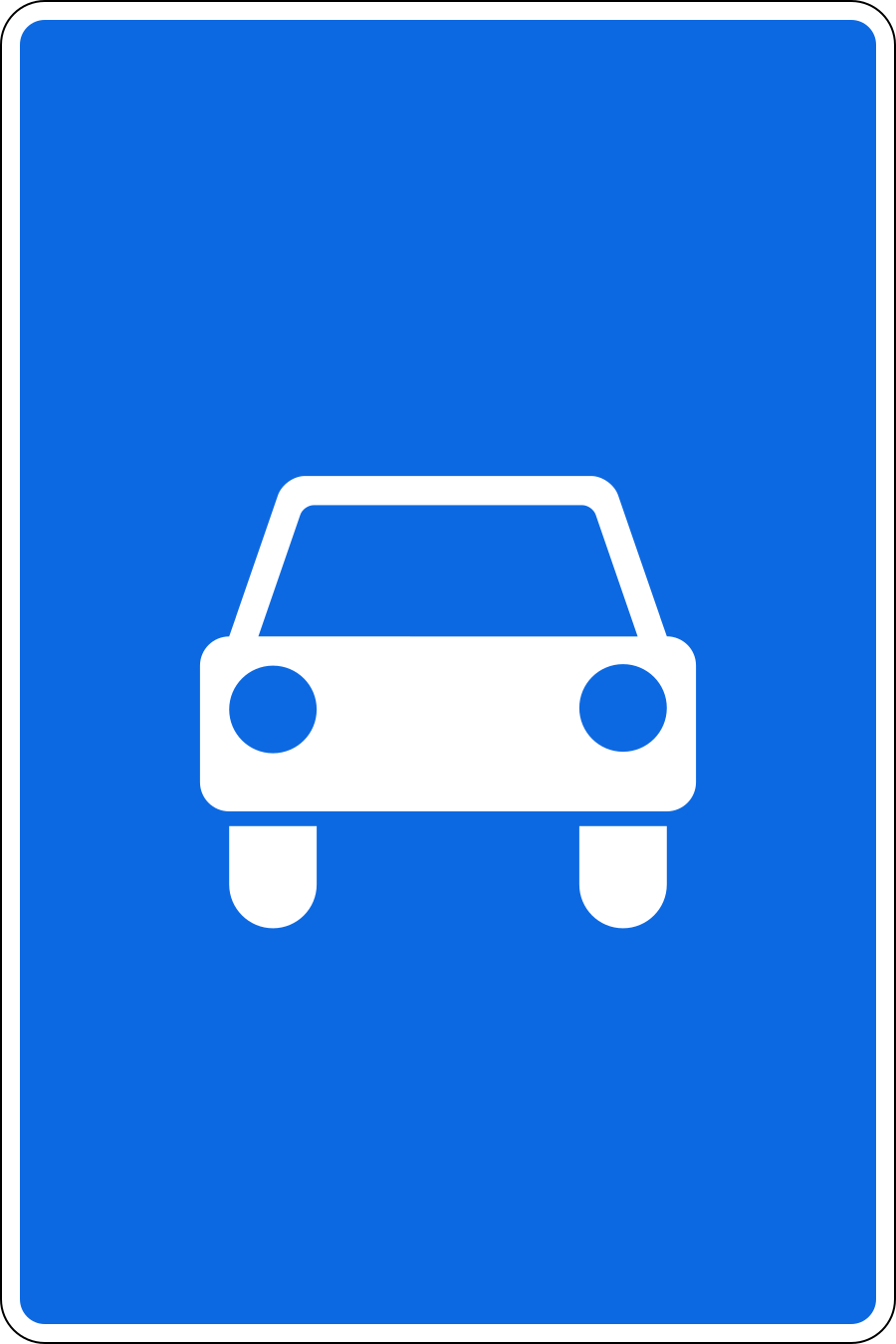
According to paragraph 3.22 of Annex 1 to the Law of Georgia “On Road Traffic”, road sign 3.22 “No overtaking by trucks” prohibits trucks with a maximum permissible mass of more than 3.5 tonnes from overtaking other vehicles (except vehicles moving at a speed of less than 30 km/h), and also prohibits tractors from overtaking other vehicles (except horse-drawn vehicles and bicycles). According to paragraph 5 of Article 38 of the same Law, when applying paragraphs 1−3 of this Article, roads intended for motor traffic and marked with road sign 5.3 that do not serve adjacent areas are equated to a motorway. According to paragraph 5.3 of the same Annex, road sign 5.3 “Road for motor vehicles” − a road intended only for the movement of cars and motorcycles.

Road sign used in this ticket

3.22. No overtaking by trucks

Prohibits trucks with a maximum permitted mass of more than 3.5 tonnes from overtaking other vehicles (except vehicles moving at less than 30 km/h), and prohibits tractors from overtaking other vehicles (except horse-drawn vehicles and bicycles). The sign applies from the place where it is installed to the nearest intersection behind it, and in a built-up area with no intersection – to the end of the built-up area. The sign's effect is also not interrupted at exits from adjacent areas or at intersections (junctions) with field, forest and other minor roads before which no corresponding sign is installed.

5.3. Road for motor vehicles

A road intended only for the movement of cars and motorcycles.

If the middle lane of a two-way road with three lanes is used for traffic in both directions, the side for traffic in the same direction is considered to be:

1 The middle and right traffic lanes
2 only the traffic lane on the right-hand side
Law explanation
According to paragraph 3 of Article 31 of the Law of Georgia “On Road Traffic”, on a two-way road with three lanes marked by road markings, only the lane on the right side is considered the side for traffic in the same direction, unless otherwise established by traffic control devices.
Ticket #359 — situation image

Over the driver of which vehicle does the driver of the grey car have priority when moving in the direction of the arrow?

1 to the driver of none of the vehicles
2 only in relation to the driver of the white car
3 to both the driver of the motorcycle and the driver of the white car
4 only to the motorcycle
Law explanation
According to paragraph 4 of Article 32 of the Law of Georgia “On Road Traffic”, when changing lanes without changing the direction of movement, the driver must give way to a vehicle moving in the same direction in the lane being entered.
Ticket #361 — situation image

In the given situation, when vehicles change lanes simultaneously, priority is given to:

1 the passenger car driver
2 the truck driver
Law explanation
According to Article 32(4) of the Law of Georgia "On Road Traffic", when changing from one lane to another without changing the direction of travel, the driver must give way to a vehicle travelling in the same direction in the lane being moved into. When vehicles travelling in the same direction change lanes simultaneously and their paths cross, priority is given to the driver of the vehicle on the right.
Ticket #362 — situation image

Does the driver of the truck have the right to continue moving in the direction of the arrow, if the width of the carriageway is insufficient for making a U-turn from the left lane?

1 Has the right
2 does not have the right
Law explanation
According to paragraph 10 of Article 32 of the Law of Georgia “On Road Traffic”, if, when making a U-turn beyond a junction, the width of the carriageway is insufficient for the manoeuvre from the extreme left position, the manoeuvre may be performed from the right edge of the carriageway or from the right shoulder; in doing so, the driver must give way to vehicles travelling in the same and opposite directions. According to paragraph 1.11 of Annex 2 of the same Law, horizontal road marking 1.11. separates traffic flows travelling in opposite or the same directions on a section of road where changing lanes is permitted from one lane only; it marks U-turn points, exits from and entrances to parking areas, etc., where movement is permitted on one side only. Crossing line 1.11 is permitted from the side of the broken line, and also from the side of the solid line, but only when completing overtaking or passing an obstacle.
Ticket #363 — situation image

If the width of the carriageway is insufficient for a truck to make a U-turn from the left lane, when moving in the direction of the arrow the truck driver is obliged to give way to:

1 the drivers of all three vehicles
2 only the driver of the black passenger car
3 only the tram driver
4 only the driver of the white passenger car
Law explanation
According to paragraphs 10 and 11 of Article 32 of the Law of Georgia “On Road Traffic”: 10. If, when making a U-turn beyond a junction, the width of the carriageway is insufficient to make a U-turn from the extreme left position, this manoeuvre may be performed from the right edge of the carriageway or from the right shoulder. In doing so, the driver must give way to vehicles travelling in the same and opposite directions. 11. If the width of the carriageway at a junction is insufficient to make a U-turn from the extreme left position, the driver must perform this manoeuvre beyond the junction, except when the width of the road near the junction does not allow this. In all cases traffic safety must be ensured and no obstruction must be caused to other road users. The rule defined by this paragraph does not apply to junctions where U-turns are prohibited by the corresponding road sign or road marking.
Ticket #364 — situation image

Does the driver of the truck have the right to continue moving in the direction of the arrow, if the width of the carriageway is insufficient for turning from the left lane?

1 has the right if traffic safety is ensured and no obstruction is created for other road users
2 does not have the right
Law explanation
According to Article 32(7)(b) and paragraph 8 of the Law of Georgia "On Road Traffic": 7. Before turning right or left to exit onto another road or to enter an adjacent area, without violating the requirements established by Article 20(2) of this Law and by paragraphs 1 and 2 of this Article, if the driver of a vehicle intends to leave the road: b) on the left-hand side, the vehicle must, as far as possible, approach the centre line of the carriageway (on a two-way road) or the left-hand edge of the carriageway (on a one-way road), and if he/she intends to exit onto another two-way road, the turn must be performed so that, on leaving the intersection of carriageways, the vehicle does not end up on the side for opposing traffic. 8. If, because of the dimensions of the vehicle or for another reason, the driver cannot perform the turn in accordance with the requirements established by paragraph 7 of this Article, deviation from these rules is permitted provided that traffic safety is ensured and no obstruction is created for other road users.
Ticket #366 — situation image

Near the intersection, the width of the road does not allow a U-turn. Does the driver of the truck have the right to continue moving in the direction of the arrow?

1 Has the right
2 does not have the right
Law explanation
According to paragraph 11 of Article 32 of the Law of Georgia “On Road Traffic”, if the width of the carriageway at a junction is insufficient to make a U-turn from the extreme left position, the driver must perform this manoeuvre beyond the junction, except when the width of the road near the junction does not allow this. In all cases traffic safety must be ensured and no obstruction must be caused to other road users. The rule defined by this paragraph does not apply to junctions where U-turns are prohibited by the corresponding road sign or marking. According to paragraph 3.19 of Chapter 3 (Prohibitory signs) of Annex 1 of the same Law, road sign 3.19 “No U-turn” – prohibits U-turns at the nearest intersection of carriageways.
Ticket #367 — situation image

To exit the road, the driver of the passenger car has the right to move:

1 Only in direction A
2 only in direction B
3 both in direction A and in direction B
Law explanation
According to Article 32(13) of the Law of Georgia "On Road Traffic", if there is a deceleration lane, a driver intending to turn must move into this lane in good time and then reduce speed.
Ticket #371 — situation image

Is the driver prohibited from making a U-turn in the direction of the arrow if visibility is limited to 90 metres?

1 is not prohibited
2 is prohibited
Law explanation
According to Article 32(15)(e) of the Law of Georgia "On Road Traffic", making a U-turn with a vehicle is prohibited on a road where visibility in at least one direction is less than 100 metres.

Road sign used in this ticket

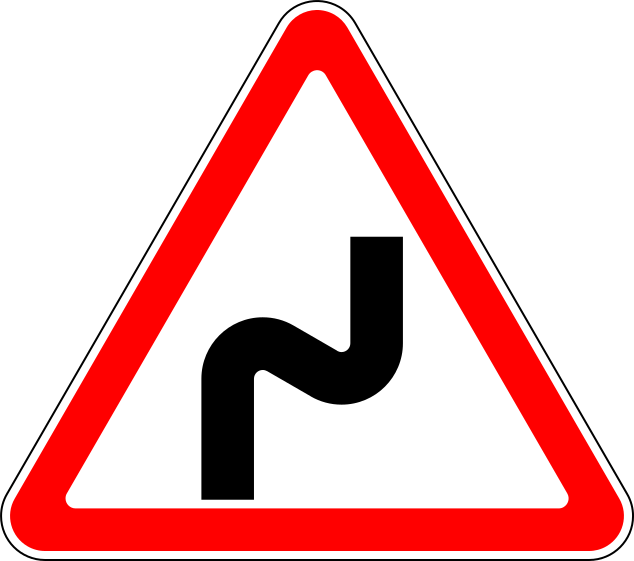
1.13.1. Dangerous bends

A section of road with dangerous bends, the first bend being to the right. Outside built-up areas the sign is placed 150−300 m before the start of the hazardous section, in built-up areas – 50–100 m before it.

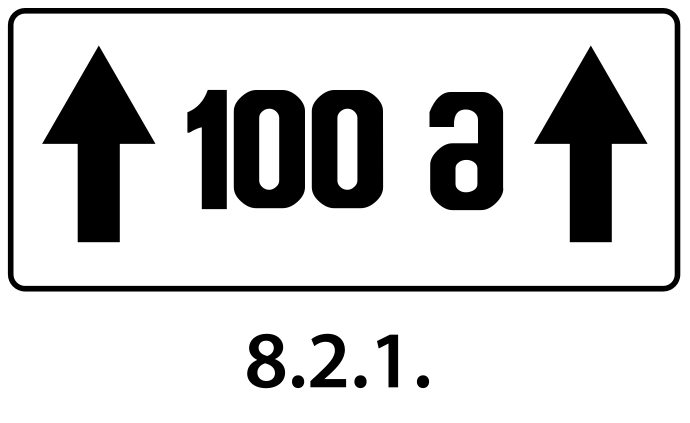
8.2.1. Zone of operation

Indicates the length of a hazardous section of road marked with a warning sign, or the zone of operation of a prohibitory or information sign. 8.2.2 indicates the length of a hazardous section of road marked with a warning sign, or the zone of operation of a prohibitory or information sign. 8.2.3 indicates the end of the zone of operation of signs 3.27–3.30. 8.2.4 informs the driver that they are within the zone of operation of signs 3.27–3.30. 8.2.5 - 8.2.6 indicate the zone of operation of signs 3.27–3.30 when stopping and parking are prohibited along one side of a square, building façade, etc.

Ticket #374 — situation image

In the given situation, a U-turn of the car is permitted:

1 only in direction B
2 Only in direction A
3 both in direction A and in direction B
4 Not permitted in either direction
Law explanation
According to subparagraph "c" of paragraph 15 of Article 32 of the Law of Georgia "On Road Traffic", making a U-turn with a vehicle is prohibited on a bridge, overpass, flyover and under them. According to paragraph 1.5 of Chapter 1 (Horizontal markings) of Annex 2 of the same Law, horizontal marking 1.5 separates traffic flows moving in opposite directions on a road that has two or three traffic lanes; it marks the boundaries of traffic lanes when there are two or more lanes intended for traffic in one direction. Line 1.5 may be crossed from either side.
Practical part

Exam routes — exactly the way the examiner drives them

60 real exam routes across 10 cities, 793 km in total. Every turn and stop on the map, with voice guidance.

  • All routes on the map
  • GPS mode on the real road
  • Practice mode with adjustable speed
  • On the web and in the app

One-off payment, no auto-renewal — by card on the Bank of Georgia secure page.

Chat with us