Law explanation
Road sign used in this ticket
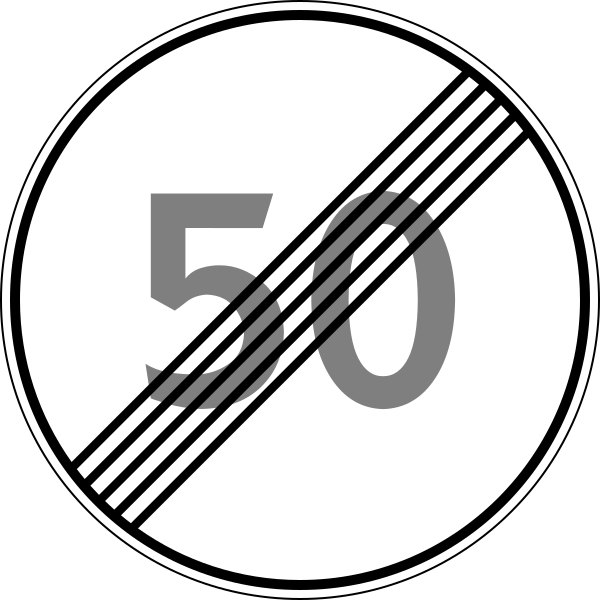
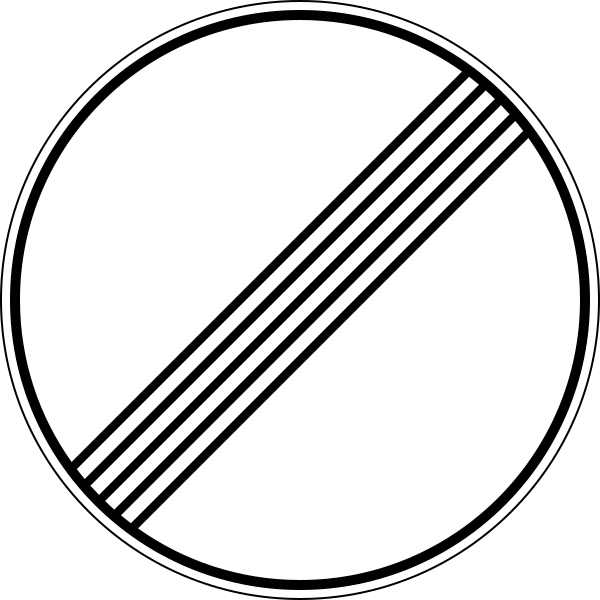
End of the zone of operation of sign 3.24 ("Maximum speed limit").
31 official tickets in this topic, with the correct answer and law explanation.
Round signs that restrict or prohibit movement.
Road sign used in this ticket
End of the zone of operation of sign 3.24 ("Maximum speed limit").
Does the driver of the passenger car have the right to park the car at the place shown in the picture on even-numbered days of the month from 19:00 to 21:00?
Road sign used in this ticket
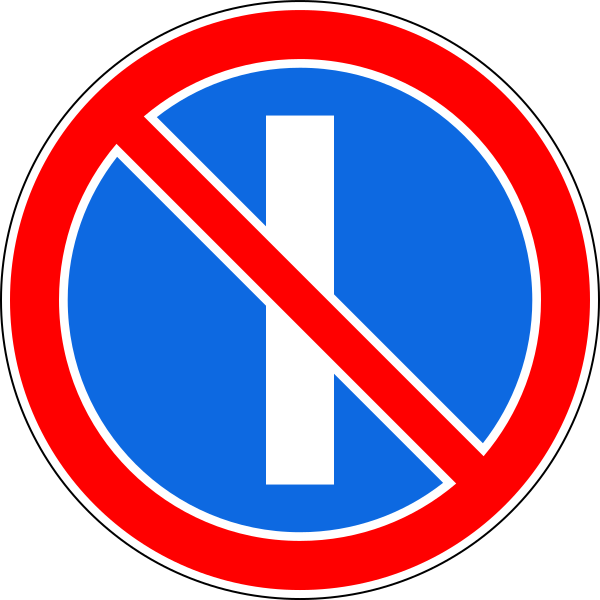
Prohibits the parking of vehicles on odd-numbered days of the month. When signs 3.29 and 3.30 are used together, the time for moving a vehicle from one side of the road to the other is from 19:00 to 21:00. During this period parking is permitted on both sides of the carriageway. The sign does not apply to postal vehicles with a white diagonal stripe on a blue background on the body, or to taxis with the taximeter switched on. The sign does not apply to vehicles driven by a person with a significant or severe disability status, or to vehicles carrying such persons. The sign applies from the place where it is installed to the nearest intersection behind it, and in a built-up area with no intersection – to the end of the built-up area. The sign's effect is also not interrupted at exits from adjacent areas or at intersections (junctions) with field, forest and other minor roads before which no corresponding sign is installed. The sign applies only to the side of the road on which it is installed.
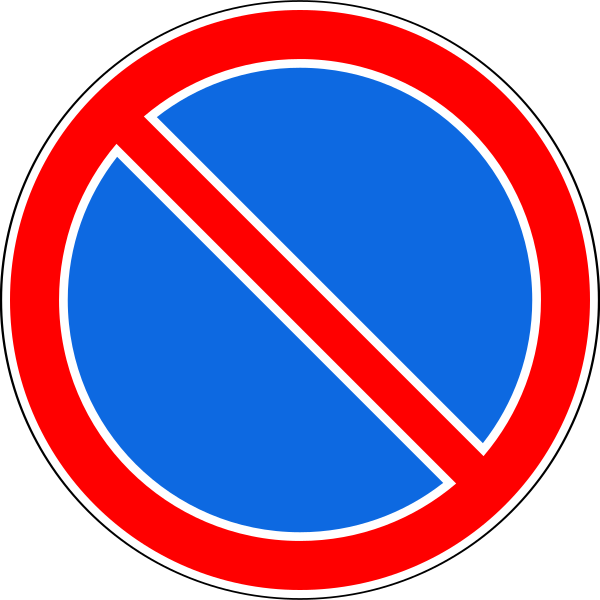
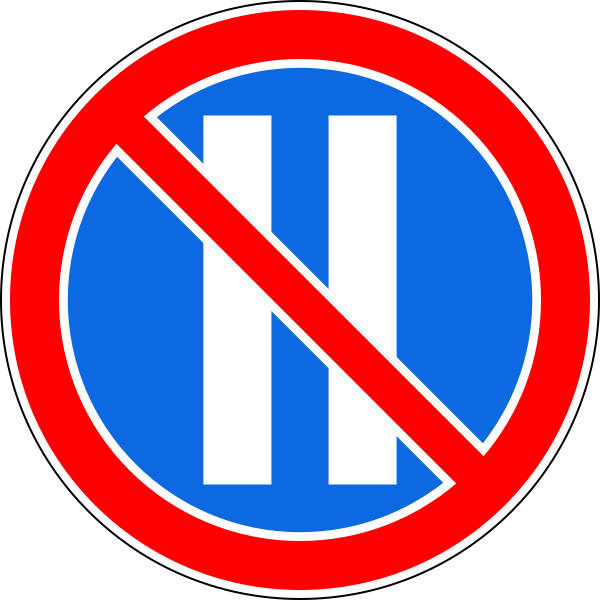
Prohibits the parking of vehicles on even-numbered days of the month. When signs 3.29 and 3.30 are used together, the time for moving a vehicle from one side of the road to the other is from 19:00 to 21:00. During this period parking is permitted on both sides of the carriageway. The sign does not apply to postal vehicles with a white diagonal stripe on a blue background on the body, or to taxis with the taximeter switched on. The sign does not apply to vehicles driven by a person with a significant or severe disability status, or to vehicles carrying such persons. The sign applies from the place where it is installed to the nearest intersection behind it, and in a built-up area with no intersection – to the end of the built-up area. The sign's effect is also not interrupted at exits from adjacent areas or at intersections (junctions) with field, forest and other minor roads before which no corresponding sign is installed. The sign applies only to the side of the road on which it is installed.
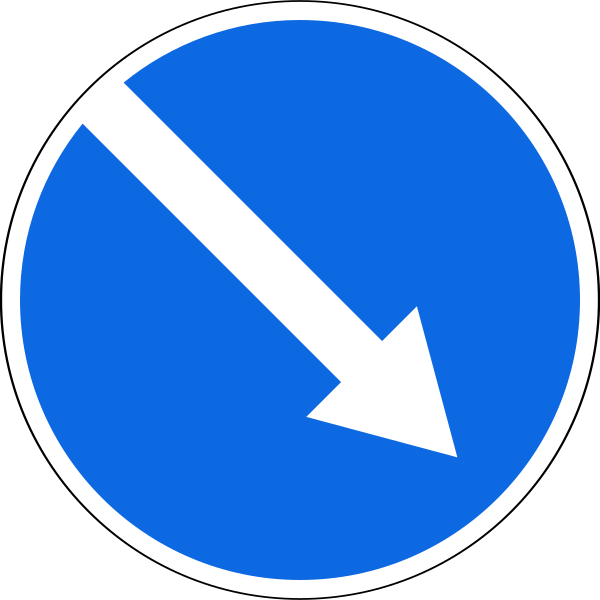
In the given situation, the driver of which car is not prohibited from moving in the direction of the arrow, if the actual mass of the truck is 7 tonnes?
Road sign used in this ticket
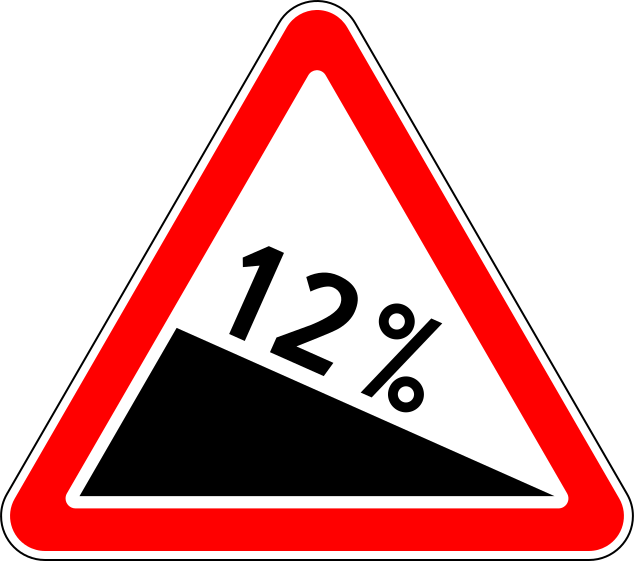
Warns of approaching a section of road with a steep descent. Outside built-up areas the sign is placed 150−300 m before the start of the hazardous section, in built-up areas – 50–100 m before it. If an ascent and a descent (or a descent and an ascent) follow each other, signs 1.14 and 1.15 may be installed without plate 8.1.1, immediately before the ascent and the descent, respectively;
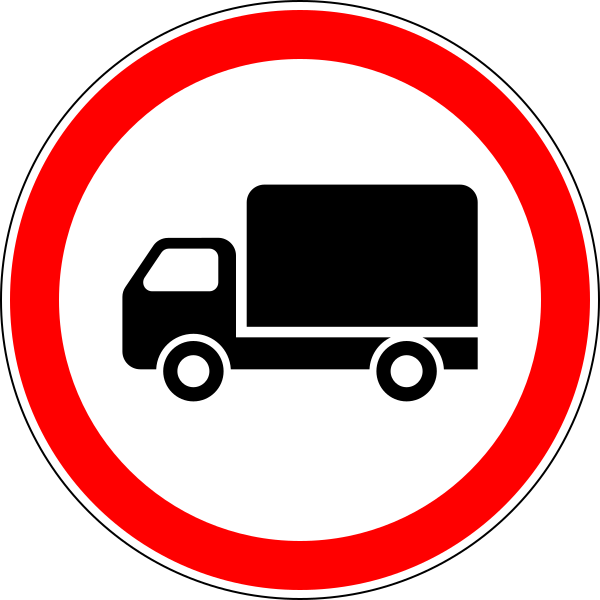
Prohibits the movement of vehicles and combinations of vehicles whose maximum permitted mass exceeds the maximum permitted mass limit shown on the sign. The sign indicates that traffic is prohibited in both directions. The sign does not apply to vehicles serving an enterprise located in the designated zone, or serving or belonging to persons who live or work in that zone. In such cases the vehicle must enter and leave the zone at the intersection nearest to its destination.
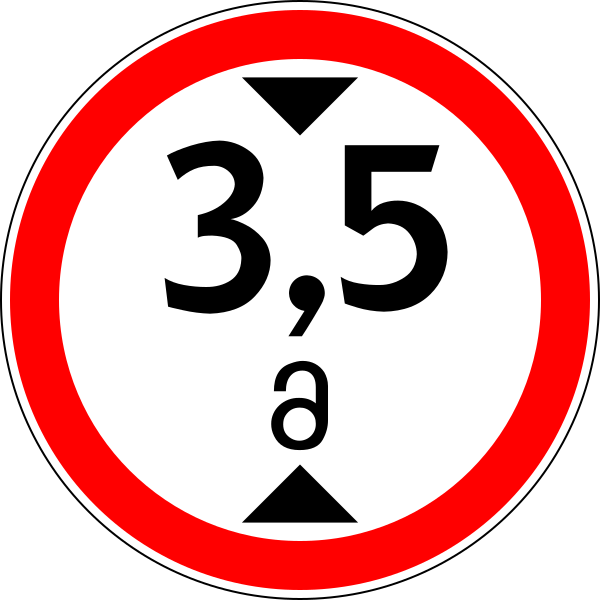
Which of the given road signs prohibits movement with a vehicle whose overall height (with or without load) exceeds that indicated on the sign?
Road sign used in this ticket
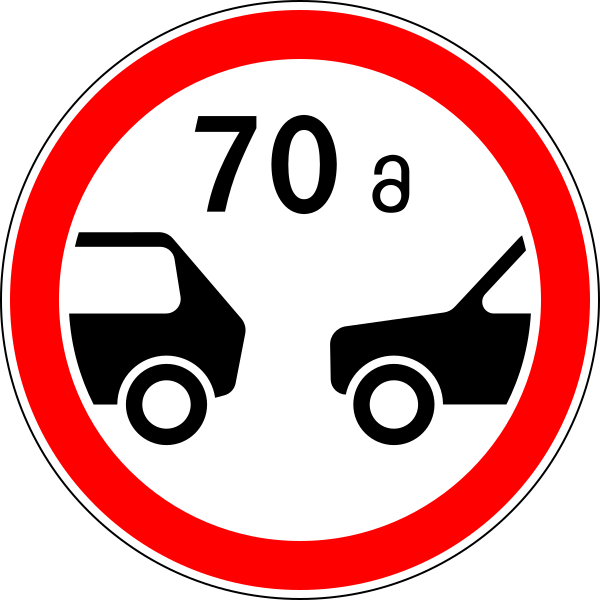
Prohibits vehicles from travelling at a distance between them shorter than that shown on the sign. The sign applies from the place where it is installed to the nearest intersection behind it, and in a built-up area with no intersection – to the end of the built-up area. The sign's effect is also not interrupted at exits from adjacent areas or at intersections (junctions) with field, forest and other minor roads before which no corresponding sign is installed.
Prohibits the movement of vehicles whose overall height (laden or unladen) exceeds that shown on the sign.
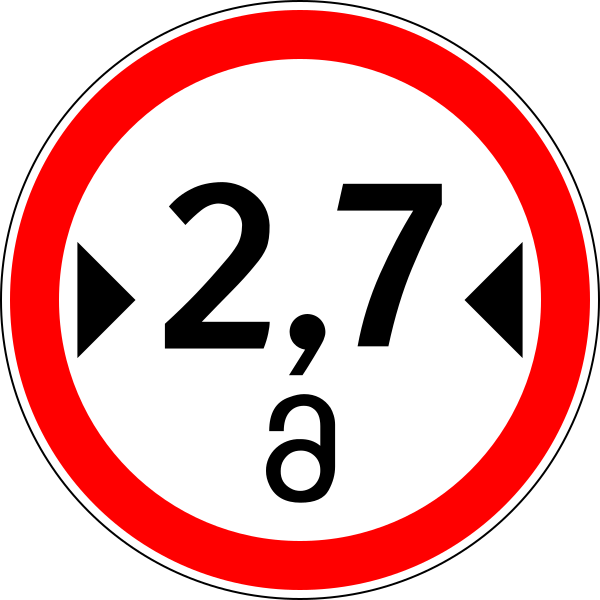
Prohibits the movement of vehicles whose overall width (laden or unladen) exceeds that shown on the sign.
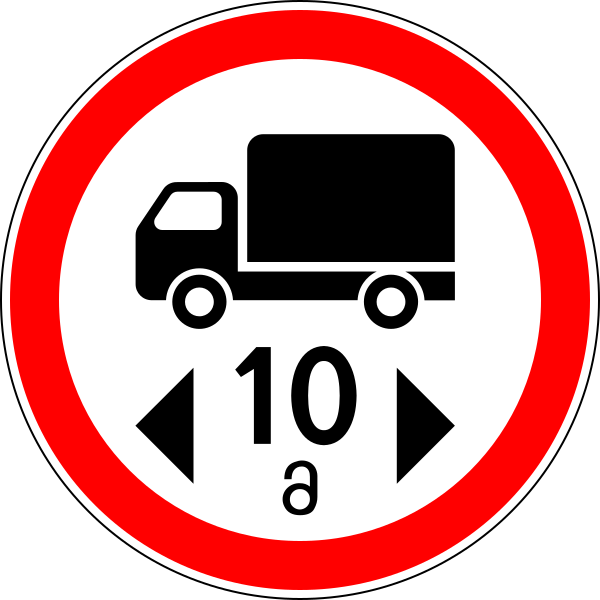
Prohibits the movement of vehicles and combinations of vehicles whose overall length (laden or unladen) exceeds that shown on the sign.
Which of the given road signs prohibits the movement of a vehicle whose overall width (with or without load) exceeds that indicated on the sign?
Road sign used in this ticket
Prohibits vehicles from travelling at a distance between them shorter than that shown on the sign. The sign applies from the place where it is installed to the nearest intersection behind it, and in a built-up area with no intersection – to the end of the built-up area. The sign's effect is also not interrupted at exits from adjacent areas or at intersections (junctions) with field, forest and other minor roads before which no corresponding sign is installed.
Prohibits the movement of vehicles whose overall height (laden or unladen) exceeds that shown on the sign.
Prohibits the movement of vehicles whose overall width (laden or unladen) exceeds that shown on the sign.
Prohibits the movement of vehicles and combinations of vehicles whose overall length (laden or unladen) exceeds that shown on the sign.
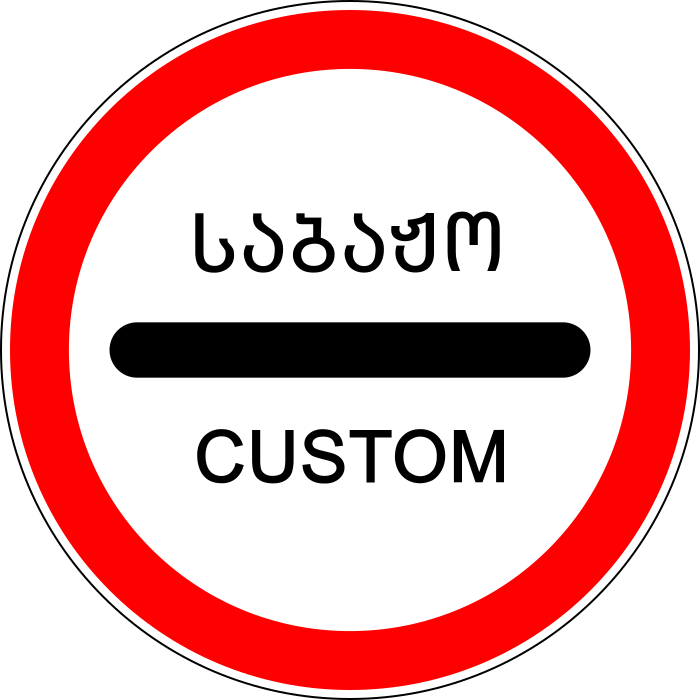
Which of the given road signs prohibits passing a customs checkpoint (customs control zone located at the customs border of Georgia) without stopping?
Road sign used in this ticket
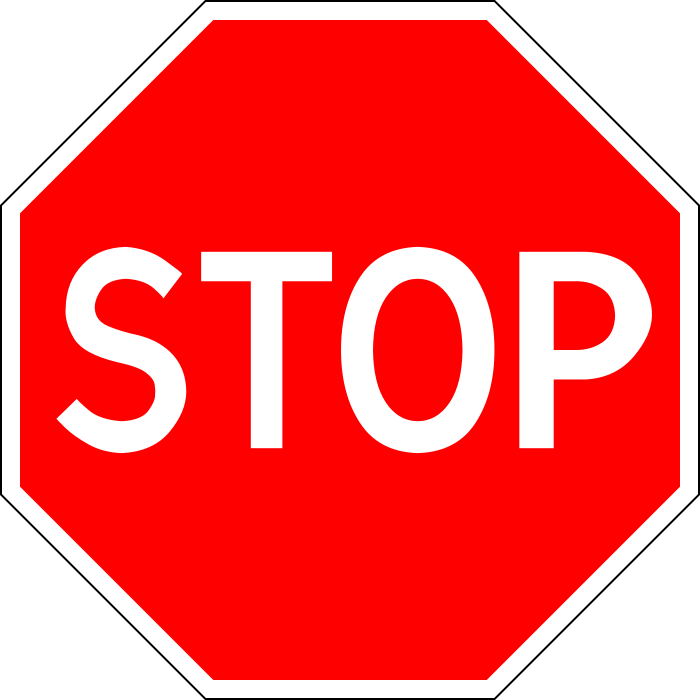
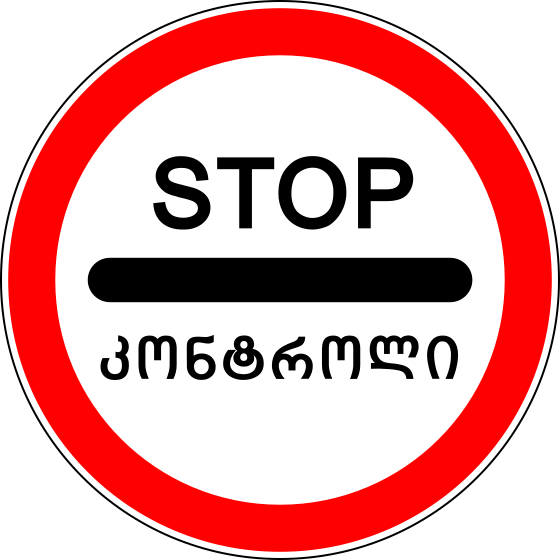
Prohibits the driver from proceeding without stopping before the "STOP" line, or, if there is none, before the edge of the carriageway being crossed. The driver must give way to drivers moving on the road being crossed, and where plate 8.13 is present – to drivers on the main road. The sign is installed where visibility of vehicles moving on the crossing road is not ensured. It may also be installed before a level crossing or a quarantine post (in this case the driver must stop before the "STOP" line, or, if there is none, before the sign). The sign applies to the intersection of carriageways before which it is installed.
Prohibits passing without stopping at a customs checkpoint (customs control zone located at the customs border of Georgia).
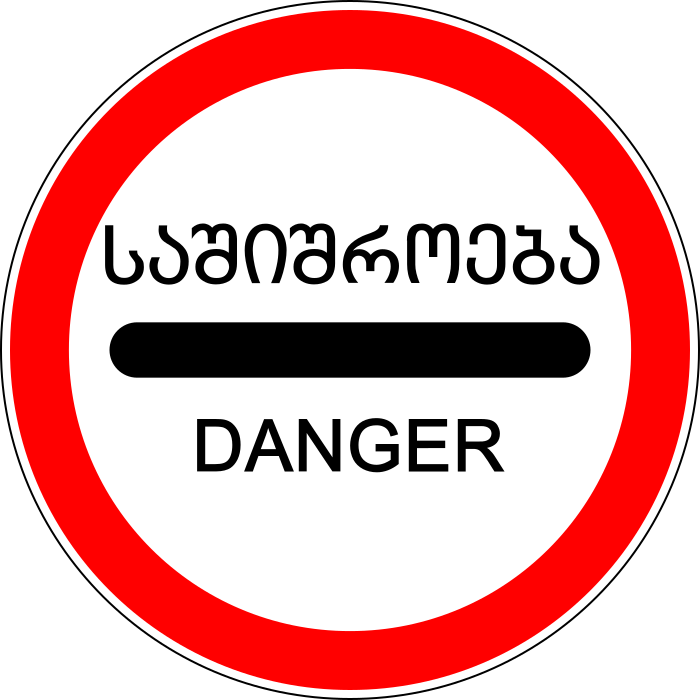
Prohibits further movement of all vehicles due to a road traffic accident or other danger.
Prohibits passing without stopping through a checkpoint (police or quarantine post, entrance to a border or restricted zone, toll road entrance, etc.).
Which of the given road signs prohibits further movement of all types of vehicles due to a road traffic accident or other danger?
Road sign used in this ticket
Prohibits vehicles from travelling at a distance between them shorter than that shown on the sign. The sign applies from the place where it is installed to the nearest intersection behind it, and in a built-up area with no intersection – to the end of the built-up area. The sign's effect is also not interrupted at exits from adjacent areas or at intersections (junctions) with field, forest and other minor roads before which no corresponding sign is installed.
Prohibits further movement of all vehicles due to a road traffic accident or other danger.
Prohibits passing without stopping through a checkpoint (police or quarantine post, entrance to a border or restricted zone, toll road entrance, etc.).
Prohibits passing without stopping at a customs checkpoint (customs control zone located at the customs border of Georgia).
Which of the given road signs prohibits passing without stopping at a checkpoint (a police or quarantine post, entrances to a border or restricted zone, exits on toll roads, etc.)?
Road sign used in this ticket
Prohibits vehicles from travelling at a distance between them shorter than that shown on the sign. The sign applies from the place where it is installed to the nearest intersection behind it, and in a built-up area with no intersection – to the end of the built-up area. The sign's effect is also not interrupted at exits from adjacent areas or at intersections (junctions) with field, forest and other minor roads before which no corresponding sign is installed.
Prohibits passing without stopping at a customs checkpoint (customs control zone located at the customs border of Georgia).
Prohibits further movement of all vehicles due to a road traffic accident or other danger.
Prohibits passing without stopping through a checkpoint (police or quarantine post, entrance to a border or restricted zone, toll road entrance, etc.).
Which of the given road signs prohibits turning right at the nearest intersection of carriageways?
Road sign used in this ticket
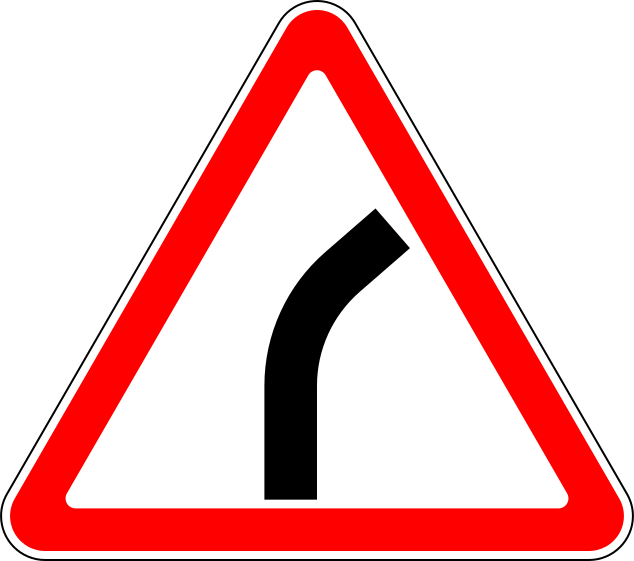
A dangerous bend of the road to the right with a small radius or limited visibility. Outside built-up areas the sign is placed 150−300 m before the start of the hazardous section, in built-up areas – 50–100 m before it.
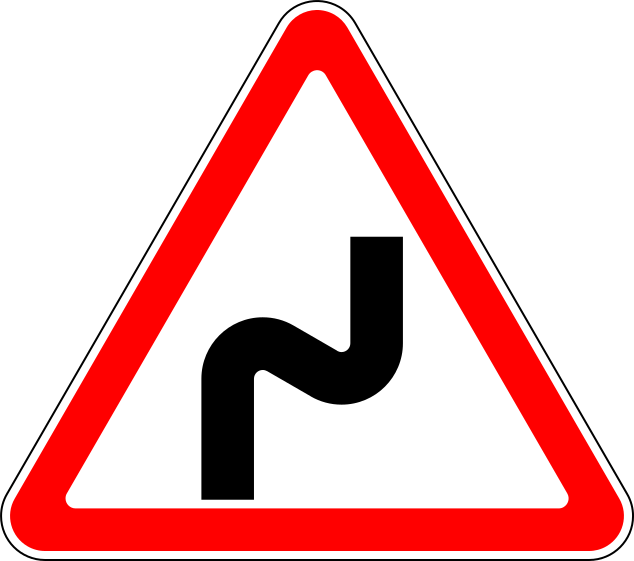
A section of road with dangerous bends, the first bend being to the right. Outside built-up areas the sign is placed 150−300 m before the start of the hazardous section, in built-up areas – 50–100 m before it.
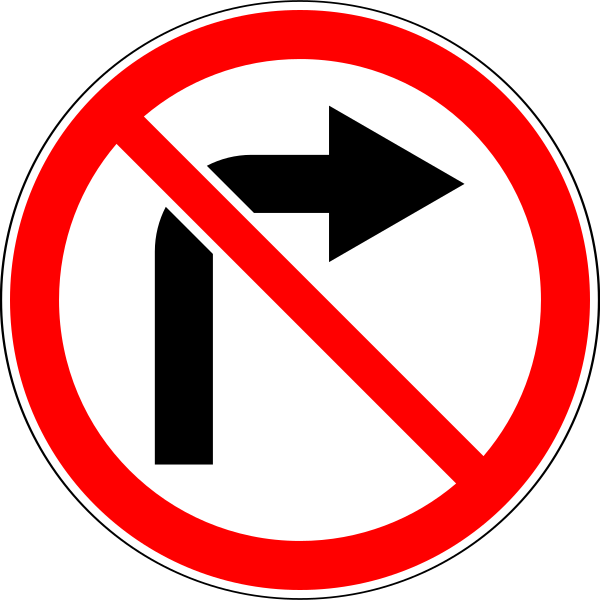
Prohibits turning right at the nearest intersection of carriageways. The sign does not apply to route (public transport) vehicles. The sign applies to the intersection of carriageways before which it is installed.
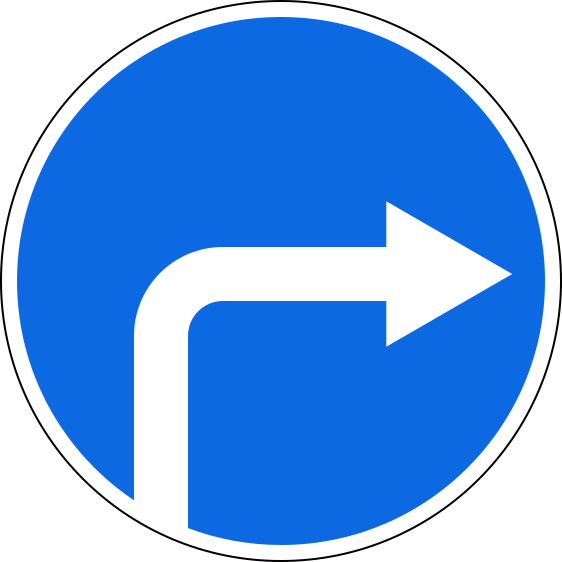
Requires the driver to proceed only to the right. The sign applies to the intersection of carriageways before which it is installed; the sign does not apply to route (public transport) vehicles.
Which of the given road signs prohibits turning left at the nearest intersection of carriageways?
Road sign used in this ticket
A dangerous bend of the road to the right with a small radius or limited visibility. Outside built-up areas the sign is placed 150−300 m before the start of the hazardous section, in built-up areas – 50–100 m before it.
A section of road with dangerous bends, the first bend being to the right. Outside built-up areas the sign is placed 150−300 m before the start of the hazardous section, in built-up areas – 50–100 m before it.
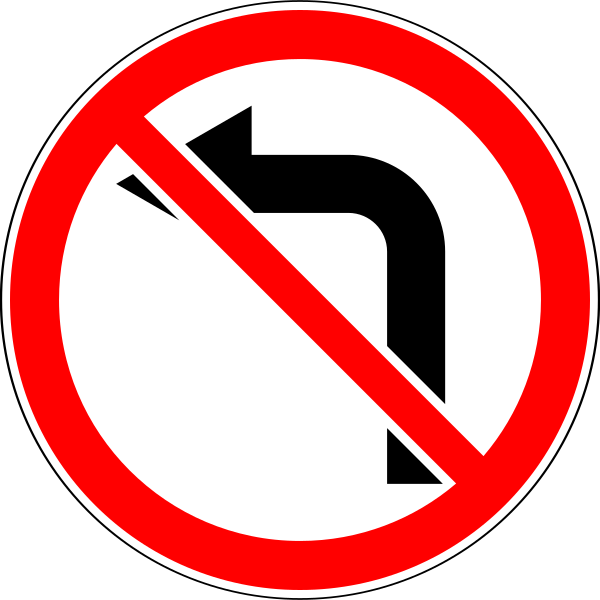
Prohibits turning left at the nearest intersection of carriageways. The sign does not apply to route (public transport) vehicles. The sign applies to the intersection of carriageways before which it is installed.
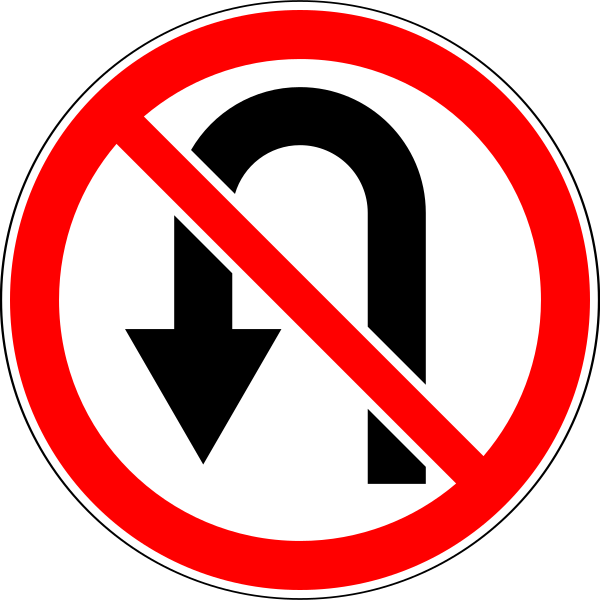
Prohibits U-turns at the nearest intersection of carriageways. The sign does not apply to route (public transport) vehicles.
Road sign used in this ticket
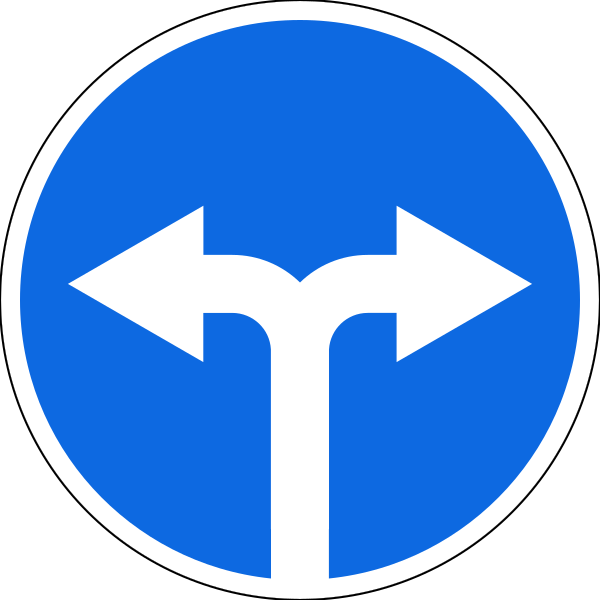
Requires the driver to proceed only to the right or to the left. The sign also permits U-turns. The sign applies to the intersection of carriageways before which it is installed; the sign does not apply to route (public transport) vehicles.
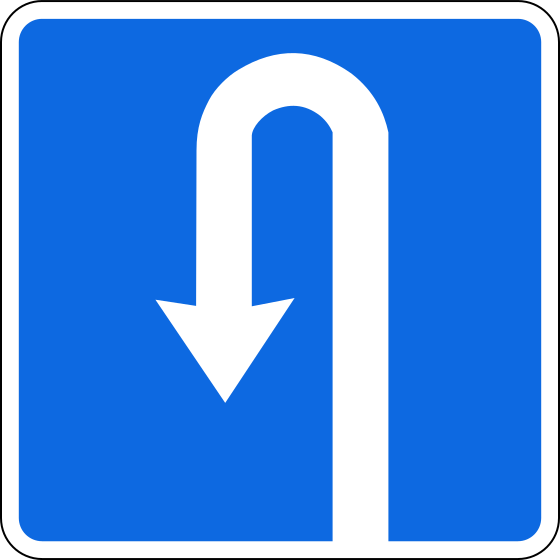
Indicates a place for making a U-turn. The sign is installed before or above the U-turn place, or in advance with plate 8.1.1. The sign does not permit turning left.
Prohibits U-turns at the nearest intersection of carriageways. The sign does not apply to route (public transport) vehicles.
Prohibits turning left at the nearest intersection of carriageways. The sign does not apply to route (public transport) vehicles. The sign applies to the intersection of carriageways before which it is installed.
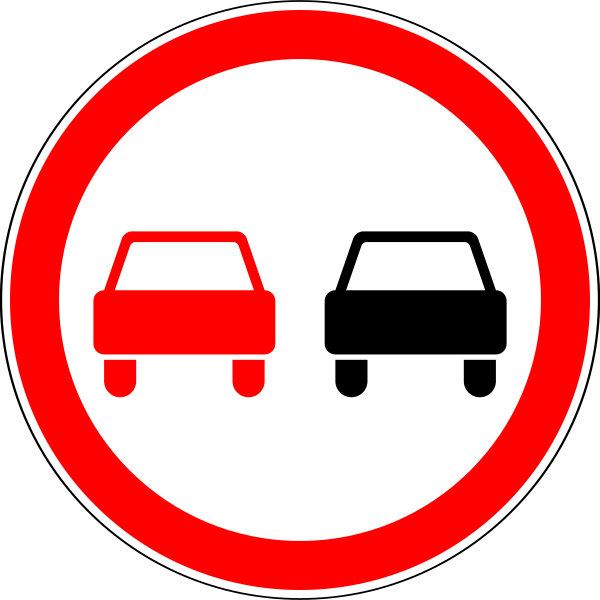
Which of the given road signs prohibits overtaking any type of power-driven vehicle (except vehicles moving at a speed of less than 30 km/h)?
Road sign used in this ticket
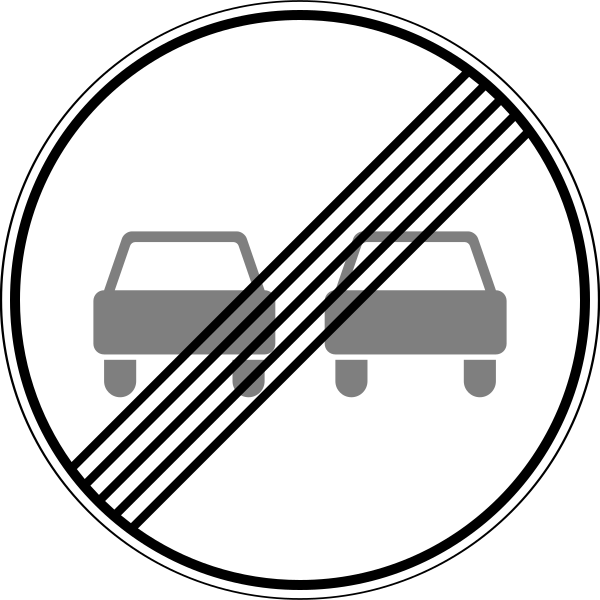
End of the zone of operation of road sign 3.20 ("No overtaking").
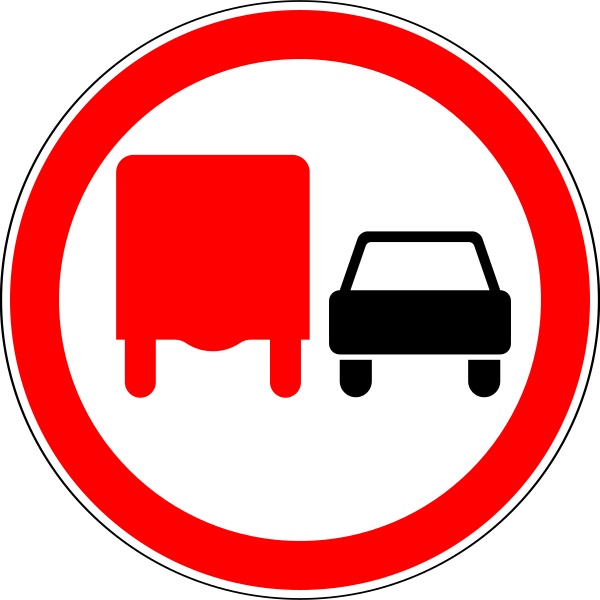
Prohibits trucks with a maximum permitted mass of more than 3.5 tonnes from overtaking other vehicles (except vehicles moving at less than 30 km/h), and prohibits tractors from overtaking other vehicles (except horse-drawn vehicles and bicycles). The sign applies from the place where it is installed to the nearest intersection behind it, and in a built-up area with no intersection – to the end of the built-up area. The sign's effect is also not interrupted at exits from adjacent areas or at intersections (junctions) with field, forest and other minor roads before which no corresponding sign is installed.
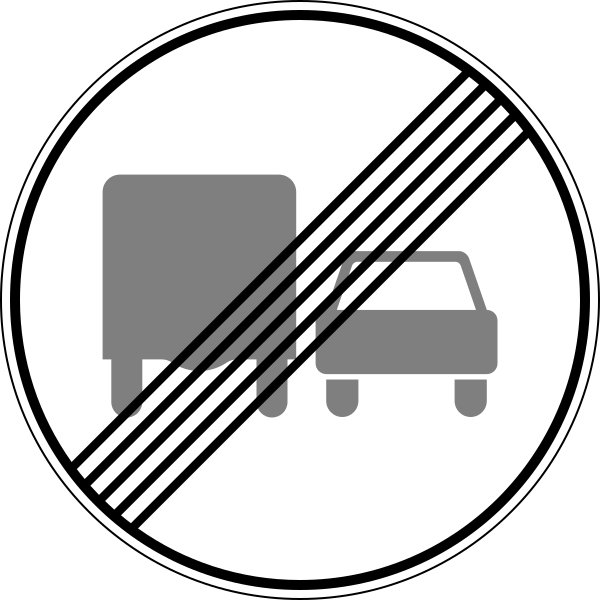
End of the zone of operation of road sign 3.22 ("No overtaking by trucks").
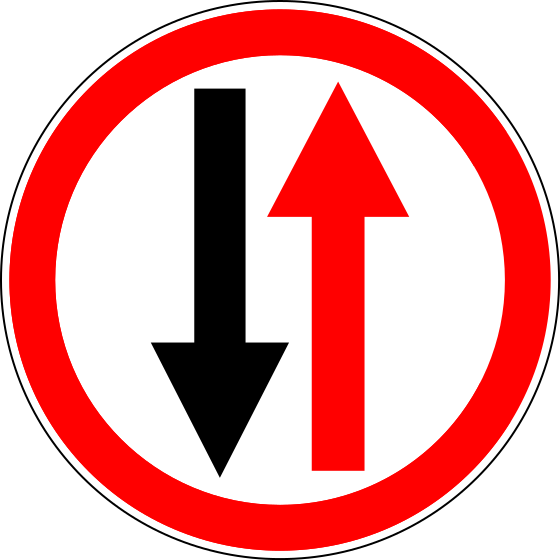
Prohibits the driver from entering a narrow section of road if this would hinder oncoming traffic. The driver must give way to oncoming vehicles that are at the opposite approach or on the narrow section of road. The sign is installed immediately before the narrow section of road, or in advance with plate 8.1.1.
Which of the given road signs prohibits movement at a speed (km/h) higher than that indicated on the sign?
Road sign used in this ticket
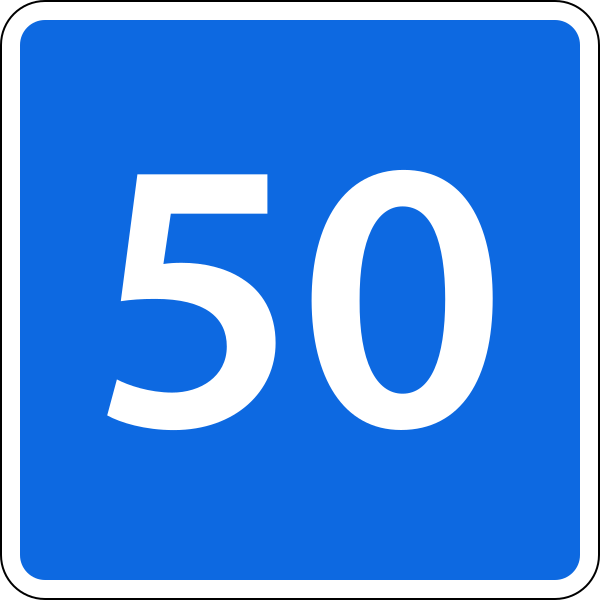
Indicates the speed at which it is recommended to travel on the given section of road. The sign is installed at the beginning of the road. The sign applies up to the nearest intersection, and when used with a warning sign − over the entire length of the hazardous section.
End of the zone of operation of sign 3.24 ("Maximum speed limit").
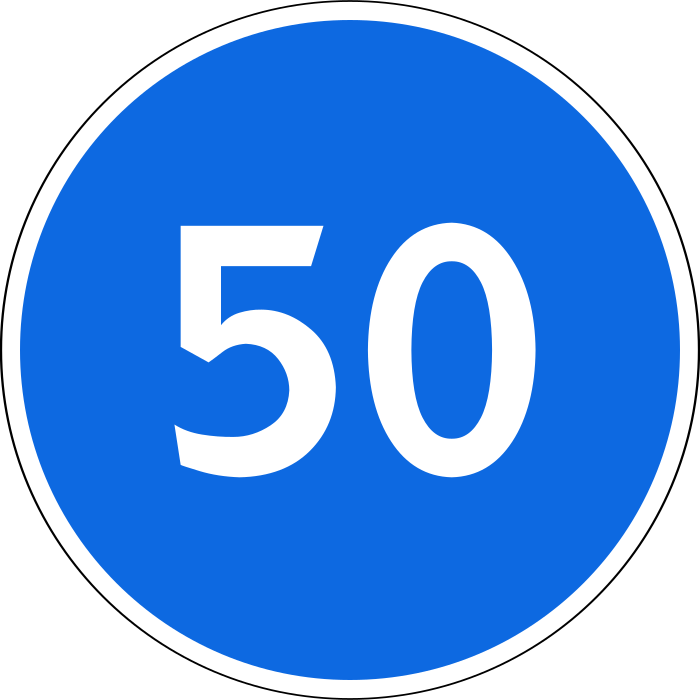
Sets the minimum speed of travel on the road. The sign applies from the place where it is installed to the nearest intersection behind it, and in a built-up area with no intersection − to the end of the built-up area.
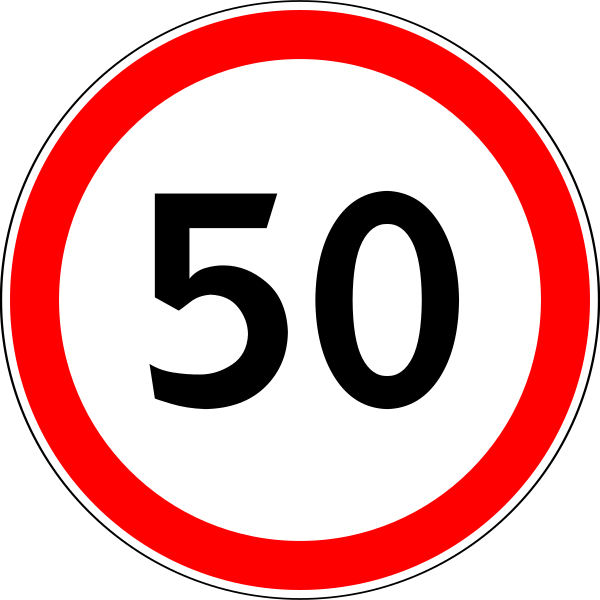
Prohibits driving at a speed (km/h) exceeding that shown on the sign. The sign applies from the place where it is installed to the nearest intersection behind it, and in a built-up area with no intersection – to the end of the built-up area. The sign's effect is also not interrupted at exits from adjacent areas or at intersections (junctions) with field, forest and other minor roads before which no corresponding sign is installed. Sign 3.24 installed before a built-up area marked with signs 5.23.1 and 5.23.2 applies up to signs 5.23.1 and 5.23.2, respectively, that mark the built-up area.
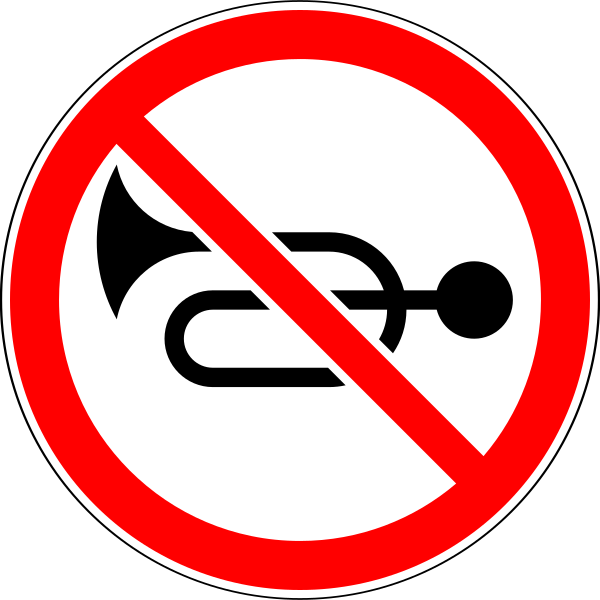
Which of the given road signs prohibits the use of the sound signal, except when the signal is used to prevent a road traffic accident?
Road sign used in this ticket
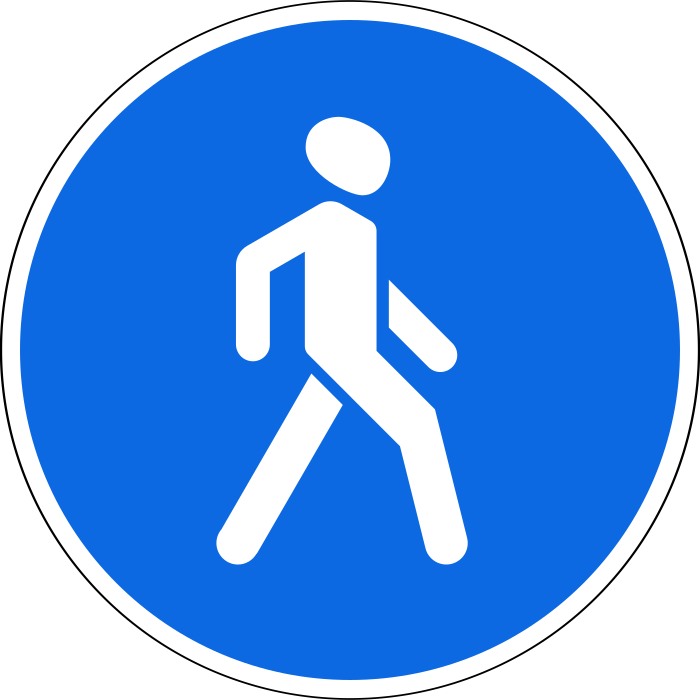
A path separated from the road and intended for pedestrian traffic. Sign 4.5 is installed as the main sign at the beginning of the footpath, and as a repeated sign after every crossing with a road.
Prohibits the use of the horn, except when the signal is used to prevent a road traffic accident. The sign applies from the place where it is installed to the nearest intersection behind it, and in a built-up area with no intersection – to the end of the built-up area. The sign's effect is also not interrupted at exits from adjacent areas or at intersections (junctions) with field, forest and other minor roads before which no corresponding sign is installed.
Sign indicating a telephone.
A section of road where a danger may arise that is not covered by other warning signs. Outside built-up areas the sign is placed 150−300 m before the start of the hazardous section, in built-up areas – 50–100 m before it.
Which of the given road signs designates the end of the zone of operation of sign 3.20 "No overtaking"?
Road sign used in this ticket
Prohibits overtaking all types of motor vehicles (except vehicles moving at less than 30 km/h). Overtaking motorcycles without a sidecar, mopeds and bicycles is permitted without crossing into the oncoming lane. The sign applies from the place where it is installed to the nearest intersection behind it, and in a built-up area with no intersection – to the end of the built-up area. The sign's effect is also not interrupted at exits from adjacent areas or at intersections (junctions) with field, forest and other minor roads before which no corresponding sign is installed.
End of the zone of operation of road sign 3.22 ("No overtaking by trucks").
End of the zone of operation of road sign 3.20 ("No overtaking").
End of the zone of operation of sign 3.24 ("Maximum speed limit").
Road sign used in this ticket
Prohibits the parking of vehicles. The sign does not apply to postal vehicles with a white diagonal stripe on a blue background on the body, or to taxis with the taximeter switched on. The sign does not apply to vehicles driven by a person with a significant or severe disability status, or to vehicles carrying such persons. The sign applies from the place where it is installed to the nearest intersection behind it, and in a built-up area with no intersection – to the end of the built-up area. The sign's effect is also not interrupted at exits from adjacent areas or at intersections (junctions) with field, forest and other minor roads before which no corresponding sign is installed. The sign applies only to the side of the road on which it is installed.
End of the zone of operation of several of signs 3.16, 3.20, 3.22, 3.24, 3.26–3.30 at the same time.
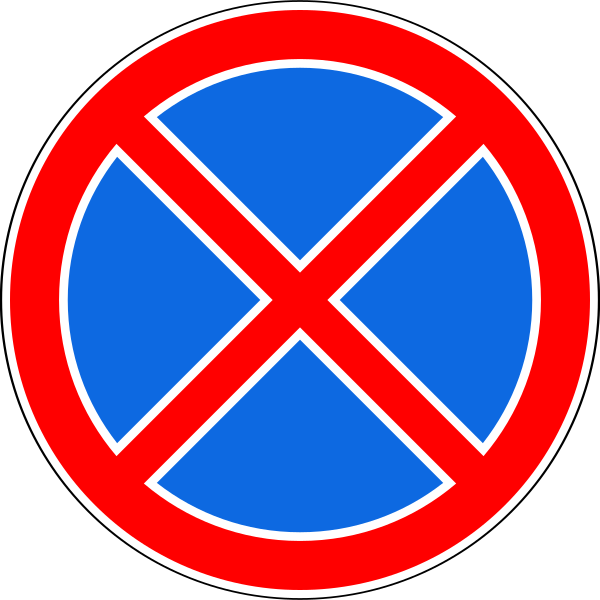
Prohibits both stopping and parking of vehicles. The sign does not apply to route (public transport) vehicles. The sign applies from the place where it is installed to the nearest intersection behind it, and in a built-up area with no intersection – to the end of the built-up area. The sign's effect is also not interrupted at exits from adjacent areas or at intersections (junctions) with field, forest and other minor roads before which no corresponding sign is installed. The sign applies only to the side of the road on which it is installed.
Indicates that a dividing strip, traffic island or other obstacle may be passed only on the right.
Which of the road signs shown prohibits the parking of vehicles on even-numbered days of the month?
Road sign used in this ticket
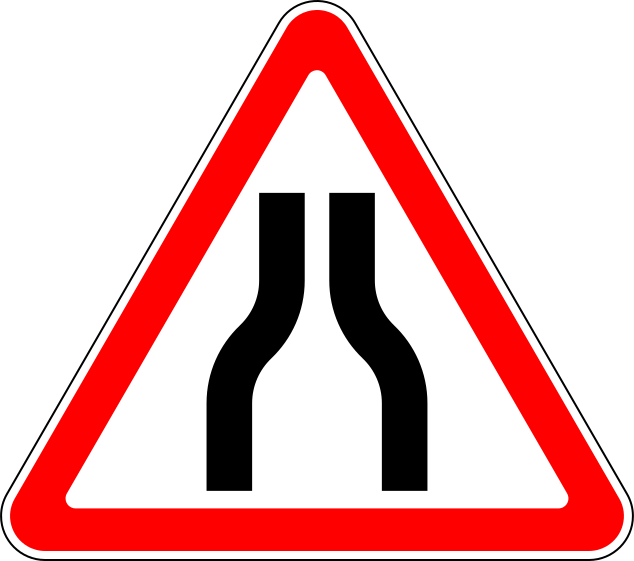
A section of road where the width of the carriageway narrows on both sides. Outside built-up areas the sign is placed 150−300 m before the start of the hazardous section, in built-up areas – 50–100 m before it.
Prohibits the parking of vehicles on odd-numbered days of the month. When signs 3.29 and 3.30 are used together, the time for moving a vehicle from one side of the road to the other is from 19:00 to 21:00. During this period parking is permitted on both sides of the carriageway. The sign does not apply to postal vehicles with a white diagonal stripe on a blue background on the body, or to taxis with the taximeter switched on. The sign does not apply to vehicles driven by a person with a significant or severe disability status, or to vehicles carrying such persons. The sign applies from the place where it is installed to the nearest intersection behind it, and in a built-up area with no intersection – to the end of the built-up area. The sign's effect is also not interrupted at exits from adjacent areas or at intersections (junctions) with field, forest and other minor roads before which no corresponding sign is installed. The sign applies only to the side of the road on which it is installed.
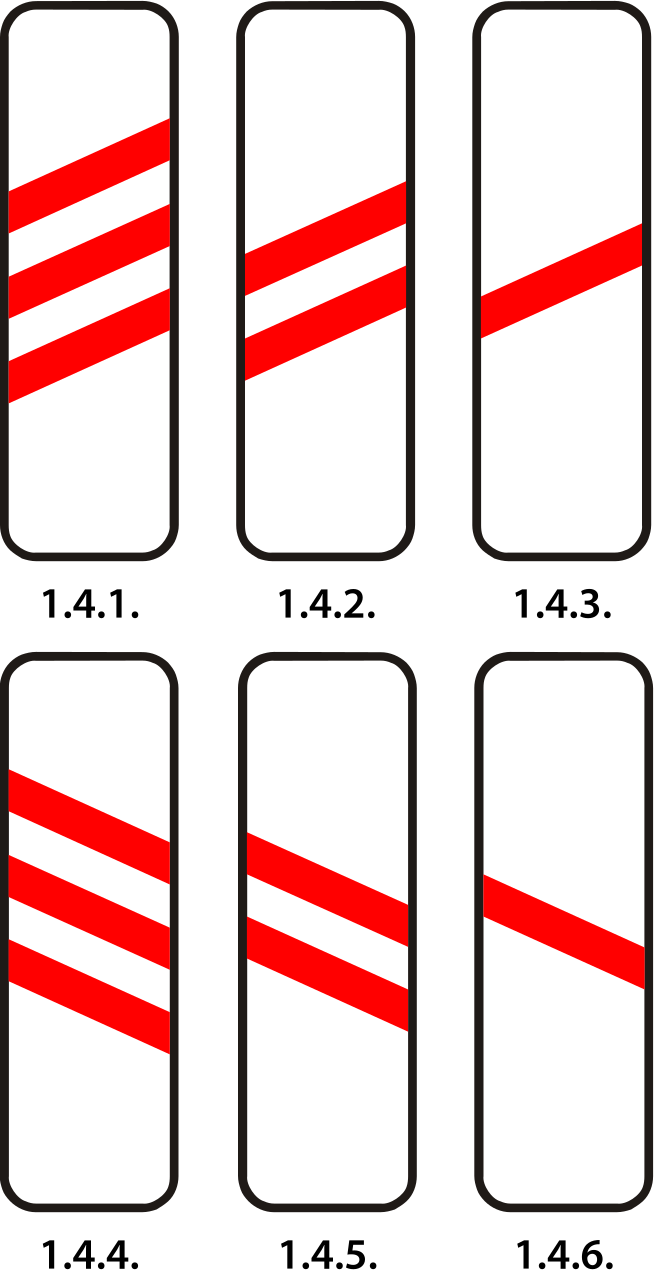
Additionally warns the driver outside built-up areas of approaching a railway level crossing. Signs 1.4.1−1.4.3 are installed on the right side of the road, and signs 1.4.4−1.4.6 on the left side. Signs 1.4.1 and 1.4.4 are installed together with the main and repeated sign 1.1 or 1.2 in the direction of travel, signs 1.4.3 and 1.4.6 together with the repeated sign 1.1 or 1.2 in the direction of travel, and signs 1.4.2 and 1.4.5 independently, at an equal distance between the main and the repeated sign 1.1 or 1.2.
Prohibits the parking of vehicles on even-numbered days of the month. When signs 3.29 and 3.30 are used together, the time for moving a vehicle from one side of the road to the other is from 19:00 to 21:00. During this period parking is permitted on both sides of the carriageway. The sign does not apply to postal vehicles with a white diagonal stripe on a blue background on the body, or to taxis with the taximeter switched on. The sign does not apply to vehicles driven by a person with a significant or severe disability status, or to vehicles carrying such persons. The sign applies from the place where it is installed to the nearest intersection behind it, and in a built-up area with no intersection – to the end of the built-up area. The sign's effect is also not interrupted at exits from adjacent areas or at intersections (junctions) with field, forest and other minor roads before which no corresponding sign is installed. The sign applies only to the side of the road on which it is installed.
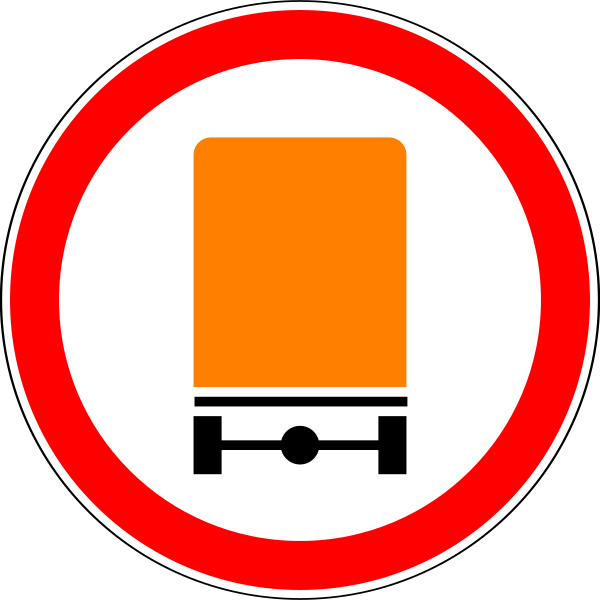
Which of the given road signs prohibits the movement of vehicles carrying dangerous goods which, according to the legislation, must be marked with the appropriate identification sign?
Road sign used in this ticket
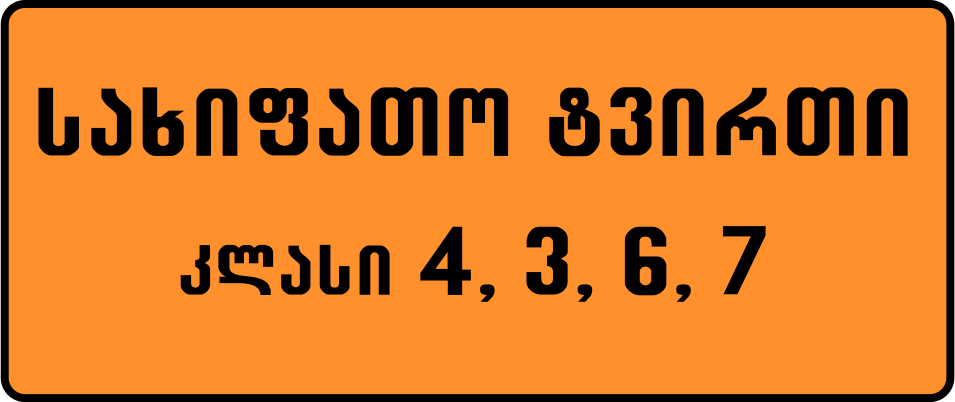
Indicates that the sign applies to vehicles carrying goods of the hazard class shown on the plate, as defined by state standard 19433-88. The plate is used with signs 3.32, 3.33 and 4.8.1−4.8.3.
Prohibits the movement of vehicles carrying dangerous goods which, in accordance with the legislation of Georgia, must be marked with the corresponding identification sign. The sign indicates that traffic is prohibited in both directions. The sign is installed to prevent deviation from the route designated for vehicles carrying dangerous, explosive and flammable goods, and to prohibit such vehicles from entering a road or area where they pose a particular danger to people.
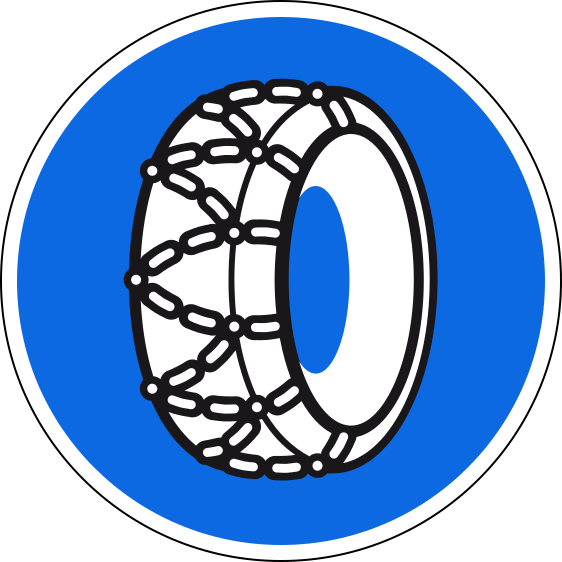
A section of road on which vehicles must have snow (anti-skid) chains fitted on at least two driving wheels.
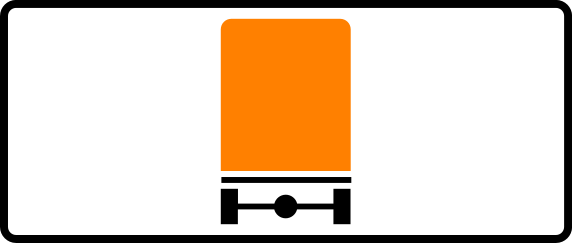
Indicates the type of vehicle to which the sign applies. The plates extend the sign's effect to vehicles marked with the identification sign "Dangerous goods".
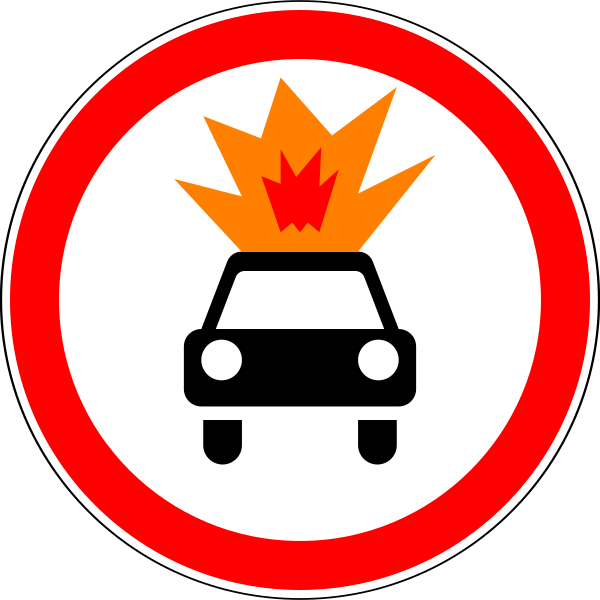
Which of the given road signs prohibits the movement of a vehicle carrying explosive and highly flammable goods, which under the current legislation must be marked with the corresponding identification sign?
Road sign used in this ticket
A section of road on which vehicles must have snow (anti-skid) chains fitted on at least two driving wheels.
Indicates the type of vehicle to which the sign applies. The plates extend the sign's effect to vehicles marked with the identification sign "Dangerous goods".
Prohibits the movement of vehicles carrying explosive and flammable goods of classes 1.22–2.4, 3.1, 3.2, 5.2 as defined by state standard 19433-88 which, in accordance with the legislation of Georgia, must be marked with the identification sign "Dangerous goods". The sign indicates that traffic is prohibited in both directions. The sign is installed to prevent deviation from the route designated for vehicles carrying dangerous, explosive and flammable goods, and to prohibit such vehicles from entering a road or area where they pose a particular danger to people.
Indicates that the sign applies to vehicles carrying goods of the hazard class shown on the plate, as defined by state standard 19433-88. The plate is used with signs 3.32, 3.33 and 4.8.1−4.8.3.
Road sign used in this ticket
Prohibits the movement of vehicles and combinations of vehicles whose overall length (laden or unladen) exceeds that shown on the sign.
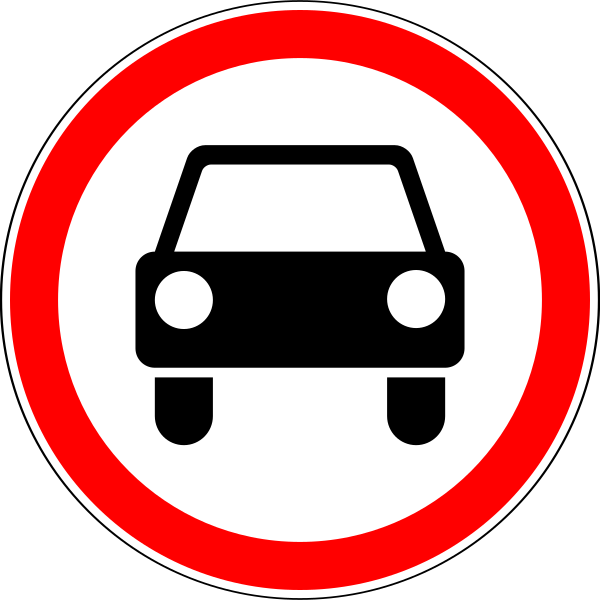
Prohibits the movement of all types of motor vehicles. The sign indicates that traffic is prohibited in both directions. The sign does not apply to route (public transport) vehicles. The sign does not apply to vehicles serving an enterprise located in the designated zone, or serving or belonging to persons who live or work in that zone. In such cases the vehicle must enter and leave the zone at the intersection nearest to its destination. The sign does not apply to vehicles driven by a person with a significant or severe disability status, or to vehicles carrying such persons.
Prohibits vehicles from travelling at a distance between them shorter than that shown on the sign. The sign applies from the place where it is installed to the nearest intersection behind it, and in a built-up area with no intersection – to the end of the built-up area. The sign's effect is also not interrupted at exits from adjacent areas or at intersections (junctions) with field, forest and other minor roads before which no corresponding sign is installed.
Prohibits turning right at the nearest intersection of carriageways. The sign does not apply to route (public transport) vehicles. The sign applies to the intersection of carriageways before which it is installed.
60 real exam routes across 10 cities, 793 km in total. Every turn and stop on the map, with voice guidance.
One-off payment, no auto-renewal — by card on the Bank of Georgia secure page.