imecadine.ge

Full ticket list

884 official tickets — category T, S, with the correct answer and law explanation.

Ticket #326 — situation image

The driver of which car violates the traffic rules when stopping at the place shown in the picture?

1 only the driver of the white car
2 The driver of both cars
3 Only the driver of the red car
4 the driver of neither car
Law explanation
According to subparagraphs “a.a” and “a.c” of paragraph 6 of Article 37 of the Law of Georgia “On Road Traffic”, stopping vehicles on the carriageway is prohibited: a.a) on pedestrian and cyclist crossings and closer than 5 metres in front of them; a.c) at crossings of carriageways, and also closer than 5 metres from the edges of the crossing carriageways, except for stopping opposite a side exit at three-way crossings (intersections) where there is a solid marking line or a dividing strip.
Ticket #327 — situation image

Which driver stopped the car at the prohibiting traffic light signal in compliance with the traffic rules?

1 the driver of neither car
2 the driver of the white car
3 the driver of the yellow car
Law explanation
According to Article 29(13) of the Law of Georgia "On Road Traffic", when a traffic light (other than a reversible-lane light) shows a prohibitory signal, the driver must stop at the "Stop" line (or at sign 7.16).
Ticket #329 — situation image

Will the driver of the passenger car violate the traffic rules by parking the car at the indicated place, if this creates an obstacle for pedestrians?

1 will not violate
2 will violate
Law explanation
According to paragraph 4 of Article 37 of the Law of Georgia “On Road Traffic”, parking on the edge of the pavement adjoining the carriageway is permitted only for passenger cars, motorcycles, mopeds and bicycles, provided that they do not obstruct pedestrians.

A driver involved in a road traffic accident is obliged to:

1 only switch on the hazard warning lights
2 only immediately stop the vehicle (not move it from the spot)
3 both immediately stop the vehicle (not move it from the spot) and switch on the hazard warning lights
Law explanation
According to subparagraph “a” of paragraph 1 of Article 27 of the Law of Georgia “On Road Traffic”, a driver involved in a road traffic accident must immediately stop the vehicle (not move it from the spot) and switch on the hazard warning lights.
Ticket #336 — situation image

In the event of a forced stop of the car at the place indicated in the picture, the driver:

1 must switch on the hazard warning lights and mark the vehicle with the appropriate sign at a sufficient distance
2 must only switch on the hazard warning lights
3 only mark the vehicle with the appropriate sign at a sufficient distance
Law explanation
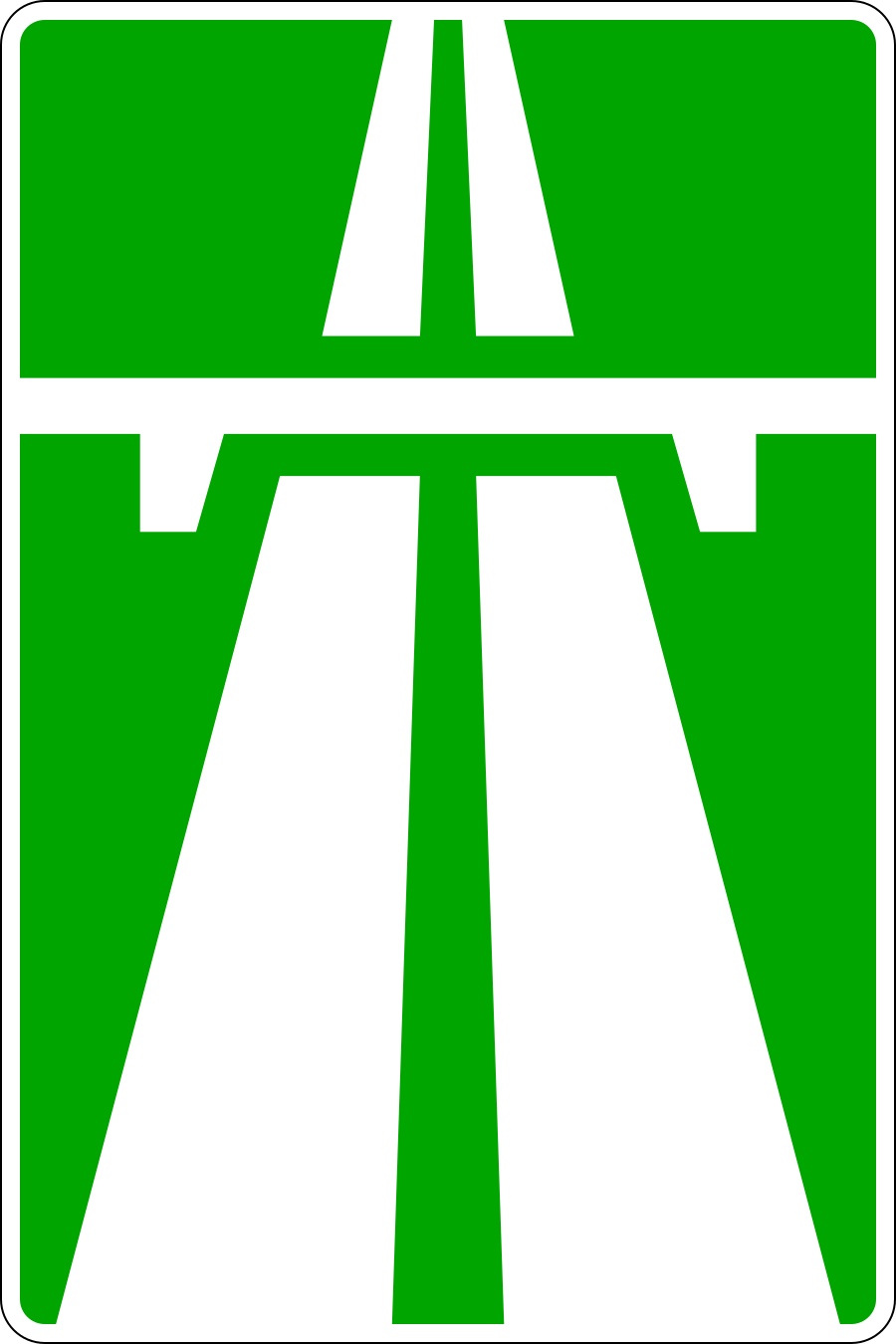
According to paragraph 5.1 of Chapter 5 (Special regulation signs) of Annex 1 of the Law of Georgia “On Road Traffic”, road sign 5.1 “Motorway” - a motorway on which the requirements of the rules governing traffic on motorways apply. The sign is placed at the beginning of the motorway or near it with plate 8.1.1. According to subparagraph “c.a” of paragraph 1 of Article 38 of the same Law, on a motorway and at motorway entries and exits the driver is prohibited from stopping or parking the vehicle (and/or its trailer), except in specially marked places designated for parking. A driver who is forced to stop for reasons beyond his control must take all measures to move the vehicle (and/or its trailer) off the carriageway, and if this cannot be done immediately − switch on the hazard warning lights (if fitted) and mark the vehicle (and/or its trailer) with the appropriate sign at a sufficient distance to warn approaching drivers in good time. According to subparagraph “a” of paragraph 1 and subparagraph “b” of paragraph 2 of Article 52 of the same Law: 1. Hazard warning lights are used to warn other road users of an impending danger. Hazard warning lights must be switched on: b) when forced to stop at a place where stopping is prohibited; 2. After switching on the hazard warning lights, and also if such lights are not fitted or are out of order, the driver must immediately set up the “warning triangle”, and in conditions of insufficient visibility − a flashing red lamp: b) when forced to stop at a place where stopping is prohibited, and where, taking into account the visibility conditions, other drivers will not be able to notice the vehicle in good time.

Road sign used in this ticket

5.1. Motorway

A motorway on which the requirements of the rules governing traffic on motorways apply. The sign is installed at the beginning of the motorway or near it with plate 8.1.1.

Ticket #342 — situation image

In the given situation, is the driver prohibited from parking the truck at the marked place?

1 is not prohibited
2 is prohibited
Law explanation
According to Article 37(6)(b.b) of the Law of Georgia "On Road Traffic", stopping a vehicle is prohibited at any place where it may create danger, including under a flyover, bridge and overpass, as well as in a tunnel, except at places specially designated for this purpose.
Ticket #343 — situation image

Will the driver of the passenger car violate the traffic rules if they park the car at the place indicated by the arrow?

1 will not violate
2 will violate
Law explanation
According to Article 37(6)(b.b) of the Law of Georgia "On Road Traffic", stopping a vehicle is prohibited at any place where it may create danger, including under a flyover, bridge and overpass, as well as in a tunnel, except at places specially designated for this purpose.

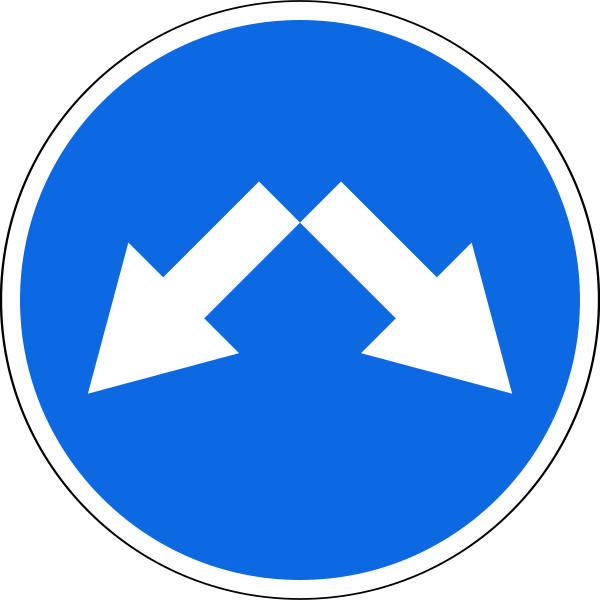
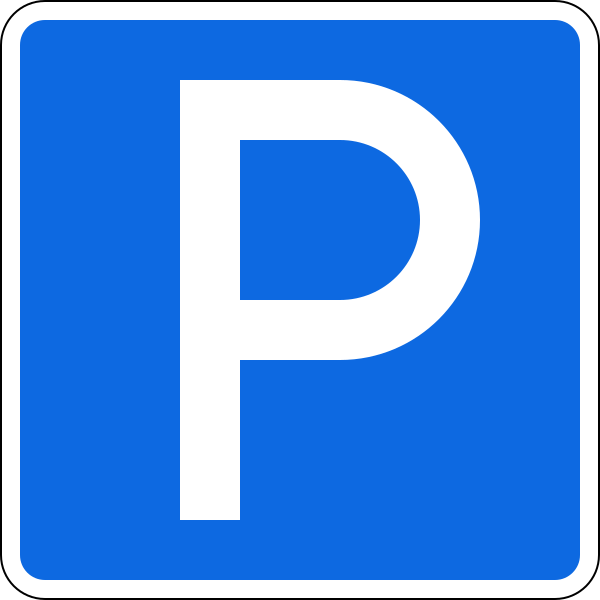
Road sign used in this ticket

4.2.3. Pass on either side

Indicates that a dividing strip, traffic island or other obstacle may be passed on the right or on the left.

4.3. Roundabout

Permits movement in the directions shown by the arrows at an intersection where roundabout (circular) traffic is organised.

7.4. Parking place

A place intended for parking vehicles. The zone of operation of the sign is determined by road markings; in their absence, the sign applies up to the nearest intersection or is limited by plate 8.2.1.

Ticket #344 — situation image

When the car is stopped at the place shown in the picture, outside a built-up area, the driver:

1 is obliged to switch on the hazard warning lights
2 is obliged to place a "warning triangle" behind the car
3 is obliged to switch on the hazard warning lights and place an "Emergency stop sign" behind the car
4 is not obliged to switch on the hazard warning lights and place an "Emergency stop sign" behind the car
Law explanation
According to Article 37(1) of the Law of Georgia "On Road Traffic", a vehicle that stops or is parked outside a built-up area must, as far as possible, be off the carriageway. According to Article 52(1)(b) and Article 52(2)(b) of the same Law: 1. Hazard warning lights are used to warn other road users of possible danger. Hazard warning lights must be switched on when forced to stop at a place where stopping is prohibited; 2. After switching on the hazard warning lights, and also if such lights are absent or out of order, the driver must immediately place the "warning triangle", and in conditions of insufficient visibility a flashing red lamp, when forced to stop at places where stopping is prohibited and where, taking into account visibility conditions, other drivers will not be able to notice the vehicle in time.
Ticket #345 — situation image

Which vehicle is parked in violation of the parking rules?

1 only the passenger car
2 only the motorcycle
3 none of the vehicles
4 both vehicles
Law explanation
According to Article 37(6)(a.c) and (c) of the Law of Georgia "On Road Traffic", it is prohibited to stop a vehicle: a.c) at the intersection of carriageways, and also closer than 5 metres from the edges of intersecting carriageways, except when stopping takes place at three-way intersections (junctions) opposite side exits where there is a solid marking line or a dividing strip; c) within the zone of effect of a road sign and/or road marking prohibiting stopping. According to paragraph 3.28 of Chapter 3 (Prohibitory signs) of Annex 1 to the same Law, road sign 3.28 "No parking" prohibits the parking of vehicles. According to subparagraphs (e) and (i) of the note to the same Chapter: e) the effect of signs 3.16, 3.20, 3.22, 3.24, 3.26–3.30 extends after the relevant sign, from the place where the sign is installed to the nearest intersection, and in a built-up area where there is no intersection, to the end of the built-up area; i) the effect of signs 3.10, 3.27–3.30 extends only to the side of the road on which they are installed.

Road sign used in this ticket
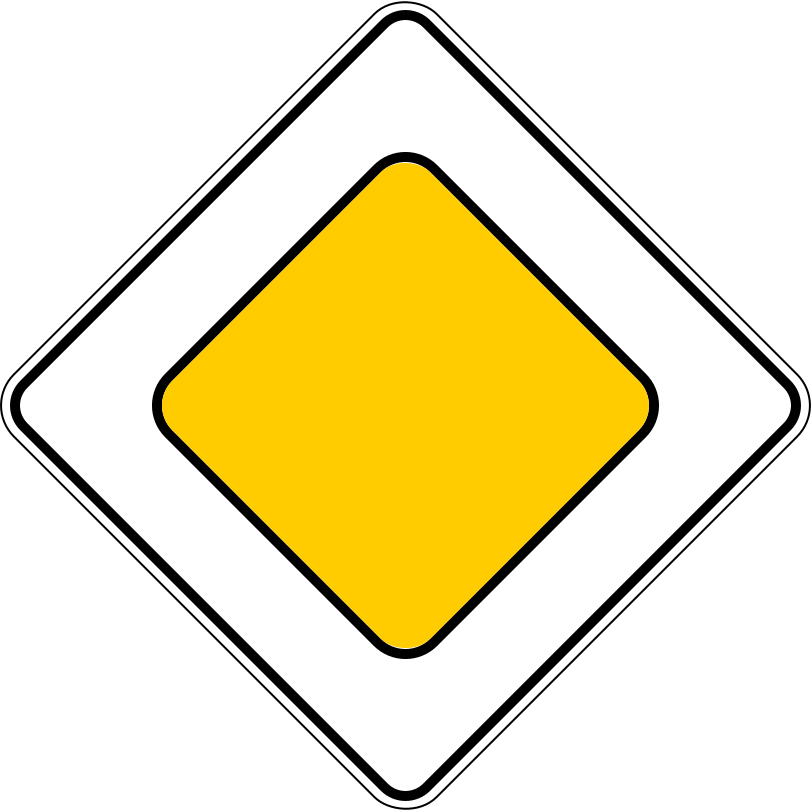
2.1. Priority road

A road on which drivers have priority when passing through unregulated intersections. The sign is installed at the beginning of the road and repeated immediately before every intersection. Sign 2.1 with plate 8.13 is installed in built-up areas before an intersection at which the main road changes direction; outside built-up areas − in advance, 150−300 m before the intersection, and before the intersection.
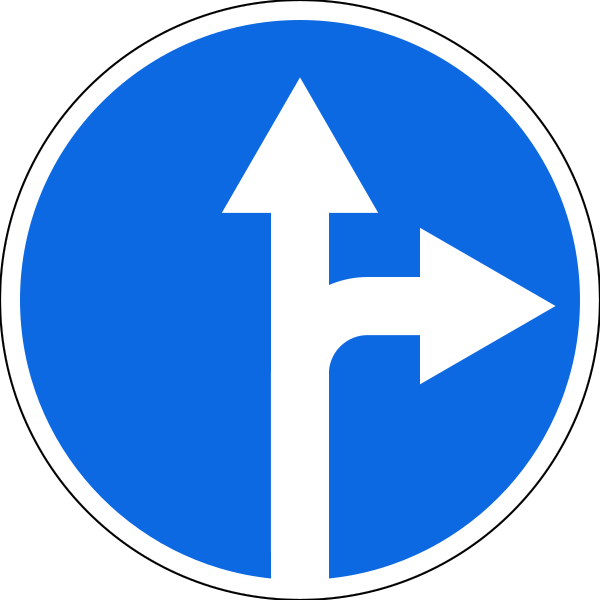
4.1.4. Straight ahead or right

Requires the driver to proceed only straight ahead or to the right. The sign applies to the intersection of carriageways before which it is installed; the sign does not apply to route (public transport) vehicles.

3.28. No parking

Prohibits the parking of vehicles. The sign does not apply to postal vehicles with a white diagonal stripe on a blue background on the body, or to taxis with the taximeter switched on. The sign does not apply to vehicles driven by a person with a significant or severe disability status, or to vehicles carrying such persons. The sign applies from the place where it is installed to the nearest intersection behind it, and in a built-up area with no intersection – to the end of the built-up area. The sign's effect is also not interrupted at exits from adjacent areas or at intersections (junctions) with field, forest and other minor roads before which no corresponding sign is installed. The sign applies only to the side of the road on which it is installed.

If the requirements of road signs and road markings contradict each other, the driver is obliged to comply with:

1 The requirements of the road signs
2 the requirements of road markings
Law explanation
According to Article 28(4) of the Law of Georgia "On Road Traffic", if the requirements of road signs and road markings contradict each other, the driver must comply with the requirements of the road signs.

A flashing green traffic light signal:

1 permits movement and gives information about the presence of an unregulated intersection, a pedestrian or cyclist crossing, or an impending danger
2 permits movement and informs road users that its time is running out and the prohibiting signal will soon come on
Law explanation
According to subparagraph “f” of paragraph 2 of Article 29 of the Law of Georgia “On Road Traffic”, a flashing green light signal permits movement and informs road users that its time is running out and a prohibitory signal will soon be switched on.

If the middle lane of a two-way road with three lanes is used for traffic in both directions, the side for traffic in the same direction is considered to be:

1 The middle and right traffic lanes
2 only the traffic lane on the right-hand side
Law explanation
According to paragraph 3 of Article 31 of the Law of Georgia “On Road Traffic”, on a two-way road with three lanes marked by road markings, only the lane on the right side is considered the side for traffic in the same direction, unless otherwise established by traffic control devices.
Ticket #352 — situation image

Did the driver of the white car violate the traffic rules by stopping at the place indicated in the picture?

1 will violate
2 will not violate
Law explanation
According to subparagraph “b.d” of paragraph 6 of Article 37 of the Law of Georgia “On Road Traffic”, stopping vehicles is prohibited in any place where it may create danger, including a place where the distance between a solid marking line (except marking indicating the edge of the carriageway) and the stopped vehicle is less than 3 metres.
Ticket #353 — situation image

Does the driver of the passenger car have the right to park the car at the place shown in the picture on even-numbered days of the month from 19:00 to 21:00?

1 does not have the right
2 Has the right
Law explanation
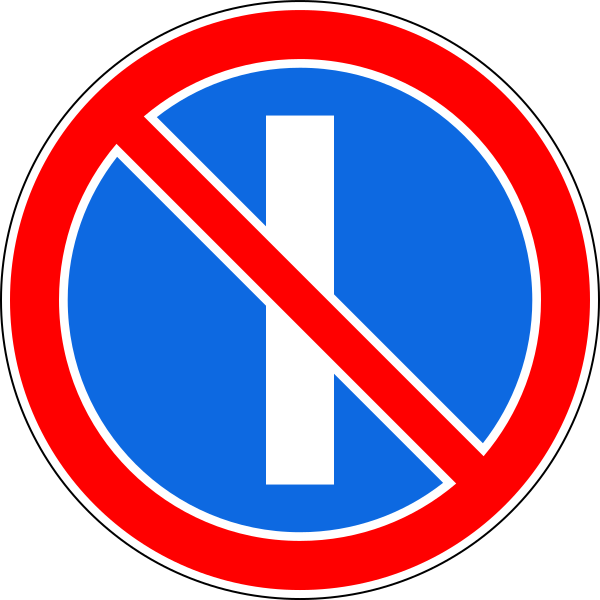
According to paragraphs 3.29 and 3.30 of Chapter 3 (Prohibitory signs) of Annex 1 of the Law of Georgia “On Road Traffic”, road sign 3.29 “No parking on odd-numbered days” - prohibits parking of vehicles on odd-numbered days of the month, and road sign 3.30 “No parking on even-numbered days” - prohibits parking of vehicles on even-numbered days of the month. According to the note to the same paragraphs, when signs 3.29 and 3.30 are used simultaneously, the time for moving vehicles from one side of the road to the other is from 19:00 to 21:00; during this period parking is permitted on both sides of the carriageway.

Road sign used in this ticket

3.29. No parking on odd days of the month

Prohibits the parking of vehicles on odd-numbered days of the month. When signs 3.29 and 3.30 are used together, the time for moving a vehicle from one side of the road to the other is from 19:00 to 21:00. During this period parking is permitted on both sides of the carriageway. The sign does not apply to postal vehicles with a white diagonal stripe on a blue background on the body, or to taxis with the taximeter switched on. The sign does not apply to vehicles driven by a person with a significant or severe disability status, or to vehicles carrying such persons. The sign applies from the place where it is installed to the nearest intersection behind it, and in a built-up area with no intersection – to the end of the built-up area. The sign's effect is also not interrupted at exits from adjacent areas or at intersections (junctions) with field, forest and other minor roads before which no corresponding sign is installed. The sign applies only to the side of the road on which it is installed.

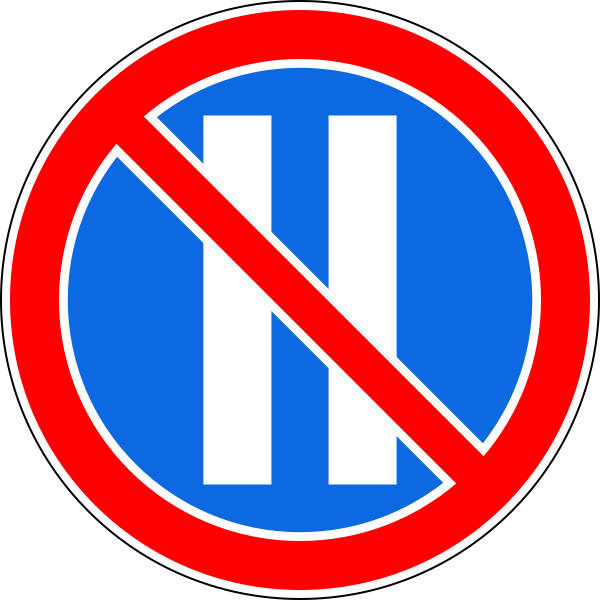
3.30. No parking on even days of the month

Prohibits the parking of vehicles on even-numbered days of the month. When signs 3.29 and 3.30 are used together, the time for moving a vehicle from one side of the road to the other is from 19:00 to 21:00. During this period parking is permitted on both sides of the carriageway. The sign does not apply to postal vehicles with a white diagonal stripe on a blue background on the body, or to taxis with the taximeter switched on. The sign does not apply to vehicles driven by a person with a significant or severe disability status, or to vehicles carrying such persons. The sign applies from the place where it is installed to the nearest intersection behind it, and in a built-up area with no intersection – to the end of the built-up area. The sign's effect is also not interrupted at exits from adjacent areas or at intersections (junctions) with field, forest and other minor roads before which no corresponding sign is installed. The sign applies only to the side of the road on which it is installed.

A vehicle is considered to be forcibly stopped if:

1 movement is halted due to a technical fault
2 movement is deliberately halted for more than 5 minutes, if this does not concern passengers boarding or alighting, or the loading or unloading of the vehicle
3 movement is intentionally stopped for up to 5 minutes
Law explanation
According to Article 5(26) of the Law of Georgia "On Road Traffic", a forced stop is the cessation of a vehicle's movement due to its technical malfunction, the load being carried, the condition of the driver (passenger), or a hazard caused by an obstacle that has suddenly appeared on the road.

Stopping vehicles on the carriageway is prohibited:

1 in any of the cases listed in this ticket
2 Only in places where the vehicle obscures traffic light signals or road signs from other road users
3 only on tram and railway tracks running along the road, or near them, if this may hinder the movement of trams or trains
4 only in an additional traffic lane intended for slow-moving vehicles and marked with the corresponding road sign
Law explanation
According to subparagraph “a.b” of paragraph 6 of Article 37 of the Law of Georgia “On Road Traffic”, stopping vehicles is prohibited on the carriageway, on tram and railway tracks running along the road or near them, if this may hinder the movement of trams or trains. According to subparagraphs “b.e” and “b.f” of the same paragraph, stopping vehicles is prohibited in any place where it may create danger, including: b.e) in a place where the vehicle hides traffic light signals or road signs from other road users; b.f) in an additional lane intended for slow-moving vehicles and marked with the appropriate road sign.
Ticket #361 — situation image

In the given situation, when vehicles change lanes simultaneously, priority is given to:

1 the passenger car driver
2 the truck driver
Law explanation
According to Article 32(4) of the Law of Georgia "On Road Traffic", when changing from one lane to another without changing the direction of travel, the driver must give way to a vehicle travelling in the same direction in the lane being moved into. When vehicles travelling in the same direction change lanes simultaneously and their paths cross, priority is given to the driver of the vehicle on the right.
Ticket #362 — situation image

Does the driver of the truck have the right to continue moving in the direction of the arrow, if the width of the carriageway is insufficient for making a U-turn from the left lane?

1 Has the right
2 does not have the right
Law explanation
According to paragraph 10 of Article 32 of the Law of Georgia “On Road Traffic”, if, when making a U-turn beyond a junction, the width of the carriageway is insufficient for the manoeuvre from the extreme left position, the manoeuvre may be performed from the right edge of the carriageway or from the right shoulder; in doing so, the driver must give way to vehicles travelling in the same and opposite directions. According to paragraph 1.11 of Annex 2 of the same Law, horizontal road marking 1.11. separates traffic flows travelling in opposite or the same directions on a section of road where changing lanes is permitted from one lane only; it marks U-turn points, exits from and entrances to parking areas, etc., where movement is permitted on one side only. Crossing line 1.11 is permitted from the side of the broken line, and also from the side of the solid line, but only when completing overtaking or passing an obstacle.
Ticket #363 — situation image

If the width of the carriageway is insufficient for a truck to make a U-turn from the left lane, when moving in the direction of the arrow the truck driver is obliged to give way to:

1 the drivers of all three vehicles
2 only the driver of the black passenger car
3 only the tram driver
4 only the driver of the white passenger car
Law explanation
According to paragraphs 10 and 11 of Article 32 of the Law of Georgia “On Road Traffic”: 10. If, when making a U-turn beyond a junction, the width of the carriageway is insufficient to make a U-turn from the extreme left position, this manoeuvre may be performed from the right edge of the carriageway or from the right shoulder. In doing so, the driver must give way to vehicles travelling in the same and opposite directions. 11. If the width of the carriageway at a junction is insufficient to make a U-turn from the extreme left position, the driver must perform this manoeuvre beyond the junction, except when the width of the road near the junction does not allow this. In all cases traffic safety must be ensured and no obstruction must be caused to other road users. The rule defined by this paragraph does not apply to junctions where U-turns are prohibited by the corresponding road sign or road marking.
Ticket #364 — situation image

Does the driver of the truck have the right to continue moving in the direction of the arrow, if the width of the carriageway is insufficient for turning from the left lane?

1 has the right if traffic safety is ensured and no obstruction is created for other road users
2 does not have the right
Law explanation
According to Article 32(7)(b) and paragraph 8 of the Law of Georgia "On Road Traffic": 7. Before turning right or left to exit onto another road or to enter an adjacent area, without violating the requirements established by Article 20(2) of this Law and by paragraphs 1 and 2 of this Article, if the driver of a vehicle intends to leave the road: b) on the left-hand side, the vehicle must, as far as possible, approach the centre line of the carriageway (on a two-way road) or the left-hand edge of the carriageway (on a one-way road), and if he/she intends to exit onto another two-way road, the turn must be performed so that, on leaving the intersection of carriageways, the vehicle does not end up on the side for opposing traffic. 8. If, because of the dimensions of the vehicle or for another reason, the driver cannot perform the turn in accordance with the requirements established by paragraph 7 of this Article, deviation from these rules is permitted provided that traffic safety is ensured and no obstruction is created for other road users.
Practical part

Exam routes — exactly the way the examiner drives them

60 real exam routes across 10 cities, 793 km in total. Every turn and stop on the map, with voice guidance.

  • All routes on the map
  • GPS mode on the real road
  • Practice mode with adjustable speed
  • On the web and in the app

One-off payment, no auto-renewal — by card on the Bank of Georgia secure page.

Chat with us