imecadine.ge

Full ticket list

1236 official tickets — category B+C1 Mil, with the correct answer and law explanation.

Ticket #796 — situation image

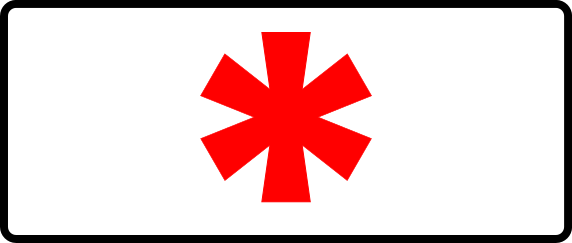
Which of the given road signs designates an area within which parking is regulated?

1 Only I and II
2 only II and IV
3 only IV
4 only III
Law explanation
According to paragraphs 5.27 and 5.29 of Chapter 5 (Special regulation signs) of Annex 1 to the Law of Georgia "On Road Traffic", road signs 5.27 "Zone with restricted parking" and 5.29 "Regulated parking zone" denote an area within which parking is regulated accordingly.
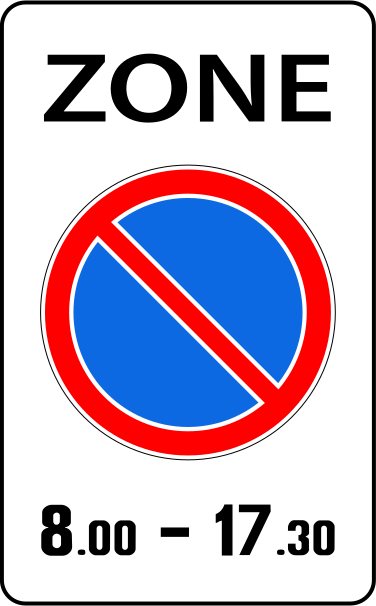
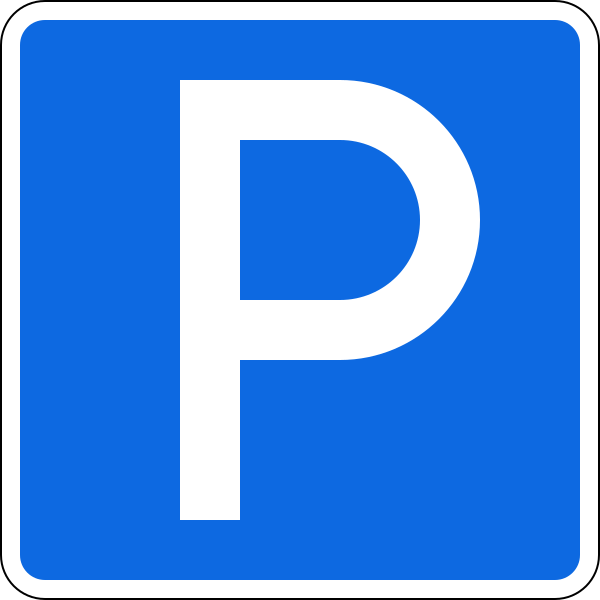
Road sign used in this ticket

5.27. Restricted parking zone

Designates an area within which parking is regulated or the maximum speed is restricted accordingly. The sign is installed at every entrance to the area.

7.4. Parking place

A place intended for parking vehicles. The zone of operation of the sign is determined by road markings; in their absence, the sign applies up to the nearest intersection or is limited by plate 8.2.1.

8.5.1. Saturdays, Sundays and public holidays

With the identification sign "Dangerous goods" on the designated vehicle.

Ticket #797 — situation image

Which of the given road signs indicates an area within which the maximum speed of movement is limited?

1 II
2 IV
3 I
4 III
Law explanation
According to paragraph 5.31 of Chapter 5 (Special regulation signs) of Annex 1 to the Law of Georgia “On Road Traffic”, road sign 5.31. “Maximum speed limit zone” designates an area within which the maximum speed of movement is limited.
Ticket #798 — situation image

In the given situation, the driver of which car is prohibited from moving in the direction of the arrow?

1 the truck driver
2 the drivers of both cars
3 the driver of neither car
4 the passenger car driver
Law explanation
According to paragraph 5.15.2 of Chapter 5 (Special regulation signs) of Annex 1 to the Law of Georgia "On Road Traffic", road sign 5.15.2 "Directions of movement in the lane" indicates the permitted directions of movement in the lane.

Road sign used in this ticket

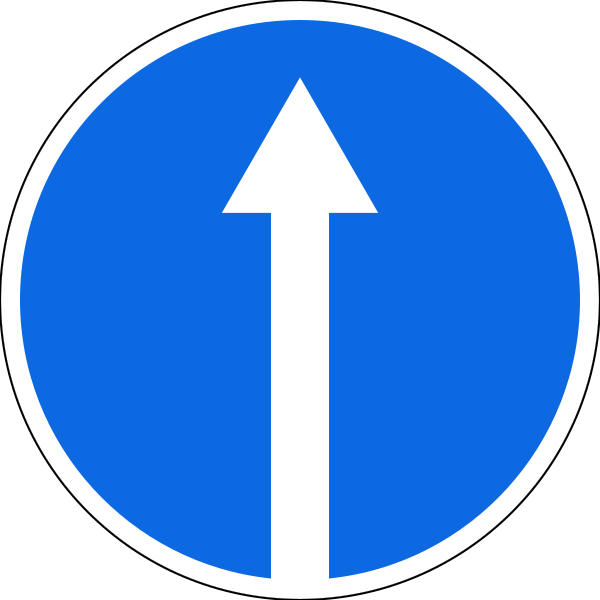
4.1.1. Straight ahead

Requires the driver to proceed only straight ahead. The sign applies to the intersection of carriageways before which it is installed; the sign does not apply to route (public transport) vehicles. A sign installed at the beginning of a section of road applies up to the nearest intersection. The sign does not prohibit turning right into a courtyard or entering other adjacent areas.

Ticket #799 — situation image

In the given situation, the driver of which car is not prohibited from making a U-turn in the direction of the arrow?

1 none
2 only the driver of the red car
3 only to the driver of the green car
4 both drivers are prohibited
Law explanation
According to paragraph 5.15.2 of Chapter 5 (Special regulation signs) of Annex 1 to the Law of Georgia "On Road Traffic", road sign 5.15.2 "Lane directions" indicates the permitted directions of travel in the lane. According to subparagraph "a" of the note to the same paragraph, signs 5.15.1 and 5.15.2 that permit turning from the extreme left lane also permit turning around from the same lane.

Road sign used in this ticket

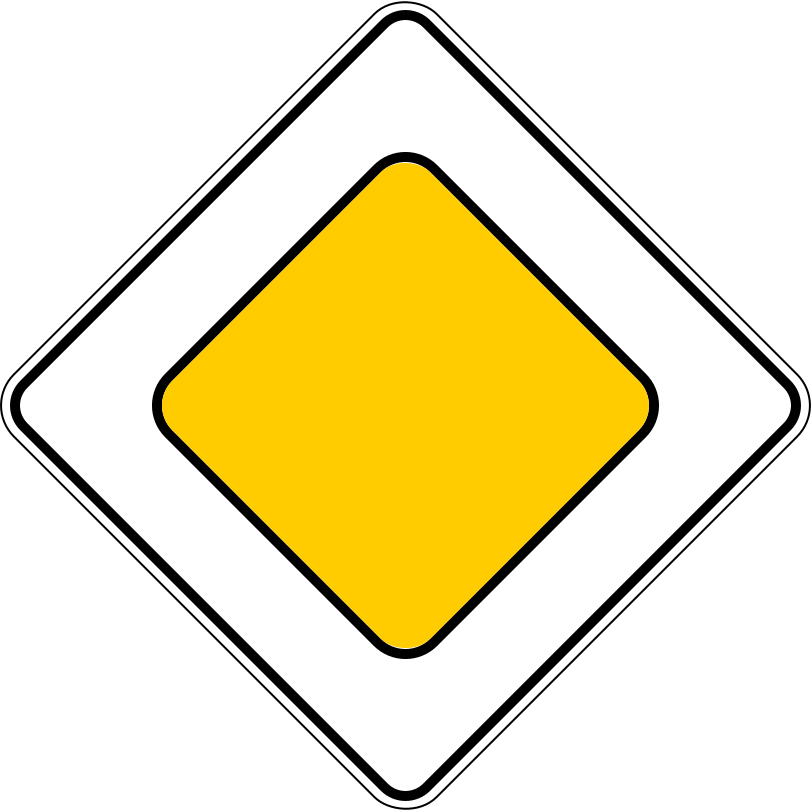
2.1. Priority road

A road on which drivers have priority when passing through unregulated intersections. The sign is installed at the beginning of the road and repeated immediately before every intersection. Sign 2.1 with plate 8.13 is installed in built-up areas before an intersection at which the main road changes direction; outside built-up areas − in advance, 150−300 m before the intersection, and before the intersection.

Ticket #800 — situation image

The driver of which vehicle moving in the direction of the arrow is violating the traffic rules?

1 Only the driver of the yellow car
2 only the driver of the black car
3 the driver of none of the vehicles
4 only the motorcycle driver
Law explanation
According to Article 32(6) of the Law of Georgia "On Road Traffic", where there are tram tracks for the same direction located on the left-hand side at the same level as the carriageway, the driver of a vehicle performs left turns and turns around from that track bed, unless a different traffic arrangement is established by road signs 5.15.1 and 5.15.2. In doing so, tram traffic must not be obstructed.

The characteristic signs of venous bleeding from the wound of a person injured in a road traffic accident are:

1 the clothing is soaked with bright red blood flowing from the wound in a pulsating stream
2 clothing slowly becomes soaked with dark-coloured blood flowing from the wound in a weak stream
Law explanation
Venous bleeding from a wound is characterised by a weak flow of dark cherry-coloured blood. A tight bandage must be applied directly to the wound. If the lower layer of the bandage becomes soaked with blood, it must not be removed and a new bandage must be added.

Is it permissible for a passenger to get into a vehicle from the carriageway side?

1 is permitted if boarding from the side of the pavement or shoulder is impossible and it will not create an obstruction for other road users
2 it is permitted only outside built-up areas
3 is not permitted
Law explanation
According to paragraph 1 of Article 23 of the Law of Georgia “On Road Traffic”, a passenger must get into and out of a vehicle after it has come to a complete stop, from the side of the pavement or the roadside, and if this is impossible, from the side of the carriageway, provided this does not obstruct other road users.

Carrying children in a vehicle is permitted:

1 in a sitting position if the design of the vehicle provides seats, and if it does not, in a standing position
2 only in a standing position
3 only in a sitting position
Law explanation
According to paragraph 3 of Article 26 of the Law of Georgia “On Road Traffic”, children may be carried in a vehicle only in a seated position, in seats provided by the design of the vehicle. Carrying children in a standing position is prohibited.

On seeing a child on or near the road, the driver should:

1 increase speed in order to pass the said section of road in time
2 exercise particular caution and move at a speed that will avoid danger and, if necessary, allow stopping without sharp braking
3 stop the vehicle and switch on the hazard warning lights
Law explanation
According to Article 26(2) of the Law of Georgia "On Road Traffic", on seeing a child on or near the road, or a stopped bus bearing the identification sign "Transporting children", the driver must exercise particular caution and drive at such a speed as will avoid danger and, if necessary, allow stopping without sharp braking.

On seeing a bus stopped on the road displaying the identification sign "Transport of children", the driver is obliged:

1 sound the horn and pass without stopping
2 stop the vehicle and not move off until the said bus continues moving
3 exercise particular caution and move at a speed that will avoid danger and, if necessary, allow stopping without sharp braking
Law explanation
According to Article 26(2) of the Law of Georgia "On Road Traffic", on seeing a child on or near the road, or a stopped bus bearing the identification sign "Transporting children", the driver must exercise particular caution and drive at such a speed as will avoid danger and, if necessary, allow stopping without sharp braking.

Is the driver of a vehicle moving on the road obliged to give way to a blind pedestrian walking with a white cane who is crossing the carriageway?

1 is obliged only if the blind pedestrian is moving on a controlled pedestrian crossing
2 is obliged in all cases
3 is not obliged
Law explanation
According to Article 21(6) of the Law of Georgia "On Road Traffic", the driver must exercise particular caution towards road users such as pedestrians (especially children, the elderly and persons with disabilities) and cyclists. The driver must in all cases give way to a blind pedestrian moving with a white cane or with a guide dog.

In which case must the driver give way to a blind pedestrian walking with a guide dog?

1 is obliged only if the blind pedestrian is moving on an unregulated pedestrian crossing
2 is obliged only if the blind pedestrian is moving on a controlled pedestrian crossing
3 is obliged in all cases
Law explanation
According to Article 21(6) of the Law of Georgia "On Road Traffic", the driver must exercise particular caution towards road users such as pedestrians (especially children, the elderly and persons with disabilities) and cyclists. The driver must in all cases give way to a blind pedestrian moving with a white cane or with a guide dog.

When driving on the road, in which of the cases listed below is the driver of a power-driven vehicle not obliged to use a seat belt?

1 If the design of the power-driven vehicle does not provide for seat belts
2 If it is moving in a built-up area
3 if they are driving an emergency service vehicle
4 If they are a person with disabilities
Law explanation
According to Article 21(9) of the Law of Georgia "On Road Traffic", when driving a motor vehicle (except a vehicle whose design does not provide for seat belts), the driver must wear a seat belt in accordance with the established procedure and ensure that the passenger sitting to his/her right (or left) wears a seat belt.

Which of the factors listed below does not affect the driver's actions?

1 fatigue
2 Consuming alcohol
3 lack of sleep
4 None of the answers listed in this ticket is correct
Law explanation
According to Article 21(5) of the Law of Georgia "On Road Traffic", the driver must know the traffic rules and must also be aware of factors that affect the driver's actions, for example fatigue, lack of sleep, taking medication, consuming alcohol, etc.

When driving past stationary vehicles with external lighting devices switched on or with open doors, the driver must:

1 reduce speed and switch on the hazard warning lights in order to ensure timely avoidance of danger should the stationary vehicle suddenly start moving
2 exercise particular caution in order to ensure, if necessary, timely avoidance of the danger caused by the sudden appearance of pedestrians and children on the road
3 give an audible signal and increase speed
Law explanation
According to Article 25(8) of the Law of Georgia "On Road Traffic", when driving past a vehicle stopped on the road, the driver must exercise particular caution towards a vehicle with its external lights switched on or with an open door, so that, if necessary, he can in good time avoid the danger arising from the sudden appearance of pedestrians and children on the road.

Is the driver obliged to exercise particular caution towards pedestrians who are children, elderly people and persons with disabilities?

1 is not obliged
2 is obliged
Law explanation
According to Article 21(6) of the Law of Georgia "On Road Traffic", the driver must exercise particular caution towards road users such as pedestrians (especially children, elderly people and persons with disabilities) and cyclists.

Is it permissible for the driver to use a mobile communication device while driving a vehicle?

1 is permitted if one hand is free to control the vehicle
2 it is not permitted in any case
3 Is permitted if they use the hands-free (loudspeaker) function of the mobile device and have both hands free to control the vehicle
Law explanation
According to Article 21(8) of the Law of Georgia "On Road Traffic", while the vehicle is moving the driver must avoid any action not related to driving. The driver is prohibited from using a mobile communication device while driving a vehicle. This prohibition does not apply to cases where the driver uses a headset of the mobile communication device or the loudspeaker (or hands-free) function of mobile communication and has both hands free to drive the vehicle.

Before passing under a bridge, overpass or high-voltage power line, as well as in a tunnel, the driver of a bus or truck is obliged to:

1 make sure that the vehicle can pass safely
2 must give way to the drivers of the passenger cars
3 switch on the hazard warning lights
Law explanation
According to paragraph 10 of Article 21 of the Law of Georgia “On Road Traffic”, before passing under a bridge, an overpass or a high-voltage power line, and also in a tunnel or other similar place, the driver of a bus or a lorry must make sure that the vehicle can pass safely.

The driver of a three-wheeled moped must move on the road in such a way that his vehicle's:

1 all wheels touch the road surface
2 at least two wheels touch the road surface
3 at least one wheel touches the road surface
Law explanation
According to Article 21(11) of the Law of Georgia "On Road Traffic", the rider of a moped, motorcycle, two-wheeled electric scooter or bicycle must ride on the road in such a way that all wheels of the vehicle are in contact with the road surface.

At night, if both the dipped-beam and high-beam headlights of a power-driven vehicle fail (go out) at the same time, the driver is prohibited from:

1 Driving on any road, regardless of whether it has artificial lighting
2 driving on a road without artificial lighting
3 driving on an artificially lit two-way road
Law explanation
According to Article 21(13) of the Law of Georgia "On Road Traffic", the driver is prohibited from driving when the service braking system, the steering mechanism or the coupling device of a vehicle combination is faulty, as well as during the hours of darkness with both the dipped and main-beam headlights simultaneously out of order (not working) (or absent) and/or with the rear position lights out of order, on a road that has no artificial lighting or where visibility is insufficient. Driving a motor vehicle in fog, rain or snow is prohibited when the windscreen wiper on the driver's side is not working.
Practical part

Exam routes — exactly the way the examiner drives them

60 real exam routes across 10 cities, 793 km in total. Every turn and stop on the map, with voice guidance.

  • All routes on the map
  • GPS mode on the real road
  • Practice mode with adjustable speed
  • On the web and in the app

One-off payment, no auto-renewal — by card on the Bank of Georgia secure page.

Chat with us