imecadine.ge

Full ticket list

313 official tickets — category AM, with the correct answer and law explanation.

In the event of a forced stop at places where stopping is prohibited, the driver must immediately put out the warning triangle (or a similar effective device):

1 Both after switching on the hazard warning lights, and if such lights are not fitted or are out of order
2 only after switching on the hazard warning lights
3 only if there are no hazard warning lights or they are out of order
Law explanation
According to Article 52(2)(b) of the Law of Georgia "On Road Traffic", after switching on the hazard warning lights, and also if such lights are absent or out of order, the driver must immediately place a "Warning triangle", and in conditions of insufficient visibility, a flashing red lamp: b) when forced to stop at a place where stopping is prohibited, and where, given the visibility conditions, other drivers will not be able to notice the vehicle in time.

Outside built-up areas, in the event of a forced stop in places where stopping is prohibited, the driver must place the warning triangle (or a similar effective device) from the vehicle at a distance of not less than:

1 At a distance of 20 metres
2 at a distance of 15 metres
3 at a distance of 30 metres
Law explanation
According to subparagraph “b” of paragraph 2 and paragraphs 3 and 4 of Article 52 of the Law of Georgia “On Road Traffic”: 2. After switching on the hazard warning lights, and also if such lights are absent or out of order, the driver must immediately place a “warning triangle”, and in conditions of insufficient visibility a flashing red lamp: b) when forced to stop at a place where stopping is prohibited, and where, given the visibility conditions, other drivers will not be able to notice the vehicle in time. 3. The “warning triangle” and the flashing red lamp must be placed at a distance from the vehicle that, in the specific conditions, ensures that other drivers are warned of the danger in good time, but this distance must not be less than 15 metres in a built-up area and less than 30 metres in a non-built-up area.

At which of the listed places is it not prohibited to make a U-turn with a vehicle:

1 At a level crossing
2 on a bridge, overpass, flyover and under them
3 At an intersection
4 In a tunnel
Law explanation
According to Article 32(15)(b), (c) and (d) of the Law of Georgia "On Road Traffic", turning a vehicle around is prohibited: b) in a tunnel; c) on a bridge, overpass, flyover and under them; d) on a level crossing.

Does the emotional state of the driver affect traffic safety?

1 has no effect
2 Yes, it does
Law explanation
The driver's emotional state affects traffic safety.

How does driver fatigue affect his attention and reaction when participating in road traffic?

1 attention decreases, reaction time increases
2 Neither attention nor reaction time changes
3 attention deteriorates, reaction time decreases
Law explanation
Driver fatigue reduces the driver's attention and increases reaction time.

The driver must check and ensure the technical soundness of the vehicle:

1 Only while travelling
2 before and during the journey
3 Only before the start of the journey
Law explanation
According to Article 21(12) of the Law of Georgia "On Road Traffic", the driver must check the technical soundness of the vehicle before starting a journey and ensure it during the journey.

Is a driver involved in a road traffic accident obliged to make sure that there are no injured or dead as a result of the accident?

1 is obliged
2 Is not obliged if they ensure that an ambulance is called
3 Is not obliged if the road traffic accident did not occur through their fault
4 is obliged only if they are a doctor
Law explanation
According to subparagraph "b" of paragraph 1 of Article 27 of the Law of Georgia "On Road Traffic", a driver involved in a road traffic accident is obliged to: b) make sure that no one has been injured or killed as a result of the road traffic accident.

If there is no urgent need for them to go to a medical institution or to transport the injured, a driver involved in a road traffic accident is obliged:

1 take their vehicle to the nearest patrol police unit and report the incident there
2 Remain at the scene of the accident and wait for an authorised person to arrive
3 draw up a diagram of the accident, take statements from eyewitnesses and submit these documents to the nearest patrol police unit
Law explanation
According to subparagraph "c" of paragraph 1 of Article 27 of the Law of Georgia "On Road Traffic", a driver involved in a road traffic accident is obliged to: c) immediately notify the relevant service within the system of the Ministry of Internal Affairs of Georgia of the incident and, if there is no urgent need for them to go to a medical facility or to transport an injured person, remain at the scene of the road traffic accident and wait for the authorised person to arrive.
Ticket #1139 — situation image

Which of the road signs shown indicates the direction of travel only straight ahead?

1 only II and IV
2 only III
3 only I
4 only IV
Law explanation
According to paragraph 4.1.1 of Chapter 4 (Mandatory signs) of Annex 1 to the Law of Georgia “On Road Traffic” and subparagraph “a” of the note to the same paragraph, road sign 4.1.1 “Proceed straight” permits movement only in the directions shown by the arrows.
Ticket #1141 — situation image

Which of the road signs shown permits movement only to the right?

1 II
2 III
3 IV
4 I
Law explanation
According to paragraph 4.1.2 of Chapter 4 (Mandatory signs) of Annex 1 to the Law of Georgia "On Road Traffic" and subparagraph "a" of the note to the same paragraph, road sign 4.1.2 "Turn right" permits movement only in the directions shown by the arrows.
Ticket #1143 — situation image

The given road sign indicates:

1 entering a one-way road or carriageway
2 the direction of going around a dividing strip, safety island or any obstacle only on the right
3 a one-way road
Law explanation
According to paragraph 4.2.1 of Chapter 4 (Mandatory signs) of Annex 1 to the Law of Georgia "On Road Traffic", road sign 4.2.1 "Pass obstacle on the right" indicates that a dividing strip, safety island or any obstacle may be passed only on the right.
Ticket #1146 — situation image

Which of the given road signs indicates the direction of passing an obstacle, dividing strip, safety island or any obstacle only on the left?

1 I
2 II
3 IV
4 III
Law explanation
According to paragraph 4.2.2 of Chapter 4 (Mandatory signs) of Annex 1 to the Law of Georgia "On Road Traffic", road sign 4.2.2 "Pass obstacle on the left" indicates that a dividing strip, traffic island or any obstacle may be passed only on the left.
Ticket #1148 — situation image

Which of the given road signs indicates the direction of movement to the right or to the left?

1 II
2 IV
3 I
4 III
Law explanation
According to paragraph 4.1.6 of Chapter 4 (Mandatory signs) of Annex 1 to the Law of Georgia "On Road Traffic" and subparagraph (a) of the note to the same paragraph, road sign 4.1.6 "Turn right or left" permits movement only in the directions shown by the arrows,
Ticket #1161 — situation image

In the given situation, is the driver of the passenger car prohibited from making a U-turn in the direction of the arrow?

1 is prohibited
2 is not prohibited
Law explanation
According to paragraph 4.1.5 of Chapter 4 (Mandatory signs) of Annex 1 to the Law of Georgia "On Road Traffic" and subparagraphs (a) and (d) of the note to paragraphs 4.1.1–4.1.6, road sign 4.1.5 "Proceed straight or turn left" permits movement only in the directions shown by the arrows, and signs that permit a left turn also permit a U-turn.

Road sign used in this ticket

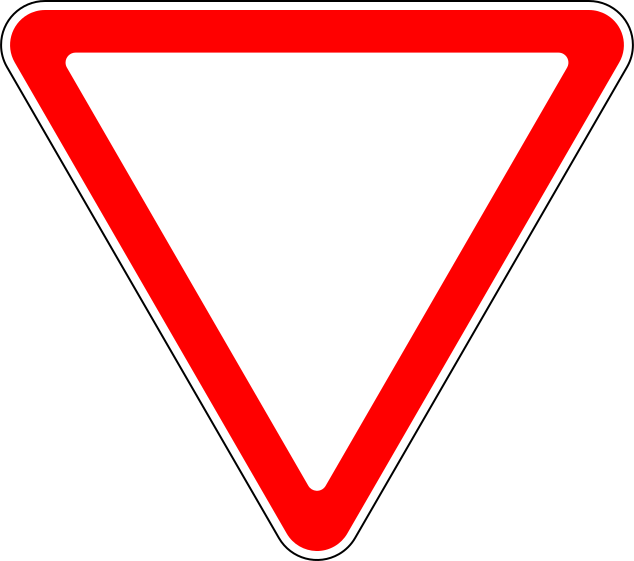
2.3. Give way

The driver on this road must give way to drivers moving on the road being crossed, and where plate 8.13 is present – to drivers on the main road. Outside built-up areas, sign 2.3 is placed in advance, 150−300 m before the intersection, with plate 8.1.1 if sign 2.3 is installed before the intersection, or with plate 8.1.2 if sign 2.4 is installed before the intersection. The sign applies to the intersection of carriageways before which the corresponding sign is installed.

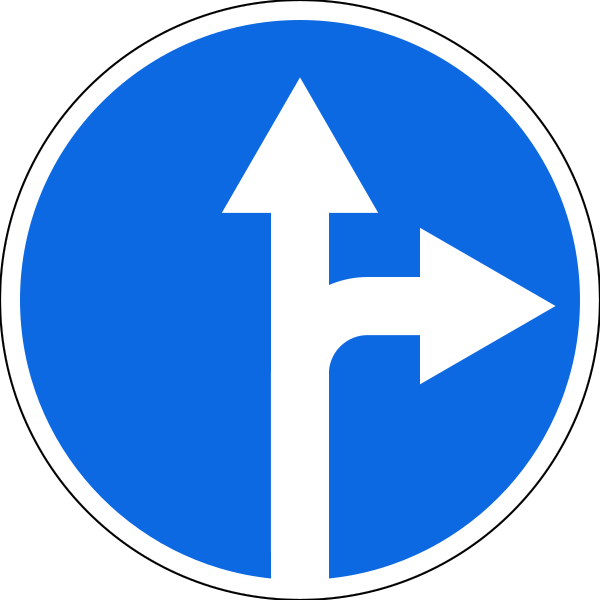
4.1.4. Straight ahead or right

Requires the driver to proceed only straight ahead or to the right. The sign applies to the intersection of carriageways before which it is installed; the sign does not apply to route (public transport) vehicles.

Ticket #1163 — situation image

The driver of which vehicle will not violate the traffic rules when moving in the direction of the arrow?

1 only the motorcycle driver
2 The drivers of both vehicles
3 Only the driver of the passenger car
Law explanation
According to paragraph 4.2.2 of Chapter 4 (Mandatory signs) of Annex 1 to the Law of Georgia "On Road Traffic", road sign 4.2.2 "Pass obstacle on the left" indicates that a dividing strip, traffic island or any obstacle may be passed only on the left.

Road sign used in this ticket

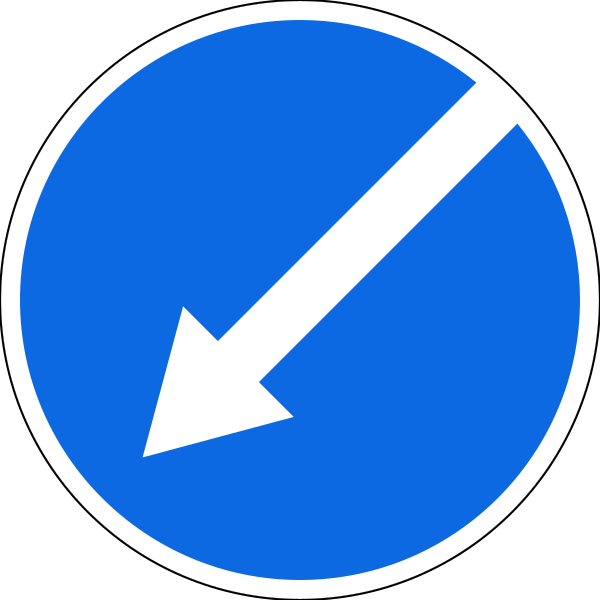
4.2.2. Pass on the left

Indicates that a dividing strip, traffic island or other obstacle may be passed only on the left.

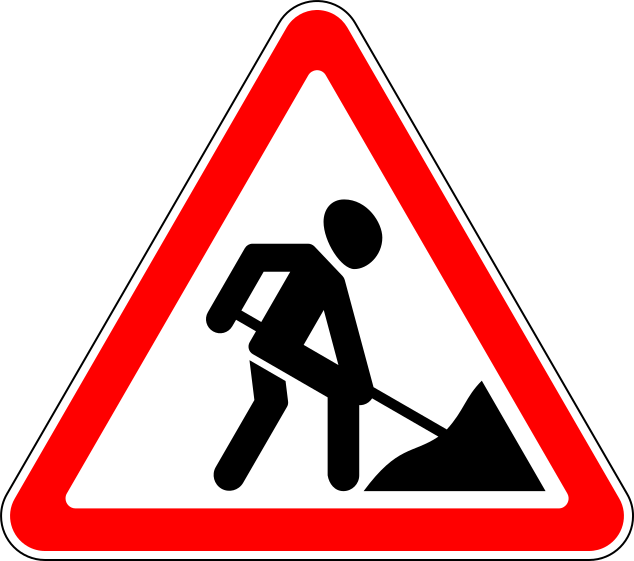
1.26. Road works

A section of road on which works are being carried out. Outside built-up areas the sign is placed 150−300 m before the start of the hazardous section, in built-up areas – 50–100 m before it. The sign is repeated in built-up and non-built-up areas at least 50 m before the start of the hazardous section. When short-term work is carried out on the carriageway, the sign is installed 10−15 m from the work site, without plate 8.1.1.

Ticket #1169 — situation image

In the zone of operation of which of the given road signs is a U-turn not prohibited?

1 only II and IV
2 Only II and III
3 Only III and IV
4 Only I and III
Law explanation
According to paragraph 7.3.1 of Chapter 7 (Information and direction signs) of Annex 1 to the Law of Georgia "On Road Traffic" and the note to the same paragraph, road sign 7.3.1 "Turning-around place" indicates a place for turning around. Signs 7.3.1 and 7.3.2 are installed before or above the turning-around place, or in advance with plate 8.1.1. These signs do not permit turning left. According to paragraph 4.1.3 of Chapter 4 (Mandatory signs) of the same Annex and subparagraph (a) of the note to the same paragraph, road sign 4.1.3 "Turn left" permits movement only in the directions shown by the arrows, and signs that permit turning left also permit turning around.
Ticket #1185 — situation image

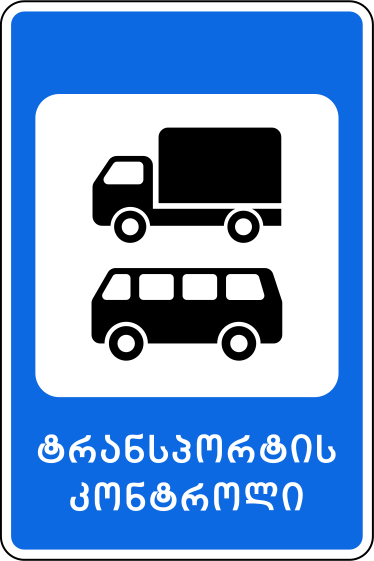
The given road sign provides information:

1 about the presence of an international road transport checkpoint
2 about the presence of a patrol police post
Law explanation
According to paragraph 6.13 of Chapter 6 (Service signs) of Annex 1 to the Law of Georgia "On Road Traffic", road sign 6.13 "International road transport checkpoint" informs road users about the relevant facility or service.

Road sign used in this ticket

6.13. International road transport checkpoint

Sign indicating an international road transport checkpoint.

To stop a nosebleed of a person injured in a road traffic accident, they must:

1 lay them on their side and put a cold compress on the nose
2 Seat the casualty in a semi-sitting position, have them tilt the head towards the chest and place a cold compress on the nose
3 seat them in a semi-sitting position, tilt the head back and place a cold compress on the nose
Law explanation
To stop a nosebleed of a person injured in a road traffic accident, the injured person should be seated in a semi-sitting position; by tilting the head towards the chest we prevent blood from entering the respiratory organs. We try to stop the bleeding by applying a cold compress to the nose.
Ticket #1195 — situation image

Which of the given additional information signs (plates) indicates the distance to a facility located off (away from) the road?

1 only III
2 only IV
3 only I and IV
4 Only II and III
Law explanation
According to paragraphs 8.1.3 and 8.1.4 of Chapter 8 (Additional information signs (plates)) of Annex 1 to the Law of Georgia "On Road Traffic", plates 8.1.3 and 8.1.4 "Distance to object" indicate the distance to an object located off the road (at a distance from it).
Ticket #1216 — situation image

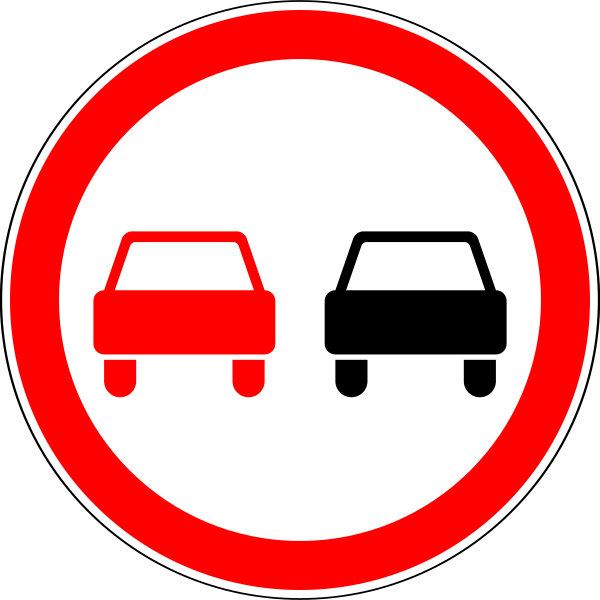
The given combination of road signs indicates to the driver that overtaking is prohibited:

1 when the carriageway surface is wet
2 during the dark time of day
3 in cloudy weather
Law explanation
According to paragraph 3.20 of Annex 1 of the Law of Georgia “On Road Traffic”, road sign 3.20. “No overtaking” − prohibits overtaking all kinds of power-driven vehicles (except vehicles travelling at less than 30 km/h). Overtaking a motorcycle without a sidecar, a moped or a bicycle is permitted without moving into the lane for oncoming traffic. According to paragraph 8.16 of Chapter 8 (Additional information signs (plates)) of Annex 1 of the same Law, plate 8.16 “Wet surface” - indicates that the sign applies during the period when the surface of the carriageway is wet. It is used together with signs 1.16, 3.20, 3.22 and 3.24.

Road sign used in this ticket

3.20. No overtaking

Prohibits overtaking all types of motor vehicles (except vehicles moving at less than 30 km/h). Overtaking motorcycles without a sidecar, mopeds and bicycles is permitted without crossing into the oncoming lane. The sign applies from the place where it is installed to the nearest intersection behind it, and in a built-up area with no intersection – to the end of the built-up area. The sign's effect is also not interrupted at exits from adjacent areas or at intersections (junctions) with field, forest and other minor roads before which no corresponding sign is installed.

8.16. Wet road surface

Indicates that the sign applies during the period when the surface of the carriageway is wet. The plate is used with signs 1.16, 3.20, 3.22 and 3.24.

Practical part

Exam routes — exactly the way the examiner drives them

60 real exam routes across 10 cities, 793 km in total. Every turn and stop on the map, with voice guidance.

  • All routes on the map
  • GPS mode on the real road
  • Practice mode with adjustable speed
  • On the web and in the app

One-off payment, no auto-renewal — by card on the Bank of Georgia secure page.

Chat with us