Does the driver of the car have the right to continue moving in the direction of the arrow, if the rear side lights failed while driving during the hours of darkness?
808 official tickets — category D, with the correct answer and law explanation.
Does the driver of the car have the right to continue moving in the direction of the arrow, if the rear side lights failed while driving during the hours of darkness?
Does the driver violate the traffic rules if, in conditions of insufficient visibility, the car is stopped at the place shown in the picture without external lighting devices switched on?
The driver of an emergency service vehicle, regardless of the requirements of road signs and markings, has priority over other road users if he has switched on:
The driver of a special service vehicle moving with blue flashing special lights and sound signals switched on has the right to use the granted priority:
Is a road user obliged to give way to a vehicle moving with dipped-beam headlights switched on that is being escorted by an emergency service vehicle with its blue flashing special lights and sound signals switched on?
When an emergency or special service vehicle is approaching with its flashing blue special light and audible signal switched on and/or giving a signal with a loudspeaker, road users must:
When approaching a stationary special service vehicle with its blue flashing special light switched on, the driver must:
A driver who has the orange flashing special light signal switched on on a special service vehicle may, while performing official duties, deviate from the requirements of road signs and markings if:
The yellow flashing special light switched on on a special service vehicle is used:
The installation of special flashing lights and sound signals on vehicles, as well as giving motor vehicles a special colour scheme, is carried out:
In case of arterial bleeding, a life-threatening amount of blood can be lost:
A truck with dipped-beam headlights switched on is being escorted by an emergency service vehicle with its blue flashing special lights and sound signals switched on. Towards which car does the bus driver have an obligation to give way when moving in the direction of the arrow at this traffic light signal?
In which direction does the driver of the emergency service vehicle have the right to continue moving on this traffic light signal, if the vehicle has its flashing blue special light switched on?
Road sign used in this ticket
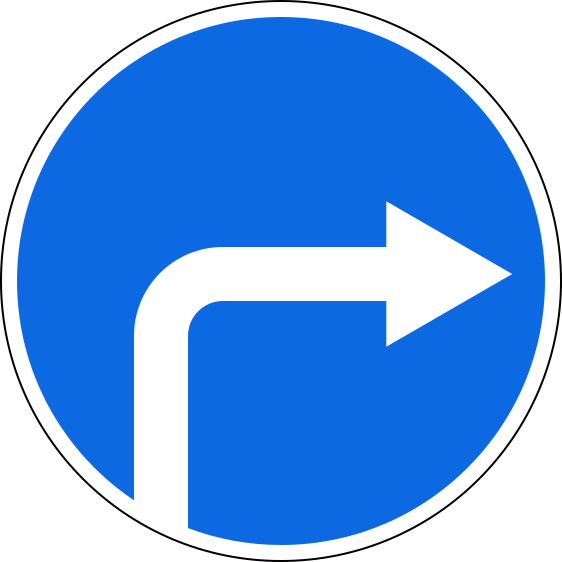
Requires the driver to proceed only to the right. The sign applies to the intersection of carriageways before which it is installed; the sign does not apply to route (public transport) vehicles.
Is the driver of the red car obliged to give way to the driver of the emergency service vehicle, if the vehicle does not have its blue flashing special lights and sound signals switched on?
An emergency service vehicle has its flashing blue special light and audible signal switched on. The driver of the red car will not violate the traffic rules if:
An emergency service vehicle has stopped with its blue flashing special light signal switched on. The driver of the passenger car must move at no more than:
In which direction does the driver of the emergency service vehicle have the right to continue moving at this traffic light signal, if the vehicle does not have its blue flashing special light signal switched on?
Road sign used in this ticket
The driver on this road must give way to drivers moving on the road being crossed, and where plate 8.13 is present – to drivers on the main road. Outside built-up areas, sign 2.3 is placed in advance, 150−300 m before the intersection, with plate 8.1.1 if sign 2.3 is installed before the intersection, or with plate 8.1.2 if sign 2.4 is installed before the intersection. The sign applies to the intersection of carriageways before which the corresponding sign is installed.
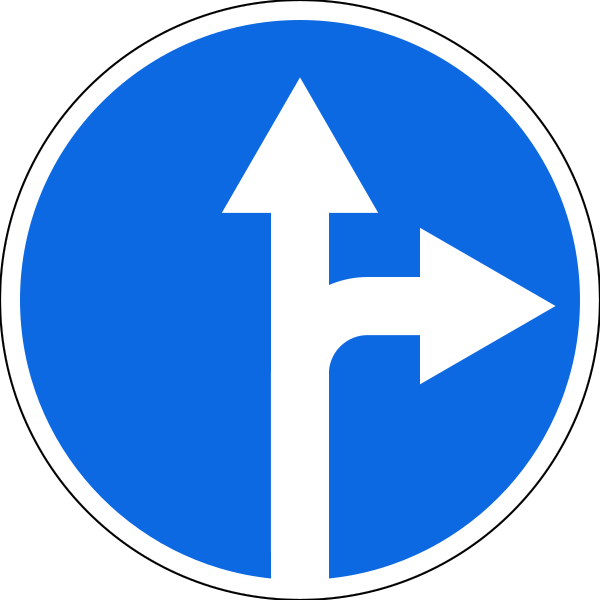
Requires the driver to proceed only straight ahead or to the right. The sign applies to the intersection of carriageways before which it is installed; the sign does not apply to route (public transport) vehicles.
The driver of which car has the obligation to give way when moving in the direction of the arrow, if the emergency service vehicle does not have its blue flashing special light signal switched on?
Road sign used in this ticket
The driver on this road must give way to drivers moving on the road being crossed, and where plate 8.13 is present – to drivers on the main road. Outside built-up areas, sign 2.3 is placed in advance, 150−300 m before the intersection, with plate 8.1.1 if sign 2.3 is installed before the intersection, or with plate 8.1.2 if sign 2.4 is installed before the intersection. The sign applies to the intersection of carriageways before which the corresponding sign is installed.
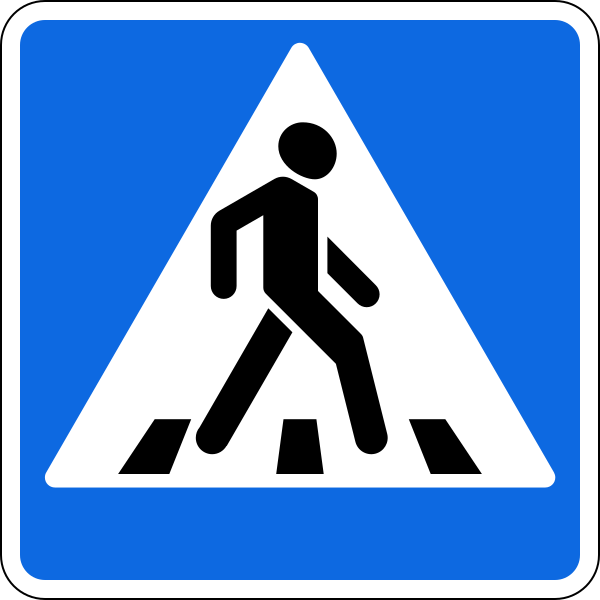
A place on the road designated as a pedestrian crossing. The sign is installed on the right side of the road. If marking 1.14 is absent at the crossing, the sign is installed at the near boundary of the crossing.
In case of damage to the skin and muscle tissue of a person injured in a road traffic accident, in order to provide first aid, they must:
In what order must the vehicles pass through the intersection when moving in the direction of the arrows, if the emergency vehicle does not have its flashing blue special beacon switched on?
Road sign used in this ticket
A place on the road designated as a pedestrian crossing. The sign is installed on the left side of the road. If marking 1.14 is absent at the crossing, the sign is installed at the far boundary of the crossing.
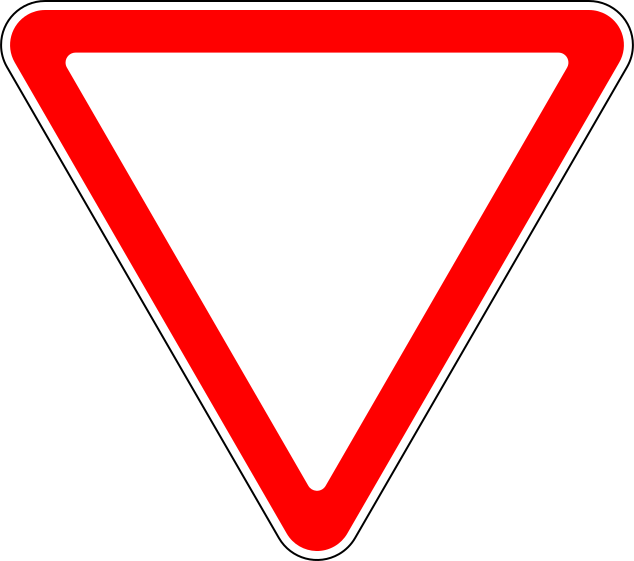
The driver on this road must give way to drivers moving on the road being crossed, and where plate 8.13 is present – to drivers on the main road. Outside built-up areas, sign 2.3 is placed in advance, 150−300 m before the intersection, with plate 8.1.1 if sign 2.3 is installed before the intersection, or with plate 8.1.2 if sign 2.4 is installed before the intersection. The sign applies to the intersection of carriageways before which the corresponding sign is installed.

Indicates the direction of the main road at an intersection. The plate is used with signs 2.1, 2.3 and 2.4 when the main road changes direction at the intersection.
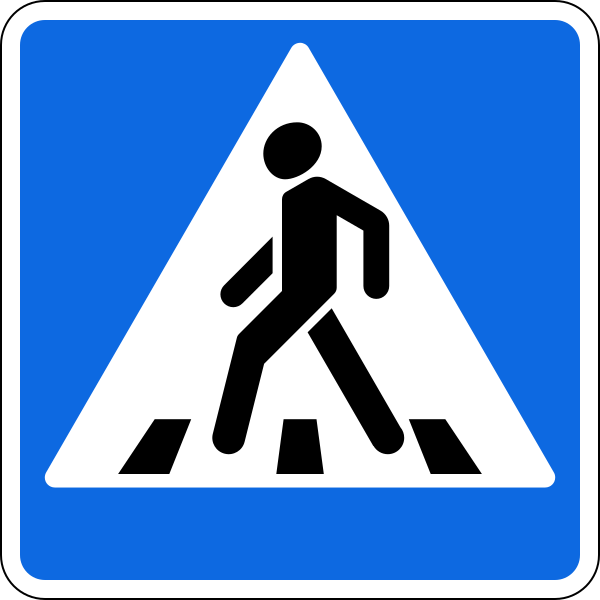
A place on the road designated as a pedestrian crossing. The sign is installed on the right side of the road. If marking 1.14 is absent at the crossing, the sign is installed at the near boundary of the crossing.
60 real exam routes across 10 cities, 793 km in total. Every turn and stop on the map, with voice guidance.
One-off payment, no auto-renewal — by card on the Bank of Georgia secure page.